May 18, 2026
Digital marketer Netyear zeros in on generative AI




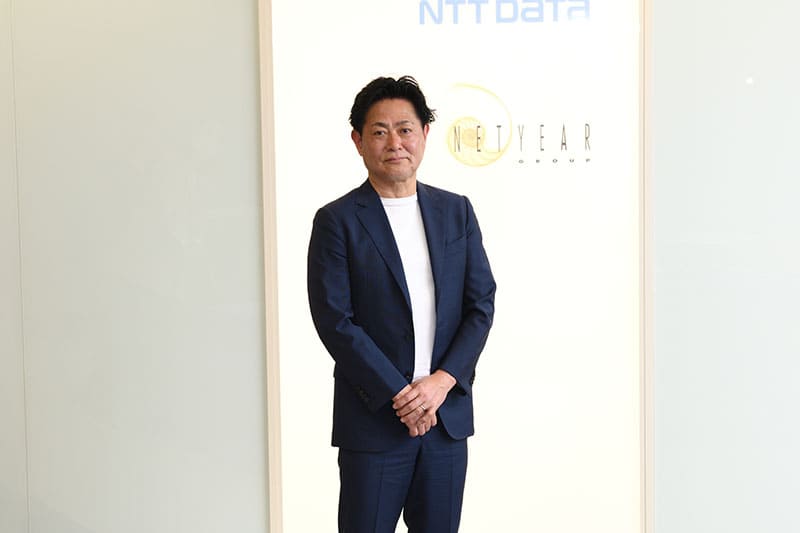
With the continuing rise of artificial intelligence technologies, the digital marketing firm Netyear Group Corp. announced last year that it would fully shift to generative AI in its services.
“When I took this post about two years ago, generative AI was just starting to emerge, and I told my coworkers that we would spend all our resources on it and needed to completely change our mindset, otherwise we would not be able to remain competitive in the market,” said President and CEO Ryuzo Hironaka in a recent interview, part of a monthly series by Naonori Kimura, a partner for the consulting firm Industrial Growth Platform Inc.
Shifting to generative AI
Hironaka said not many companies in the country have yet incorporated generative AI technologies into their operations despite the accelerated technological development, although businesspeople have already started to adopt it on their own. “Since our main business field is marketing, we must think about how effectively and efficiently we can utilize it with our customers,” he said.
It may be natural for the company to do so, as the magnitude of how AI has been transforming the world is similar to how the internet has affected society. Netyear was established in 1999, during the early development phase of the internet. The company soon posted growth, which made it possible to list its stock on the Tokyo Stock Exchange’s Mothers market for young emerging companies in 2008. Currently, Netyear is traded on the TSE’s Standard market.
Growth and market expansion
Netyear’s business network has come to involve more than 1,000 firms, and it makes more than 2,800 deals a year. In 2019, the company became a group company of NTT Data Corp. in order to maximize the value of its digital marketing by achieving synergy with the system developer.
“Since Netyear had accumulated data on customers’ purchases, we needed to analyze it for marketing and, as the next step, develop new services to further deepen relationships with our customers,” Hironaka said, adding that this view was not fully shared in the company. As a result, he said, workers had mainly focused on tasks like creating websites and mobile applications.
Hironaka’s announcement of the company’s complete shift toward generative AI aimed to help it bounce back from a decline. For the business year that ended in March 2025, it marked a net loss of ¥33.75 million ($210,000), down from ¥106.11 million in net profit a year earlier, on sales of ¥3.38 billion, against the previous year’s ¥3.63 billion.
Strengthening AI partnerships
In the following business year, the company started to reinforce cooperation with NTT Data and other group companies in the field of generative AI technologies to attract new corporate customers and build a stronger customer base.
For Netyear, it is essential to strengthen its relationship with NTT Data, which launched a strategic alliance with OpenAI Inc. last year, becoming the first OpenAI agent in Japan. NTT Data experts are now providing an OpenAI acceleration program to 100 major Japanese firms.
Meanwhile, Netyear aims to develop its human resources in the field of generative AI, trying to utilize them in AI-related internal operations that had been outsourced and increase business efficiency.
The battle among generative AI technologies has grown fierce since OpenAI launched the revolutionary AI chatbot ChatGPT in November 2022. The potential of artificial intelligence has prompted companies around the world to transform their business operations to boost efficiency and create new services.
Netyear said in its latest business plan, released last June, that business fields that would likely increase in value through introducing generative AI — customer operations, marketing and sales, software engineering, and research and development — coincided with the company’s major business domains. Citing a 2023 McKinsey & Co. report, the plan said those fields would be impacted most because customer operations would likely automate and improve the efficiency of replies to customers, marketing and sales would benefit from data analysis and the creation of personalized advertising, software engineering would automate code creation and bug fixes, and R&D would accelerate the speed of new product design and simulations.
Focus on personalization
Hironaka said companies should emphasize two aspects of generative AI: personalization and automation. “In the upcoming generative AI era, if we don’t have customers’ personalized data, that means we don’t have armor to protect ourselves” from harsh competition, he said. In the future, AI could automate processes related to consumer activities such as credit card payments and settlements, he said.
Another key aspect that companies need to focus on when they utilize generative AI is its ability to update consumer data in real time, he added.
Netyear thinks interactions between companies and their customers will eventually involve AI agents on both sides, a model it calls “AI agent-Based Autonomous Communication®” (ABAC). For example, an AI agent for an end user would let an agent for a corporation know about the user’s consumption behavior and the latter agent, which has knowledge about products and how to reply to frequently asked questions, would autonomously process the data.
“Whether to utilize generative AI will determine the critical turning point of corporate activity in the future,” a company’s report says.

Future AI-driven strategy
As the first step, Netyear will support corporate customers in converting digital media designed for web searches into ones geared for generative AI.
At the same time, the company will improve its own productivity in developing corporate customers’ digital media by utilizing generative AI. Lastly, it will develop AI agents for them in cooperation with NTT Data.
To support future growth in the field of generative AI, Netyear plans to expand its AI taskforce into a larger organization, enabling it to collaborate with customers on experimental projects. It will also send employees to a generative-AI training program run by Yutaka Matsuo, a professor at the University of Tokyo specializing in artificial intelligence, deep learning and big data.
Naonori Kimura
Industrial Growth Platform Inc. (IGPI) Partner
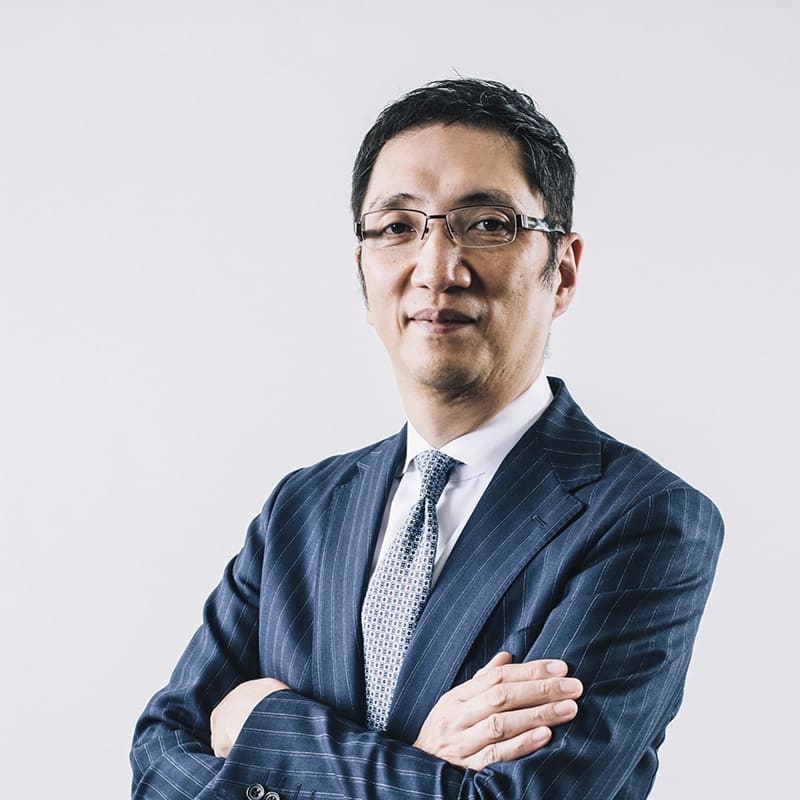
Netyear Group is moving to elevate customer value creation through the utilization of generative AI, anticipating the full arrival of the generative AI era. Long recognized for its strength in customer experience–driven marketing support, the company at one time placed emphasis on production services such as for websites and system development. However, Netyear has shifted its focus toward leveraging customer data and delivering tangible outcomes, redefining its value.
In particular, the company has recognized changes in the decision-making environment, where choices are increasingly made without relying on online search, and is evolving its offerings toward value creation centered on personalization and real-time responsiveness. At the same time, it is constructing the “ABAC model,” in which AI agents representing companies and customers connect, with the aim of redefining the nature of future customer touchpoints. Furthermore, as a member of the NTT Group, Netyear is well positioned to drive social implementation by leveraging the group’s advanced technologies and data platforms — an important factor underpinning its competitive advantage.
In pioneering these new domains, where value creation and risk are inseparable, maintaining a stance of working alongside customers to explore optimal solutions based on mutual trust is essential. President Hironaka stressed that he wants the company to enhance its productivity and reputation as an organization while evolving into a workplace where every employee can take pride in their work. Netyear’s evolution is poised to present a new direction for value creation in the digital society.