May 18, 2026
Family business heirs pitch ideas at Atotsugi Koshien




Small and medium-size enterprises (SMEs), which account for about 99% of all companies in Japan, play a vital role in supporting the economy as providers of employment and technological expertise. However, many are now facing a serious challenge: a lack of successors.
In response, the Small and Medium Enterprise Agency has been implementing measures to address various issues associated with business succession, providing strong backing to SMEs undertaking succession efforts.
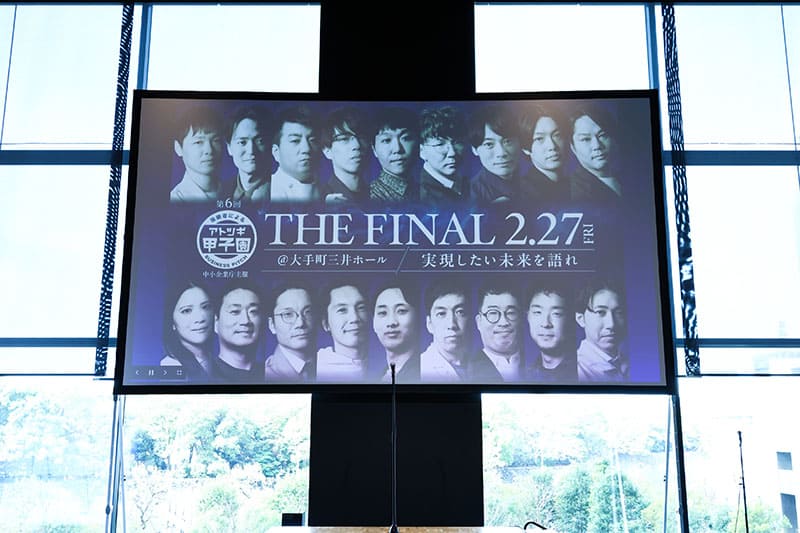
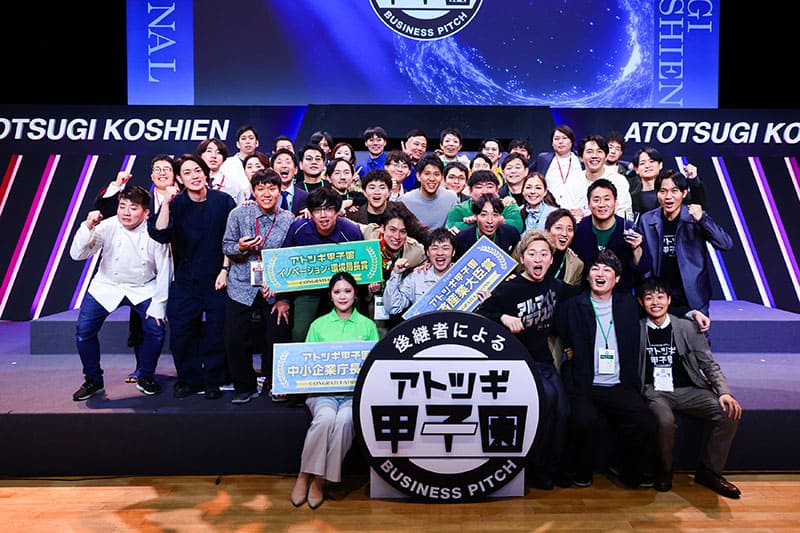
One such initiative is the Atotsugi Koshien, a pitch contest for business successors. The final round of the sixth competition, in which successors and successor candidates age 39 or younger from across Japan present new business ideas based on their companies’ existing resources, was held on Feb. 11 at Otemachi Mitsui Hall in Tokyo.
Critical turning points
Generational change in a company is not merely a transfer of leadership; it is a critical turning point that can significantly shape its future growth and direction. Smooth business succession is therefore essential to maintaining the vitality of SMEs and ensuring their sustainable development.
However, succession requires time and careful preparation. More than half of SME owners say it takes at least three years to transfer leadership to a successor, underscoring the importance of early and well-planned efforts.
Another major challenge, cited by both current leaders and successors, is the managerial capability of successors. Strengthening these capabilities requires improving their ability to formulate business strategies, communicate effectively and execute new initiatives. The Atotsugi Koshien, launched in 2020, is one effort aimed at helping them develop those skills.
Many past participants have gone on to develop their ideas into actual businesses after taking part in the competition, which has evolved beyond a simple contest into a platform that fosters new initiatives.
This year, 225 applicants from across Japan entered the competition, with 90 advancing to regional rounds after an initial screening process. A total of 18 finalists selected from six regional blocks — Kyushu and Okinawa, Chugoku and Shikoku, Kansai, Chubu, Kanto, and Hokkaido and Tohoku — advanced to the final stage.
Toshiyuki Ochi, a parliamentary vice minister of economy, trade and industry, highlighted the importance of challenges undertaken by business successors in his opening remarks, saying, “Successors who confront issues facing their communities and industries and overcome them to grow their businesses will help shape the future of regional economies and Japan as a whole.”
At the final round, entries were evaluated based on criteria including originality, sustainability and social impact, as well as how effectively participants leveraged their companies’ existing resources and the level of passion and narrative behind their ideas.
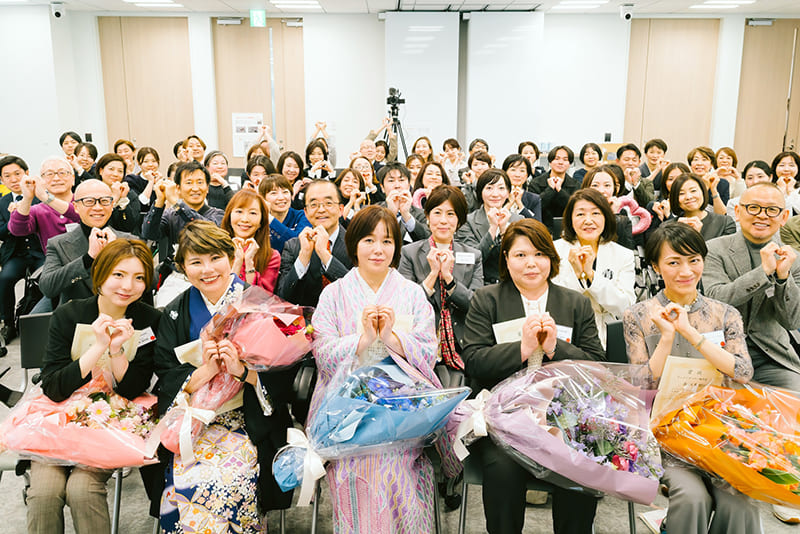
Awards including the economy minister’s prize, the SME Agency commissioner’s prize, the innovation and environment bureau director’s prize, the excellence award and corporate special prizes were presented, with a total of eight successors selected.
Value for family businesses
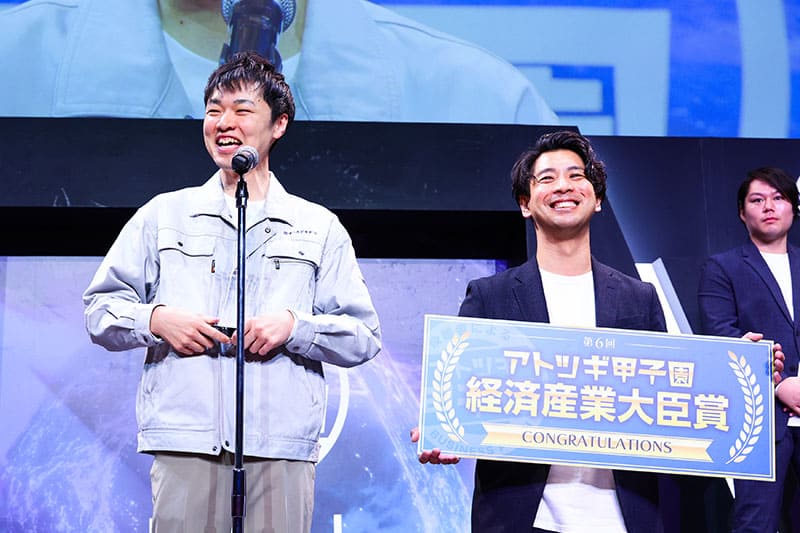
Turning waste into a resource while addressing local challenges — the initiative by Ken Sato of Mold Model Co. Ltd., a casting company based in Yamanashi Prefecture, stood out as a compelling example of a circular business model. It received the economy minister’s award.
The company, which produces metal products using gypsum molds, has been grappling with the disposal of waste gypsum generated in its manufacturing process. Rising disposal costs, fewer available disposal facilities and stricter regulations had put the continued use of its long-established technology at risk.
Against this backdrop, Sato focused on converting waste gypsum into liquid calcium fertilizer. The idea was sparked by a local grape grower who was struggling with fruit cracking caused by extreme heat. By repurposing what had previously been treated as waste, the initiative aims to reduce environmental impact while supporting agriculture. Based on university research, the technology was adapted for practical use and brought to market by leveraging the company’s on-site expertise.
The initiative also points to the potential of a localized circular model in which waste generated within a region is reused locally, helping to reduce transportation costs and stabilize supply. Sato said he aims to start in Yamanashi and eventually expand nationwide and overseas, with the goal of establishing a regionally rooted circular model. His decision to take over the family business was driven in part by a strong desire to protect both his employees and the company’s technology.
Rather than simply inheriting the business, his approach — creating new value by addressing existing challenges — was highly regarded.
Unlocking new value from underutilized resources and connecting local materials to global markets — this approach by Tsubaki Hokama of Japan Biotech Co. Ltd., a company engaged in land-based cultivation of sea grapes in Okinawa Prefecture, was recognized with the SME Agency commissioner’s prize.
Founded by her grandparents and expanded under her mother to export to 14 countries, the family business has grown steadily but has faced limits in production capacity and its ability to accommodate tourists.
To address these challenges, Hokama proposed a new venture that repurposes off-spec sea grapes, normally discarded, as raw materials for beauty products. Focusing on the approximately 6.4 tons of unused resources generated annually, she aims to convert them into cosmetic ingredients by leveraging their rich nutritional properties. With products using Okinawan ingredients on the rise, she has chosen a business-to-business strategy rather than targeting consumers directly.
She has set her sights on Paris as her target market. As demand for seaweed-based cosmetics continues to grow, sea grapes remain relatively unknown, offering significant room for differentiation. By leveraging the company’s existing export experience, she aims to establish value in overseas markets before expanding into Japan.
The innovation and environment bureau director’s prize was awarded to Naoto Takanashi of Takanashi Manufacturing Co. Ltd. Corporate special prizes were presented to Mold Model’s Sato and Japan Biotech’s Hokama, while the excellence awards went to Hiroaki Kobayashi of Marukin Co. Ltd. and Ryota Inagaki of Inagaki Sekizaiten Co. Ltd.
Challenges and opportunities
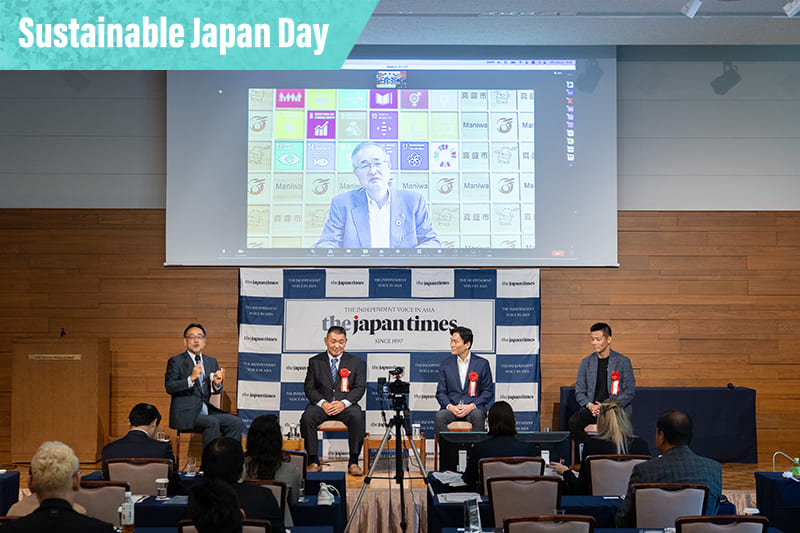
A panel discussion featuring experienced business leaders and past award winners was also held at the final round, moderated by Mariko Mabuchi, a representative director of the Japan Institute of Finance and Economics, and focusing on the challenges commonly faced by business successors and how to address them.
Participants included Ichiro Kawanabe, a director of Nihon Kotsu Co. Ltd.; Hironori Tomoyasu, president of Tomoyasu Seisakusho Co.; Takuhiro Ashida, winner of the economy minister’s prize in the fifth competition; and Tetsuya Nanbara, winner of the SME Agency commissioner’s prize in the fourth competition.
The discussion highlighted that business succession does not always proceed smoothly, with successors often facing gaps between expectations and the realities of management, as well as challenges in building trust within their organizations. Participants also shared the view that pursuing new business initiatives is essential for sustainable growth, as relying solely on existing operations can limit a company’s future potential.
They further noted that successors already possess valuable assets, such as established customer bases and relationships with financial institutions, and that effectively leveraging these resources is key to success. The importance of networks among successors was also emphasized, as connections with peers facing similar challenges can help generate new ideas and solutions.
Overall, the session underscored both the difficulties faced by successors and the opportunities for innovation based on existing business foundations.
Feedback from both panelists and judges indicated that the finalists’ presentations stood out for their quality, execution and strong sense of purpose. Their efforts to build new markets and create value while drawing on existing businesses pointed to the potential for sustainable growth rooted in local industries and communities.