March 02, 2026
Atomusu Award honors women innovating at family businesses




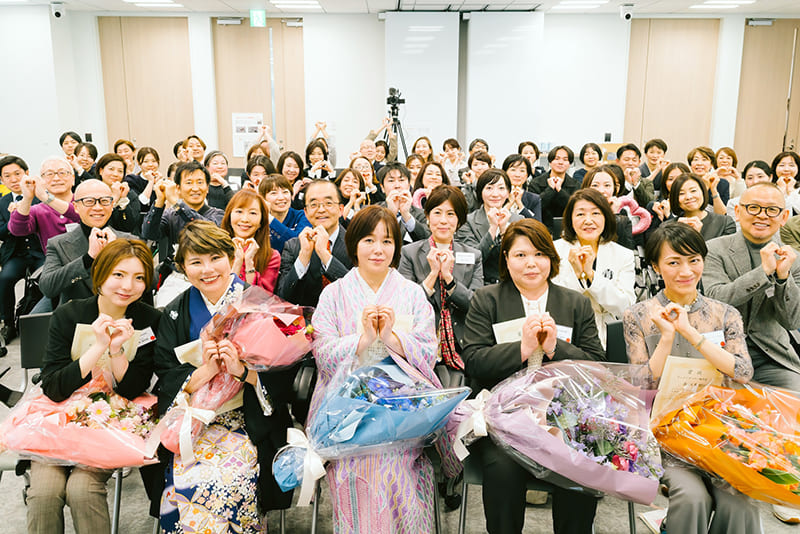
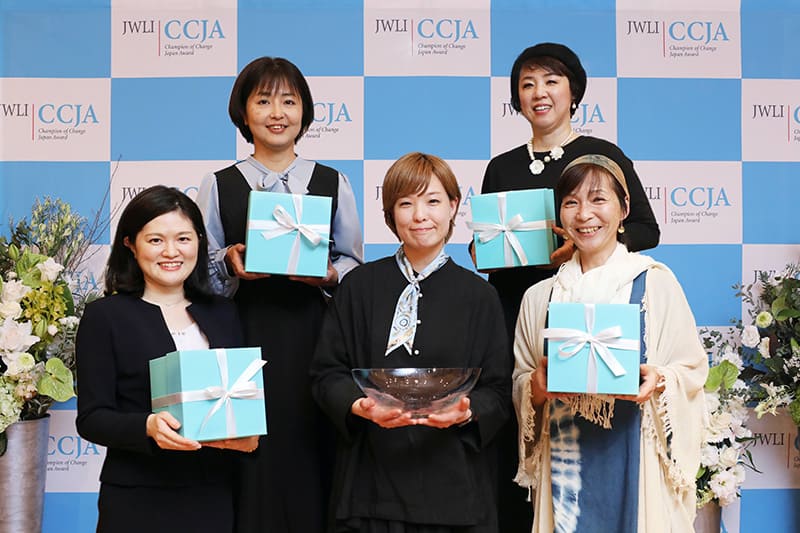
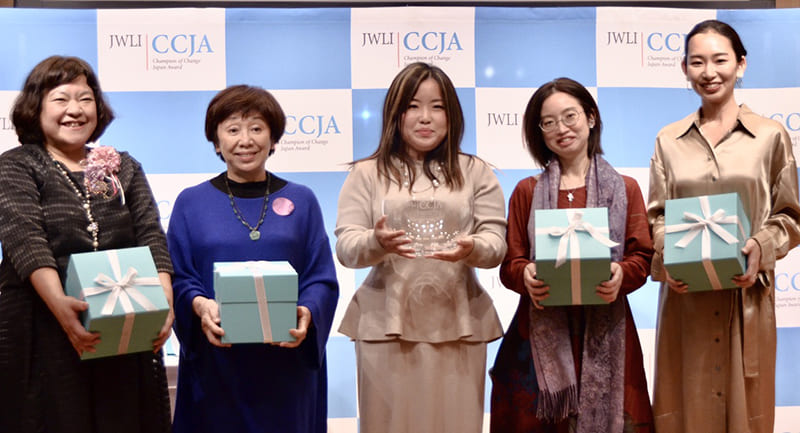
The Atomusu Award 2026 ceremony was held at NN Shibuya Crossroads in Tokyo on Feb. 15, honoring female business leaders and successors whose dedication to employees, families and local communities extends beyond measurable sales figures. Selected from 31 applicants, five finalists shared their visions for their family enterprises and presented practical examples of their management initiatives.
Japan’s small and medium-size enterprises, which account for 99.7% of all businesses, now stand at a turning point. Women make up just 8.6% of business leaders, and disparities in opportunity and support that are rooted in gender bias are said to remain deeply entrenched.
In her opening remarks, Noriko Uchiyama, representative director of the Association of Co-development of Women’s Business Succession of Japan, the organizer of the award, said, “These long-standing values may be depriving capable individuals of valuable opportunities and, as a result, weakening regional economies by hindering the advancement of women.”
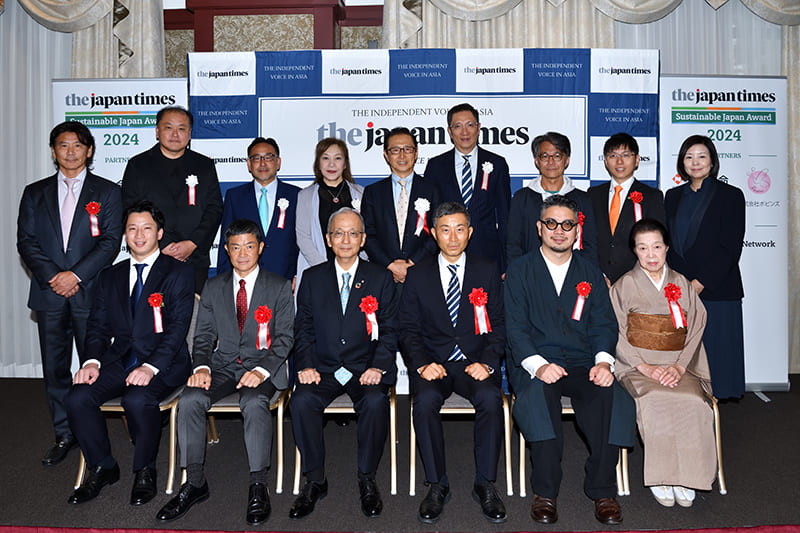
Speaking as a premium sponsor, Minako Suematsu, representative director of Jinseki International School and president of The Japan Times, noted that women face distinct challenges in business succession and that current support systems remain insufficient. She praised Uchiyama’s efforts to bring these issues to light and connect them to practical solutions.
The grand prize was awarded to Mitsue Nishi of Gems Co. Ltd., a jewelry maker and wholesaler based in Kofu, Yamanashi Prefecture. Under her father, a charismatic master craftsman, employees often appeared intimidated, and the company had posted consecutive losses. Confronted with both the management challenges and her father’s commanding leadership style, Nishi had resolved never to take over the business. However, when he fell ill and asked for her help, she decided to assume leadership.
Viewing the company with fresh eyes, Nishi discovered skilled artisans devoted to their craft. Lacking technical expertise, she prioritized dialogue with employees, introducing weekly reflection sessions that encouraged employees to articulate their goals and insights. Over time, a shared sense of purpose began to take root within the organization. Sales doubled and net profit tripled.
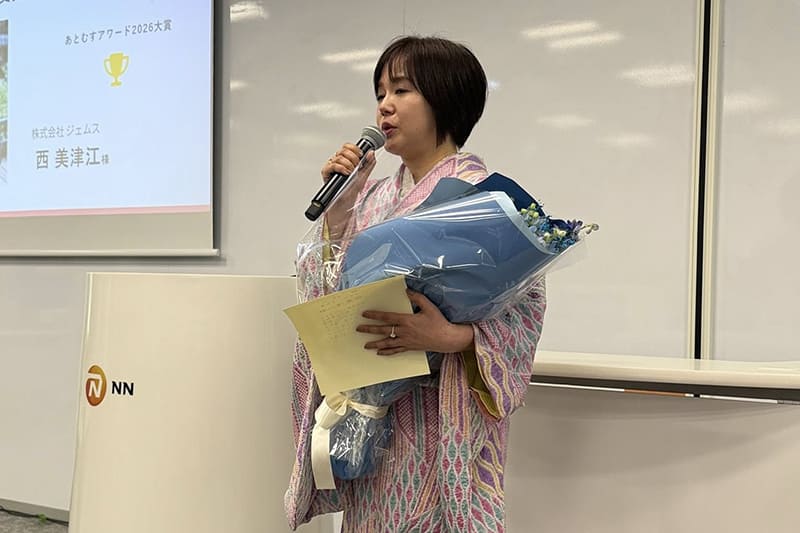
Beyond all this, Nishi said she hopes “to build a society in which each individual life is valued, and where love, gratitude and joy circulate.”
The Family Business Award, which recognizes management that cherishes family bonds and carries forward the aspirations of previous generations into the future, was presented to Chisato Kumakura of Hanasho Co. Ltd., a long-established maker and retailer of Edo kiriko glassware.
Kumakura was not a craftsperson herself and had originally served in a supporting role to her younger brother, who had been expected to take over the business. However, she unexpectedly found herself assuming leadership of the company.
“I had only ever been in a supporting role, as had many of the staff around me, and I felt we were not suited to become leaders on our own,” she said. “That’s when I proposed that we move forward together as ‘Team Third Generation.’”
Kumakura added that she believes this team-based organizational structure could become one model for succession among small and medium-size enterprises in the years ahead.
The Sustainability Award, which recognizes efforts to foster sustainable local cycles and distinctive management styles, was presented to Marie Oguma of Heisei Jyutaku Co. Ltd., a company engaged in real estate and hotel management in Tokyo’s Ikebukuro area.
Love hotels — short-stay hotels primarily designed to offer privacy for couples — have long carried a certain stigma. However, Oguma has sought to reframe them as part of urban culture, working to transform them into spaces for dialogue and engagement.
She has also organized the Ikebukuro Love Hotel Conference, where experts discuss topics such as sex education and “femtech.” Through these initiatives, she has worked to make visible issues that are often treated as taboo, creating opportunities for local communities to reflect and engage together.
The Well-Being Award, which recognizes management that prioritizes the happiness of those around the organization, was presented to Ryoko Shimano. Born into the family that runs Shimano Landscaping Co. Ltd., she inherited its ethos and, as a registered dietitian, founded Higashimatsuyama Fore, where she has put into practice a regional circulation model that connects greenery, food and people.
At the heart of Higashimatsuyama Fore are colleagues from her previous career at Shimano Landscaping. Together, they have created a cycle in which each generation nurtures the next.
The Women Power Award, which recognizes efforts to leverage women’s strengths in advancing family businesses, was presented to Miki Wakabayashi of CER Co. Ltd., which specializes in cleaning restaurant equipment.
After facing illness and a management crisis, Wakabayashi moved to strengthen internal controls and establish clearer management guidelines. The judges highly commended her ability to transform hardship into learning and to reassess the company from a broader, more strategic perspective.
Uchiyama concluded: “Japan’s new dawn begins with women who inherit their family businesses. I sincerely hope that these successors will become lights that illuminate the future of their regions.”
Aiming to highlight issues related to a sustainable society, The Japan Times gave its support to this event by writing an article about it.