May 01, 2026
Estee Lauder Cos. invests in local communities
Japan President James Aquilina says company is fashioning a global legacy
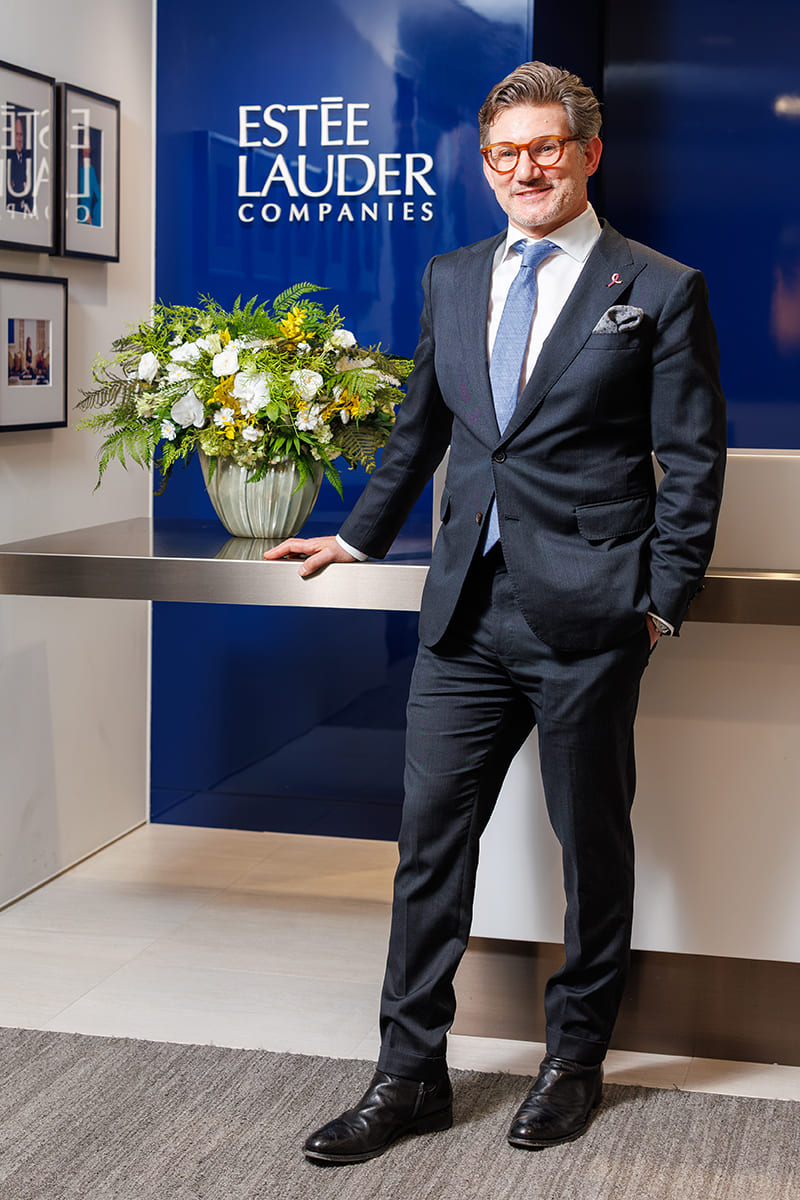
- Name: James Aquilina
- Title: Executive Officer and president, Estee Lauder Companies Japan
- URL: https://www.elcompanies.com/en/
- Hometown: New York
- Years in Japan: 4
Glamour, fantasy and excess often come to mind when one thinks of the luxury beauty industry. While this side is the most visible, behind such gorgeous images at the Estee Lauder Cos. lies a very real, grounded ethos that guides their heart and soul. One of the greatest investments they make is pouring back into the communities that love their brands. Not only do they champion multiple thoughtful causes that support women’s and girls’ advancement in health, education, and entrepreneurship, and the LGBTQIA+ communities, but their commitment to reducing their carbon footprint led them to open their first Asia-Pacific manufacturing and engineering facility in Japan. Manufacturing products closer to consumers cuts down on fossil fuels needed for transportation, reduces waste in the supply chain, customizes research and development for the Asian market and supports local vendors.
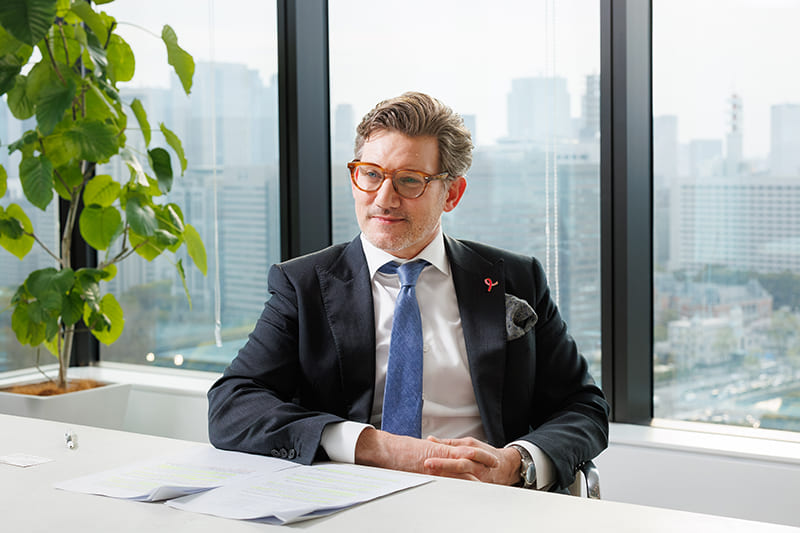
In a sit-down with ELC Japan’s Executive Officer and President James Aquilina, he discussed the efforts being made locally to support social and environmental initiatives. By remaining true to the engine behind the Estee Lauder Cos. — the people who support them — Aquilina personifies the legacy of inclusion, respect and sustainability that defines the company’s moral compass.
Originally from New York, Aquilina’s career in the luxury beauty industry has taken him to the Americas, Europe, the Middle East, Africa and now the Asia-Pacific region. He moved to Japan in 2022 with his family to head ELC Japan. Many consumers don’t realize that their favorite beauty brands — MAC, Clinique, Jo Malone London, La Mer, Aveda and more — fall under the Estee Lauder Cos. umbrella.
“Our sustainability commitment is focused on how our business can drive social and environmental impact. It’s not sustainability as a pillar, it’s about how sustainability is integrated into business impact over time, and how one fuels the other,” he said. Aquilina does not view social causes and sustainability initiatives as side projects, but rather as core parts of the Estee Lauder Cos. ecosystem.
Aquilina points to the MAC Viva Glam campaign as a shining example. Founded in 1994, 100% of sales for Viva Glam products are donated to support gender and racial equality or HIV and AIDS care, and the campaign has begun expanding to environmental sustainability causes. The campaign has raised over $540 million for various nonprofits and support organizations since it began. MAC’s early commitment to funding HIV/AIDS care in 1994 was far ahead of its time, and its subsequent expansion into broader social causes has helped cement MAC as a trailblazer in supporting the LGBTQIA+ community.

Estee Lauder Cos. also champions its own breast cancer campaign, founded by Evelyn H. Lauder, the daughter-in-law of Estee Lauder herself. Since 1992, it has raised more than $156 million, which has been used to fund research, education and medical services around the world. Their brands also support Estee Lauder Cos.’ Breast Cancer Campaign with Pink Ribbon products, special items whose proceeds raise funds for the Breast Cancer Research Foundation. The Estee Lauder Cos. social impact missions, led in Japan by Aquilina, to “invest in and empower our consumers,” show that building up customers’ communities doesn’t just impact these groups, it builds a global legacy. “As a company that is growing and successful, you have a commitment to your community,” he said. “Our commitment is to the local community, supporting social, health and environmental wellness. Your investments will fuel more success, and your success will fuel more investments. It’s truly circular.”
In addition to its admirable commitment to social impact causes, Estee Lauder Cos. also goes to great lengths to minimize its environmental impact in product packaging, retail store resource usage, manufacturing and overall carbon footprint. Rather than leaning into the norm by relying on layers and layers of plastic and excessive packaging, Aquilina speaks to the clever leveraging of the Japanese love of simplicity and efficiency. “Luxury is not always more,” he said. Consumer expectations are also evolving toward a more holistic perspective in which the values behind brands and products matter more and more and, because of this, the retail stores are also thoughtfully designed to minimize environmental impact.
One of the most impressive efforts made to take more ownership of the end-to-end manufacturing process has been to expand production to Japan. Not only does this reduce fossil fuel usage and waste associated with transportation, but it also gives more control over the sourcing of materials by leveraging local craftsmanship in product development.
A great example of this is the award-winning Estee Lauder Aqua Charge. Its formula involves a rice ferment that was discovered in the sixth-generation, 170-year-old Yushin sake brewery. “It’s really a delight to be able to meet with the family and understand their values, and how we can be in protection and in respect of that,” said Aquilina.
The Sakura manufacturing campus was also built with environmental impact in mind: It is solar-powered, recycles water and has LEED (Leadership in Energy and Environmental Design) certification. Opening a manufacturing plant in Japan, close to consumer demand, supports sustainability efforts in the region. It also allows R&D to be tailored to the needs of Asian consumers.
Estee Lauder Cos. also rewards customers with programs like the Le Labo perfume refills. Craft perfume is fresh-blended at the store, reducing transportation waste. Once a bottle is empty, it is refillable at Le Labo stores for a 20% savings. This directly incentivizes customers not to throw bottles away. “It’s great to be able to pass on these savings to consumers to encourage waste reduction.”
Globally, Estee Lauder Cos. also aim to reduce their carbon footprint across manufacturing sites in key areas such as energy, water usage and packaging. Since 2020, they have been able to convert to 100% locally sourced renewable energy. They have collectively reduced their water usage by 41%, and 72% of their packaging is “refillable, reusable, recycled or recoverable,” according to the companies’ Social Impact & Sustainability Report for fiscal 2025.
When asked if there was one thing Aquilina would like his customers to remember about his views on sustainability and social impact, he said, “Our success is a responsibility to bring a positive impact to everyone we touch, including our consumers, employees and communities.” Whether it’s investing in the physical community’s well-being by reducing the company’s carbon footprint, spotlighting partnerships with local vendors and manufacturers or creating incentives and programs that customers can participate in to contribute to social projects and waste reduction, Aquilina sees all of it as a sustainable ecosystem. “When those things work in synergy, we can have a great, responsible connection.”