March 09, 2026
PocketSeed powers honest sustainability in the AI age
AI-powered platform bringing accountability to corporate claims
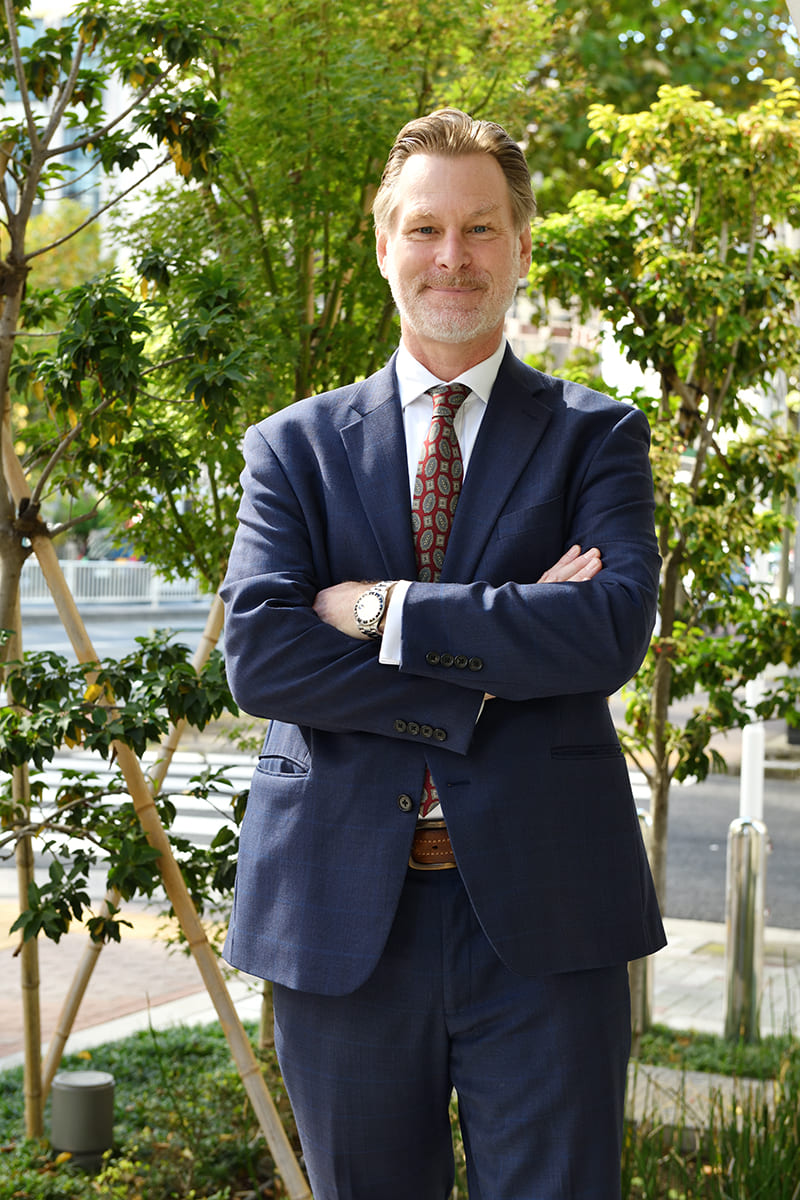
- Name: Mitch Hammer
- Title: Co-founder of PocketSeed
- URL: https://www.pocketseed.io/
- Hometown: Sydney
- Years in Japan: 11
AI: Will it save us? Destroy us? Is there a middle way? Its transition from R&D spaces into the public sphere has pushed a sophisticated tool to an unsettled frontier. The rapid advances being made far outpace the legal and ethical frameworks the public relies on for accountability. Some see AI as a miracle that will lead us into the future, others as an unregulated evil. A case can be made that both sides carry an element of truth.
AI’s potentials for scientific advancement and to provide the public with unprecedented access to massive amounts of neatly packaged information are astounding. Also astounding are the concerning potential for it to be used to mislead and the significant amounts of energy and water needed for the data centers that train generative AI models. But AI is surely here to stay, so what kinds of systems can provide accountability? And can it be used to support positive environmental impacts?
Mitch Hammer’s journey in business led him down this line of questioning. Originally from Australia, where he received his master’s in international business, Hammer’s career has taken him to Dubai and the United Nations, and 11 years ago to Japan, where he built a path in sustainability and technology. One key problem he encountered across his projects was the credibility of sustainability claims.
Vague language, mixtures of data with and without proper context, varying levels of corporate accountability and loud opinions can bombard consumers. Hammer sought to cut through the noise by developing the concept for the AI and blockchain-powered trust network PocketSeed together with co-founder Alex Knight, the company’s CEO.
PocketSeed is a platform with an in-depth system of checks and balances designed to create structure, verification and accountability for corporate sustainability reporting. By giving businesses a tool to communicate responsibly to consumers, stakeholders, auditors and beyond, PocketSeed seeks to offer transparent evaluations of sustainability claims and potential solutions to address gaps in data or mismatches between claims and facts. “We don’t want to police these systems; we want to package communication responsibly in a way that everyone can use and understand,” Hammer said.
Very few people read the long, dense sustainability reports that companies release. There are also inconsistent regulations around vague claims and the misrepresentation of data, whether intentional or accidental. In this era when AI is increasingly embedded into our everyday lives, why not use it to provide structure based on verified data, hold companies accountable for their sustainability claims, create a straightforward path to compliance and better inform consumers?
By removing obstacles to creating clean, credible and reasonably readable sustainability reports, businesses using PocketSeed not only provide their stakeholders and the public with responsible reporting, but they can also ensure their claims are grounded in accessible evidence through a multilayered verification system. Claims are evaluated against open standards, source traceability and internal consistency. “It’s really complex, how you treat communication,” Hammer said. “We don’t want to say, ‘Just trust us.’ We want to say, ‘This is responsible.’”

PocketSeed verification is designed specifically to substantiate sustainability claims. By evaluating them against underlying data, AI software can introduce structural checks that help limit greenwashing. “You can’t tweak the report based on sales targets or marketing KPIs,” Hammer said. “But there’s an incentive for companies to do the right thing if there’s a trail of evidence available — there’s no legislation forcing them to do it or talk about it.”
When the PocketSeed framework evaluates claims from different vantage points, inaccuracies and disagreements between systems are flagged. The platform provides potential solutions, such as adjusting the language of a claim to help prevent misleading consumers, displaying gaps in data needed to substantiate imperfect claims and showing businesses dense information in a user-friendly format. That way, labeling issues and inconsistent sustainability claims can be caught and resolved before marketing campaigns and products go out into the world.
The platform even generates a QR code that consumers can scan online or on a product to access the evidence used to verify a company’s claim. For example, if a food item claims to be fair trade, the QR code lets consumers see the reasoning and evidence that substantiates the claim, such as third-party verification and exact payment structures for workers. “The problem with random data is it can tell many different stories if it doesn’t have context,” Hammer said. PocketSeed seeks to remove the vague “just trust us” that many labels imply and thereby build trust in products and businesses. It also motivates businesses to practice what they preach by providing evidence for their claims and a clear path to necessary adjustments. Public and internal accountability, when backed by evidence and verification, are healthy assets to a responsible path forward as AI continues to advance.
While industrywide transparency around the environmental impact of AI remains inconsistent, Hammer is already pursuing solutions before the formal launch of PocketSeed. He said: “As we are still early-stage, the impact is relatively small, but that’s not a free pass out. We plan to monitor, calculate and report on our impact, implement reduction plans and work out where to minimize impact as the platform progresses.”
In addition to the PocketSeed platform, the company also supports several notable real-world sustainability initiatives in collaboration with other organizations. To date, initiatives facilitated by PocketSeed have contributed to the removal of 500,000 plastic bottles from the ocean, offsetting 13.3 million kilograms of carbon emissions, and deployed 14,424 kelp plants, and in the next 12 months it plans to plant 6,000 trees. These real impacts, along with transparent reporting, show what is possible when tech founders take responsibility for their impacts and treat ethics as a guiding motivation rather than an inconvenience.
AI’s availability to the public sphere is often referred to as a “gold rush” or “the wild west.” Practically speaking, it is too late to ask, “Should companies use AI?” The question has become, “How can businesses use this technology responsibly, and how can we reduce the negative impacts as much as possible?”
PocketSeed shows a possible way forward, one where accountability in a rapidly shifting technological landscape is both reasonable and accessible. Within the chaos of the “gold rush,” a voice of reason to provide responsible structure, alongside a distinctly human desire to make the world a bit better using the tools at hand, becomes an anchor. If more of our leaders take the same care demonstrated by Hammer in the pursuit of progress, today’s polarization around AI could shift into a standard of a more responsible and lower-impact approach to technological innovation. In closing, Hammer urged consumers to “dig a bit deeper into why things are being said.”