April 27, 2026
Daiwa House builds toward seven environmental zeros




Daiwa House’s strong points
1.Selected as one of just 27 triple-A companies in CDP’s 2025 global list
2.Aims to achieve zero environmental impact in seven areas, including emissions, forests, water and resources
3.Its homes now come with high-performance insulation in anticipation of next-generation standards
4.It is applying its comprehensive capabilities to a broad range of problems
Daiwa House Industry Co. is often mentioned in the same breath as Sekisui House Ltd. as a homebuilder leading in sustainability initiatives. Daiwa is also a general developer that handles large-scale commercial facilities, among other things, with its group sales totaling about ¥5.43 trillion ($35 billion) in the fiscal year that ended in March 2025. As it handles everything from homes to office buildings, logistics warehouses, hotels, hospitals and data centers, Daiwa’s responsibility toward the environment is broader than that of companies specializing solely in homebuilding.
In fiscal 2016, Daiwa, aiming to help realize a sustainable society, formulated “Challenge Zero 2055,” a long-term environmental vision in which it set seven key targets in four priority themes: mitigation of and adaptation to climate change, harmony with the natural environment, conservation of water and other natural resources, and prevention of chemical pollution. It also set milestones for 2030.
In 2018, it simultaneously participated in the Science Based Targets initiative and the Climate Group’s EP100 and RE100 initiatives on energy efficiency and renewable energy, a first in the world’s housing and construction industry.
In CDP’s 2025 global lists, released this January, Daiwa received the highest rating in all three areas of climate change, forests and water security, for the first time becoming a triple-A company. There are 27 triple-A companies worldwide, and Daiwa is one of six from Japan, along with Sekisui, Toyota Tsusho Corp., Daito Trust Construction Co., Kao Corp. and Unicharm Corp. Daiwa has been selected for the A lists in climate change for eight consecutive years and in water security for four consecutive years, placing it among the leaders in the domestic homebuilding industry.
Although Daiwa and Sekisui are two of the best in their industry in the field of sustainability, their business areas and approaches differ significantly.
Ahead of curve for standards
Following the adoption of the Paris Agreement at the 2015 U.N. Climate Change Conference, Daiwa established the seven “Challenge Zero” targets.
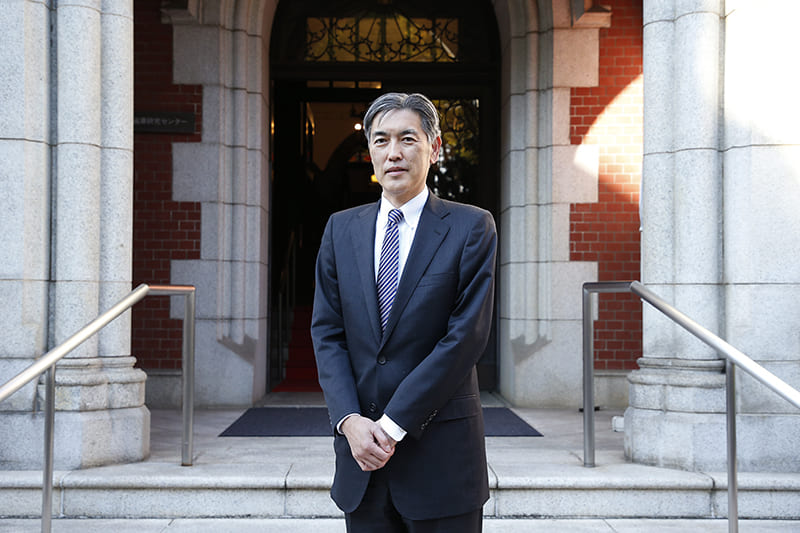
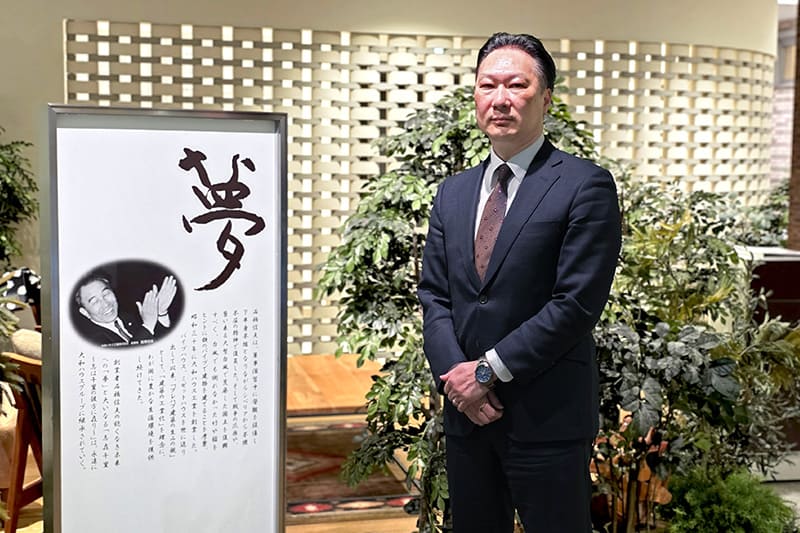
“It would be too late if we acted only when 2050 came closer,” said Yutaka Yamashita, general manager of the sustainability division of Daiwa’s corporate strategy headquarters. “The crucial factor was that the top management showed their intention early on that what matters is how much progress we can make by 2030.”
The key areas of the targets are community development, business activities and the supply chain. The goal is to achieve carbon neutrality by 2050 in these areas through, for example, net-zero energy in new buildings and energy-saving renovations in existing buildings.
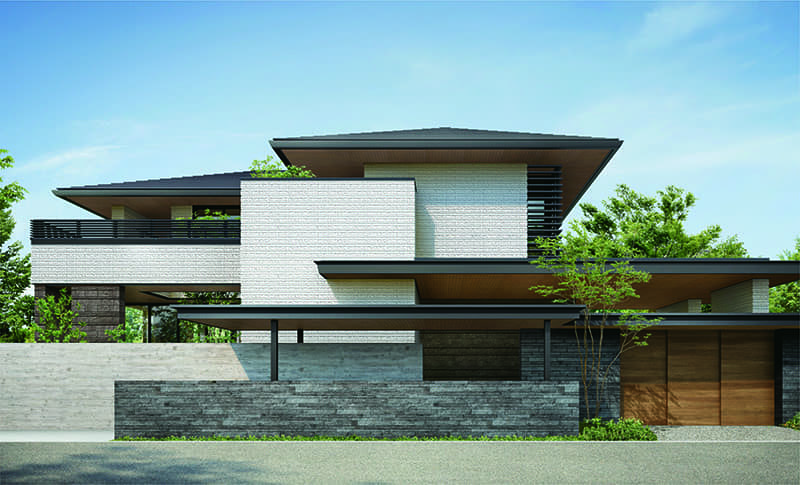
Daiwa is also leading the way in promoting zero-energy houses (ZEH). Its homes come with solar power as a standard feature and meet the government’s ZEH standards. ZEH homes represented 99% of the detached homes it sold in fiscal 2024 — the second-highest figure in the industry, after Ichijo Co.’s 100%.
Notably, it standardized thermal insulation to grade 6 for built-to-order homes last July. The existing ZEH insulation standard can be met with a grade of 5 or higher, but the new GX ZEH standard, set to be introduced next April, requires a grade 6 or higher. Daiwa was early in addressing the new standard.
Daiwa also is working to make multiunit housing and condominiums ZEH-compliant. It adopted ZEH-M specifications, a condo version of ZEH, for all of its Premist condominiums starting in fiscal 2024. The number of its ZEH-M buildings, including rental apartment buildings, reached 2,012 in the same year.
Commercial efforts
But because business and commercial facilities make up about 47% of Daiwa’s sales, it must additionally promote decarbonization across a wide range of buildings and businesses that vary in purpose and size.
For business and commercial facilities, the Daiwa group has been working to comply with the zero-energy building (ZEB) environmental standards, and the total number of its ZEB buildings reached 1,661 by fiscal 2024.
Its measures for the ZEH, ZEH-M and ZEB standards contribute to reducing emissions from the use of buildings it sells, which form part of Scope 3 emissions across the value chain. However, emissions associated with the procurement and transportation of building materials are also significant, and “it will be difficult to achieve the reduction targets unless we raise supplier awareness,” Yamashita said.
Thus, Daiwa has formulated guidelines for sustainability in its supply chain. Following repeated dialogue with key suppliers, over 90% of them have now set targets to keep global warming “well below” 2 degrees Celsius.
Daiwa is exploring ways to contribute to carbon neutrality in areas beyond architecture and construction. In 2023, it introduced an internal carbon pricing program to help guide it on property investments, becoming the first Japanese company to do so. It is also expanding its off-site power purchase agreements, supplying electricity from its solar facilities to other companies via the power grid. Daiwa also is moving toward carbon neutrality by promoting conversion of its business facilities to zero-energy buildings and the use of renewable energy to address its own Scope 1 and 2 direct and indirect emissions.
All these efforts will help the company achieve a 40% reduction in emissions of greenhouse gases by 2030 compared to 2015 and the target of zero emissions by 2050. The 40% reduction means cutting 6.46 million tons — not an easy target
Following founder’s teachings
The “Challenge Zero” initiative is not limited to reducing emissions. In timber procurement, Daiwa promotes sourcing of products that takes into account legality and sustainability in accordance with its zero-deforestation policy. It is also working on tree-planting initiatives that take biodiversity into consideration, as well as projects to conserve and recycle water. These endeavors are aimed at reducing environmental impacts to zero.
Its circular economy initiatives aim to increase the use of renewable and recycled materials to 100%. Initiatives such as the Livness business, which restores and resells homes, and the Livness Town project, which revitalizes large housing complexes and towns, are expected to reduce the amount of required new resources by replacing old facilities with new, more efficient ones.
But why so many initiatives? This is related to the broad scope of Daiwa’s business and its founding philosophy. “Because we operate in a wide range of business areas, we can take various approaches in initiatives for the environment in general, not only for carbon neutrality,” Yamashita said. “Our business has always been rooted in the philosophy of our founder. As our current CEO often says, ‘We do it not because it is profitable, but because it serves society at large.’”
In 1963, Daiwa founder Nobuo Ishibashi wrote a booklet for employees titled “The Future of the Daiwa House Group: Daiwa House Group Employees — Think this Way and Forge Ahead.” It is still handed to all new hires and serves as a guidebook that all employees must read thoroughly.
Ishibashi’s philosophy, that companies should serve as public institutions and that they can only thrive if they serve society at large, transcends time and continues to inspire Daiwa. The continuing strength of this philosophy lies in the fact that it has been passed down as the basis of management decisions by successive leaders, rather than remaining mere words in a motto.
“This is just my personal view,” Yamashita said, “but there are many social issues that need to be addressed, including not just environmental issues but the problem of vacant homes and preparedness for earthquakes and floods. Because we are engaged in large development projects, there should be more things we can do.”
The series of zeros that Daiwa aims for reflect its sense of mission as a comprehensive developer. Daiwa’s comprehensive capabilities will further reveal their true worth as it expands its goals beyond the environment to address social issues in general.