January 26, 2026
Revitalizing rural Japan, one step at a time
CEO Paul Christie helped pioneer sustainable approach to travel
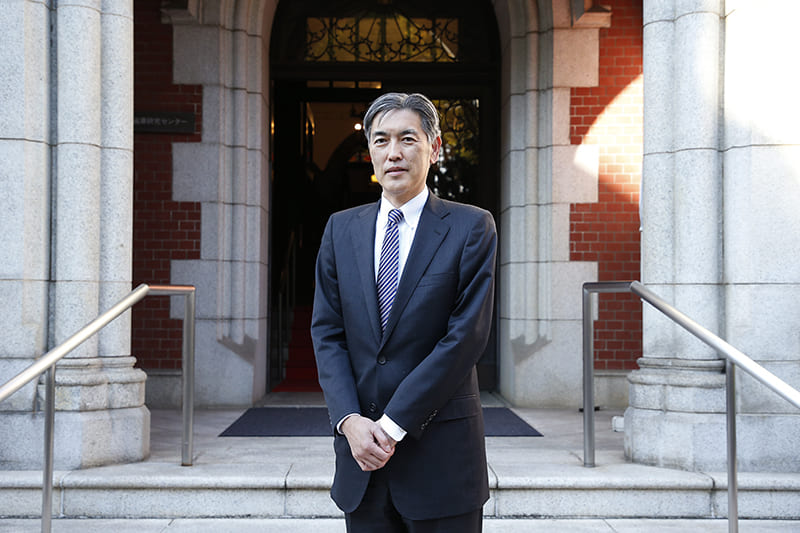
- Name: Paul Christie
- Title: CEO, Walk Japan
- URL: https://walkjapan.com/
- Hometown: Whitstable, England
- Years in Japan: 38
In an era of “perfect” Instagram shots and curated “must-see” lists, Walk Japan takes a distinctly different approach to tourism. Built on the premise that the best way to understand Japan is to walk through it, slowly and with purpose, its tours lead guests on immersive journeys along historic trails and through rural landscapes.
At the helm is Paul Christie, who has called Japan home for almost four decades. In the early years of his career, split between London and Tokyo, he worked in an eclectic range of roles ranging from analyst for the Nihon Keizai Shimbun to freelance documentary production for NHK and TBS. However, he stepped away from the corporate world in 2002 to take over Walk Japan — and hasn’t looked back.
The road to Japan
Christie was born and raised in the sleepy seaside town of Whitstable on the coast of Kent. Like many such places, the real estate market is now booming, and he quipped that “you can’t buy property there for love or money.” He went on to major in economics at university in London, where he lived in one of the international halls of residence. Forming close ties with his fellow residents, he decided to pursue graduate studies in another language after mingling with all the polyglots in the halls.. “All I could do was English, but they could speak two, three or four languages — one Swedish guy spoke six!” he recalled. “I chose Japanese, mainly because the economy was doing so well.”
Christie came to Japan for the first time in 1987 to further his language studies and ended up staying for two years. He was fortunate to experience a homestay in Kawagoe, Saitama Prefecture, with a family who welcomed him as one of their own, offering total immersion in Japanese daily life.
A turning point came a few years later in the form of a phone call from a fellow Brit in Tokyo, who was looking for someone to take over his role at the Japanese subsidiary of a printing firm specializing in legal documentation. Christie came on board and assumed the leadership role when his boss repatriated a year later.
Christie credits the experience with giving him a crash course in how to do business in Japan. “I was probably a bit young for it, but the lessons I learned in that position have paid off: how to deal with people, how to do things the proper way, branching out into new areas,” he said.
Forging a new path
While Christie’s name is now synonymous with Walk Japan, the company’s roots began with two Hong Kong university professors who wanted to create study tours for their geography and history students. They started bringing groups over in 1992 to walk the Nakasendo Way, an ancient inland route that once connected Edo (present-day Tokyo) and Kyoto, passing through post towns and rural communities across central Japan.
The students’ families and friends began asking to come along, and the project took on a life of its own. The academic duo ran the tours as a side venture for some time before Christie, who had been doing some part-time guiding for them, took over the business in 2002. Around the same time, he visited the Kunisaki Peninsula on the northeastern side of Kyushu’s Oita Prefecture for the first time. He quickly decided that this remote, nature-rich area was where he wanted to spend his life.
Building on the established tours on the Nakasendo, Christie developed the first Kunisaki trek in 2003, and the company steadily grew from there. Today, a network of more than 160 team members coordinate walking tours in Hokkaido, the Izu Peninsula, Ishikawa, Nagano, Kyoto, Wakayama and Kyushu.
“Wherever we walk in Japan, we can explain things from direct experience. Not all of our tour leaders are farmers, but through our work in Japan we understand farming more deeply than most,” he said. “In Kunisaki, in particular, we take people through the areas where we work, so we can explain things from a very intimate, firsthand perspective.”
The term “overtourism” is heard at every turn these days in Japan. Christie, however, is careful not to criticize first-time visitors who focus on mainstream destinations such as Tokyo and Kyoto, many of whom come on package trips and probably have a perfectly good time. He likens trying to counterbalance concentration in tourism to “trying to stop a massive oil tanker.”
“It doesn’t happen easily, because everything has become organized around a particular flow. However, that doesn’t mean change is impossible,” he pointed out. “It’s not just about relieving overtourism; it’s also about spreading the benefits that inbound tourism brings to as many regions of Japan as possible. That largesse can help in many other ways as well.”
Learning the lay of the land
Christie points to the Nakasendo Way as a solid example of how a sustainable approach to tourism can benefit the local economy. “It’s become a major tourism resource, and that all started with us. Somebody would have done it eventually; we were maybe 16 or 17 years ahead of everybody else.”
According to Christie, the key lies in successfully combining agriculture and tourism — making it work in practice, not just on paper — so that it becomes a viable activity that can actually generate income. Through Walk Japan, Christie is immersed in a multifaceted undertaking for regional revitalization known as the Community Project, which encompasses “everything we do.”
“Our regenerative initiatives through agriculture — such as reviving and repurposing akiya (vacant homes), providing employment and encouraging immigration to underpopulated regions — all embody this,” he explained. “All these, in turn, also help us grow and enrich our business, which enables us to further invest in our initiatives.”
An important part of the Community Project is taking over local farmland as aging owners step back. Christie cited the example of one farmer who told them he could no longer continue in 2024. The man had been pushed to his limits economically and physically, with severe flooding delivering the final blow.
This farmer was a linchpin in the community, owning the combine harvester, drying equipment and rice-processing machines used by everyone else. Losing his expertise and the resources he provided would have been devastating.
“Then a thought occurred to me: What if we took over his operation? When I suggested it, he was taken aback at first, but when he realized we were serious, the smile returned to his face,” Christie said. “Now he’s a consultant for us.”

New life for akiya
Walk Japan is also renovating vacant homes to create offices, visitor accommodations and cafe-gallery spaces that can be shared with local communities. Christie sees such efforts as providing a model for what can be achieved.
“When people see a concrete example — someone who has actually done it — it becomes much easier to imagine themselves doing the same thing,” he said. “Reading about it in a book or watching a TV program can be encouraging, but seeing it in real life makes it feel achievable. That’s when people start to think, ‘Yes, I could do that!’”
That said, Christie cautions that buying rural property in Japan involves many considerations, from legal complexities to location. “There’s a lot of things that may not be obvious. So, while you might have a cheap property, you could be in for a shock because they can be very cold and drafty, and making them comfortable can cost a lot of money,” he noted.
He advises checking property deeds carefully, as records may not have been updated for decades, and paying close attention to where a building sits. Many rural homes were constructed to conserve farmland rather than maximize comfort, which can mean limited sunlight or higher flood risk if located near a river.
When things do align, the results can be a win-win for everyone. At the family’s request, Walk Japan has recently taken over stewardship of a magnificent 200-year-old property in Nakatsugawa, Gifu Prefecture, which once served as the residence of the village head. Japan-based British community consultant Adam Fulford has been helping to delve into the background of the building and the family, who have lived in the region for four centuries.
“It’s quite an honor. We don’t just want to take on this beautiful building and preserve it for the future, but also to share its history and the story of the family who have cared for it,” said Christie, adding that it will be restored to provide accommodation for Walk Japan tours.
Christie is grateful for where he finds himself, but doesn’t take anything for granted. “I’m lucky in that I thoroughly enjoy what I do. I feel extremely privileged to be leading this life. Japan provided me with the opportunity to achieve far more than I think I could have in the U.K.,” he said.