December 22, 2025
Rising climate risks are opening a path to action




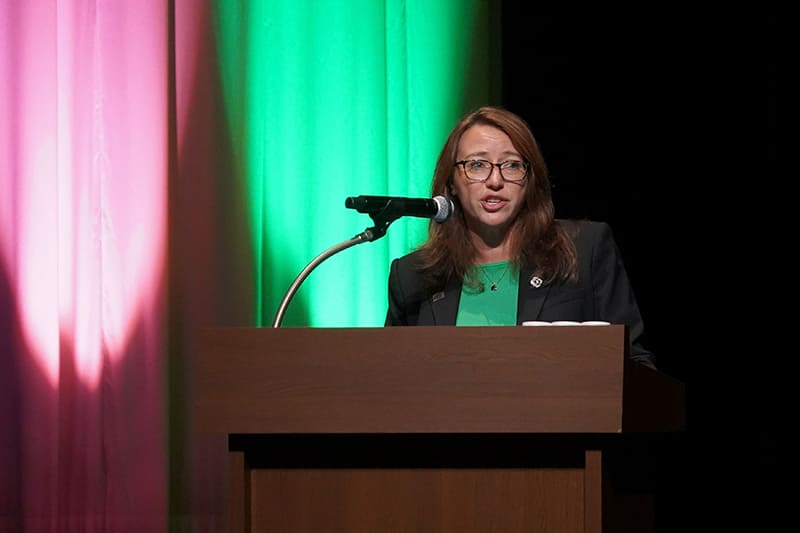
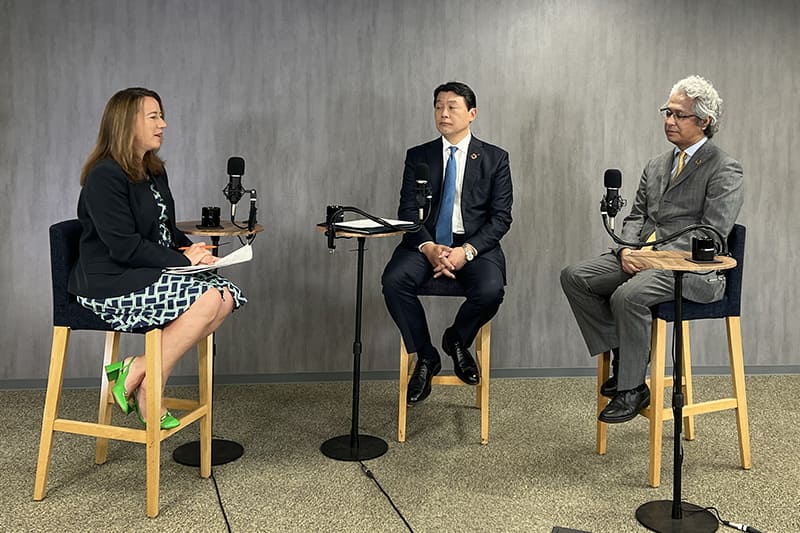
Severe weather events around the world have helped people realize that climate change is creating financial risks that will grow if not mitigated soon, the head of the organization running the world’s largest environmental disclosure system said in a recent interview.
“Unfortunately, I think humankind often needs evidence before acting,” said Sherry Madera, the CEO of CDP, a London-based nonprofit promoting disclosures crucial to assessing the private and public sectors’ environmental impacts. “The effect of this is that companies, cities, states, regions, countries are starting to ask about the cost of climate impact on physical risk.”
Climate Risks Intensify
Record recent heat waves, wildfires, storms and floods have hit many parts of the world. Earlier this year, the World Meteorological Organization confirmed that 2024 was the warmest year on record, and temperatures continue to hit historic highs: Japan, Britain and several other countries said this summer was the warmest on record. Caribbean islands were hit by the most powerful hurricane ever in October, while torrential rains caused heavy floods in Spain.
No one wants natural disasters. “But since we are where we are,” Madera said, “the good point of this is that we can start creating a financial plan — what is the financial impact and how are we going to mitigate them.”
Financial Impacts Emerging
Because global warming exacerbates weather events, the financial community is starting to price it, she said. “If you price it, then you can move capital in order to be able to service it, or capital will move away from where the risk is not being mitigated. And that’s actually, I think, what the future brings.”
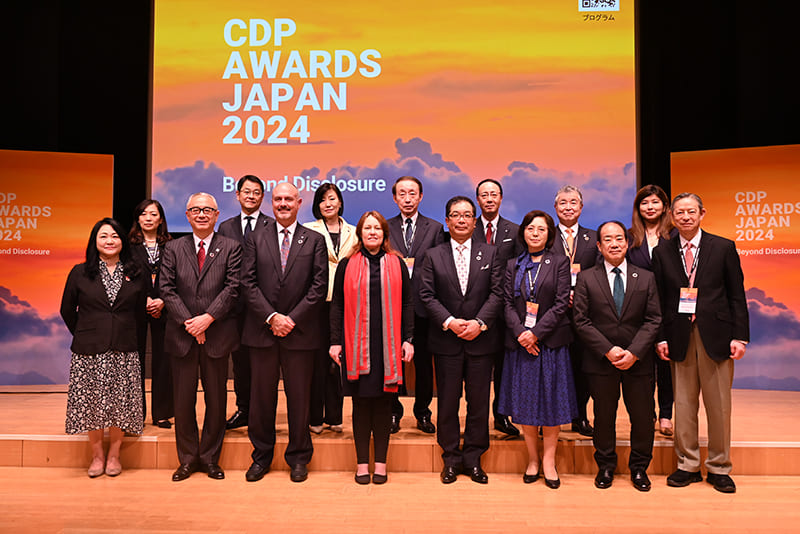
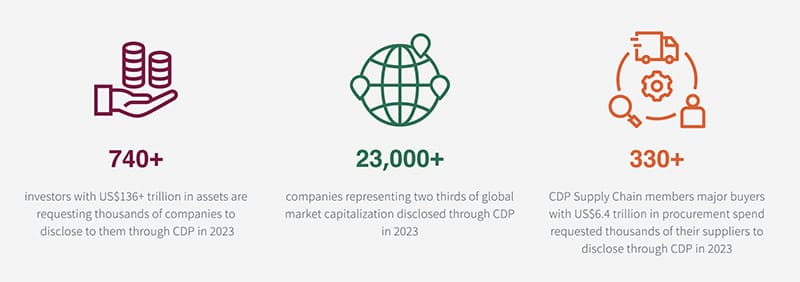
With more companies acknowledging the risks of climate change, the number that disclose sustainability-related data to CDP has increased, including a record number of companies in Japan — in 2024, about 2,200 companies reported to CDP, accounting for over 70% of the Prime market in the Tokyo Stock Exchange.
Madera said 67% of all companies that report to CDP have identified financial risks related to climate change. In Japan, the number is even higher at 82%.
She pointed out that it is much more efficient to take preemptive steps rather than resort to countermeasures later. Last year, companies reported to CDP that they had $6.5 trillion worth of risks related to climate change, and that it would cost $1.4 trillion to mitigate them.
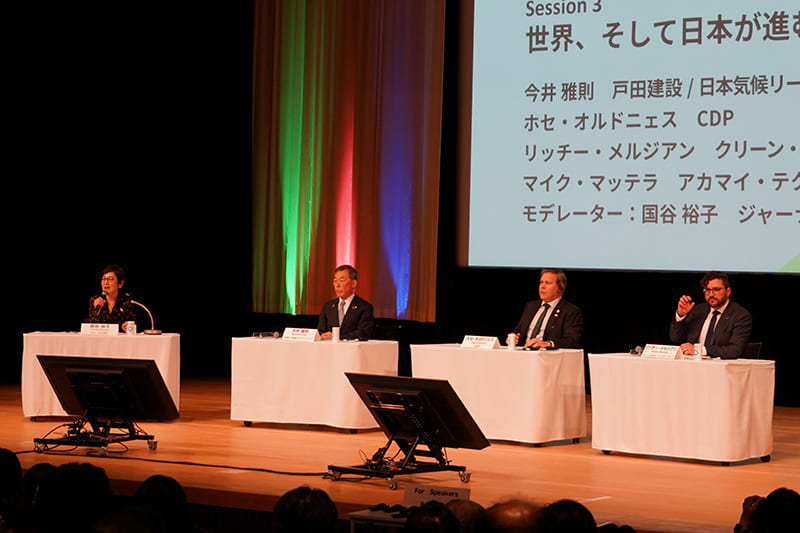
Madera said in a speech at the Japan Climate Action Summit on Nov. 7, prior to the interview: “This is a time of transition. Whether we define it that way or not, environmental risks are economic risks. In the decade to come, sustainable business will be the power behind profit, and the planet coming together to build enduring business success.”
Transition Plans Lag
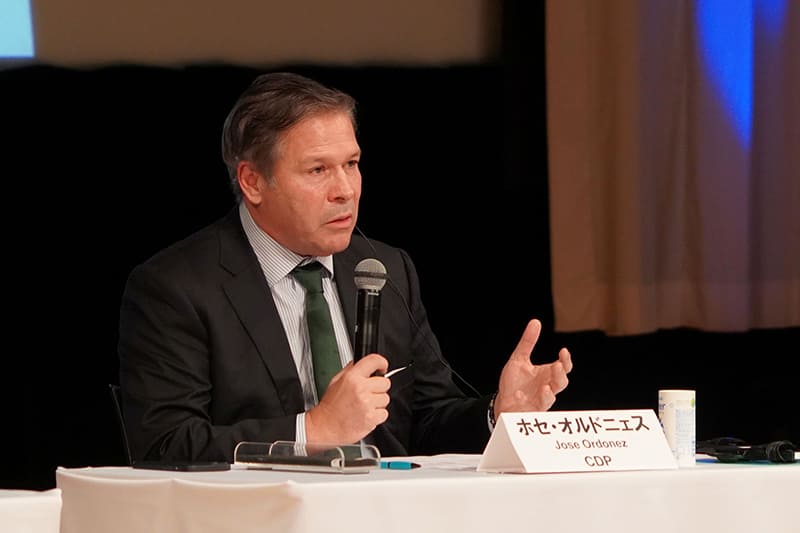
Although many companies have recognized risks due to climate change, not many have taken action yet. “CDP’s data shows that more companies are disclosing that they have transition plans, but our data also shows that only 11% of companies with transition plans put capex (capital expenditures) against their transition plans,” Madera said.
To realize transition plans, it is important to shift from fossil fuels to renewable energy, but this is not happening equally across the globe. According to the London-based energy think tank Ember, the growth of solar and wind power exceeded global demand for the first time in the first half of 2025, driven by China and India, but the use of fossil fuels rose in the United States and the European Union.
Japan also faces challenges in boosting renewables. In August, Mitsubishi Corp. and its partner companies announced that they would withdraw from offshore wind farm projects in three areas off the coasts of Chiba and Akita prefectures, citing price hikes in construction materials.
Madera said the world still consumes too much energy, partly due to the recent growth of artificial intelligence technologies and data centers. “So therefore we should be thinking about how we create and innovate, in order to create … processes that use less energy and that use less actual natural inputs overall,” she said.
Global Policy Efforts
Another issue is the recent U.S. reversal under President Donald Trump. In January, the U.S. withdrew from the Paris climate agreement adopted in 2015, which requires signatories to set long-term goals for reducing greenhouse gas emissions and thereby keep the Earth from warming no more than 1.5 degrees Celsius from the level during the Industrial Revolution. The U.S. later rolled back major climate policies, including wind power and cleaner power for cars.
But Madera said such actions also help to keep important climate issues at the top of the agenda and in any case are not likely to change business leaders’ sustainability policies because those are based on practicality. “Geopolitical headwinds would say companies are going to stop disclosing. But, why? It is so that they can access capital. It is so that they can actually have their own business efficiencies and because their customers are asking them. And these are business reasons. This is not just a save-the-planet type reason,” she said. “We don’t have a choice anymore: ‘Our customers are asking for this. If I don’t disclose it, my customers are not going to buy from me’ — that’s pretty compelling.”
For the first time in the history of COP climate summits, the U.S. — the world’s largest economy and carbon emitter — did not send a delegation to the talks. COP30 kicked off on Nov. 10 in Belem, Brazil, with the U.S. and only a few other countries absent.
As for the transition finance that the Japanese government promotes but has faced criticism by some global investors as prolonging the lives of fossil fuel companies, Madera advocated Japan’s approach to reaching carbon reduction targets, saying it points the way to a sustainable future: “You’ve created something that starts describing a direction of travel. … Actually, without a transition plan, the target means nothing because there’s no way to get there, and there’s no proof point that the company is executing against the target. So, I think transition finance is actually putting a little bit more methodology around how do you achieve a target.”
In January, Madera was appointed to the Global Advisory Council of Japan’s new GX Acceleration Agency, set up to advance the government’s “green transformation” (GX) policy by investing in projects to reduce carbon emissions and boost renewable energy. After her appointment, CDP quoted her as saying, “As we face mounting environmental challenges, the work of organizations like the GX Acceleration Agency is crucial in driving the change we need.”