February 09, 2026
Brewers’ association event pairs sakes, foods from around world




Sake, whose origins go back more than 2,000 years, has constantly evolved thanks to the ingenuity of the Japanese people. To spread the diverse ways sake can be enjoyed, the Japan Sake and Shochu Makers Association (JSS) hosted the “Special Japanese Sake and Food Pairing Program” at the Hotel New Otani Tokyo on Oct. 29.
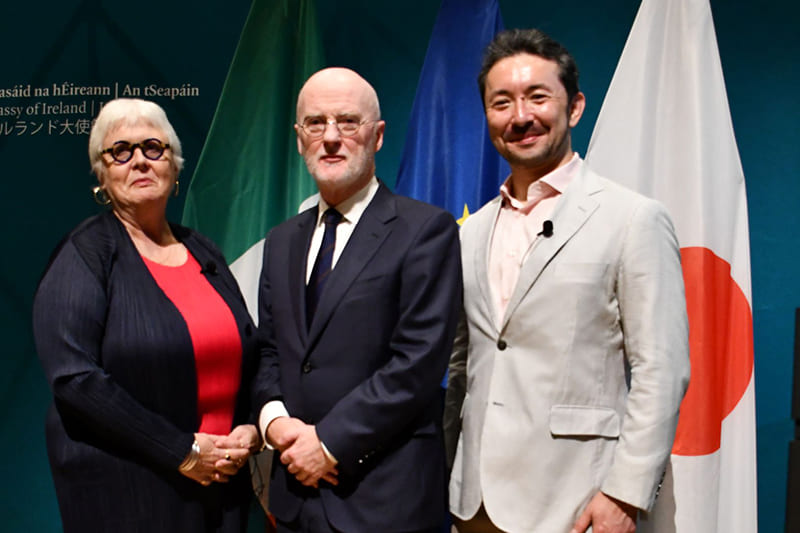
The participants included ambassadors, diplomats and staff members from the embassies of 28 countries, as well as about 50 experts from foreign chambers of commerce and industry, economic organizations and media. Naotaka Miyasaka, the chairman of the association’s overseas sake promotion committee, gave the opening address as participants enjoyed the welcome drink, Masumi Sparkling Origarami Junmai Ginjo — “junmai” means pure rice — in a friendly atmosphere.
“I think learning sake is also about learning the climate and history of Japan, as well as the temperament of its people,” he said. “Over the past decade, Japanese sake exports have tripled, but compared to wine and beer, sake has only just begun to hit the international market. My wish is that tonight, you will discover what makes sake so great and spread the word to the world.”
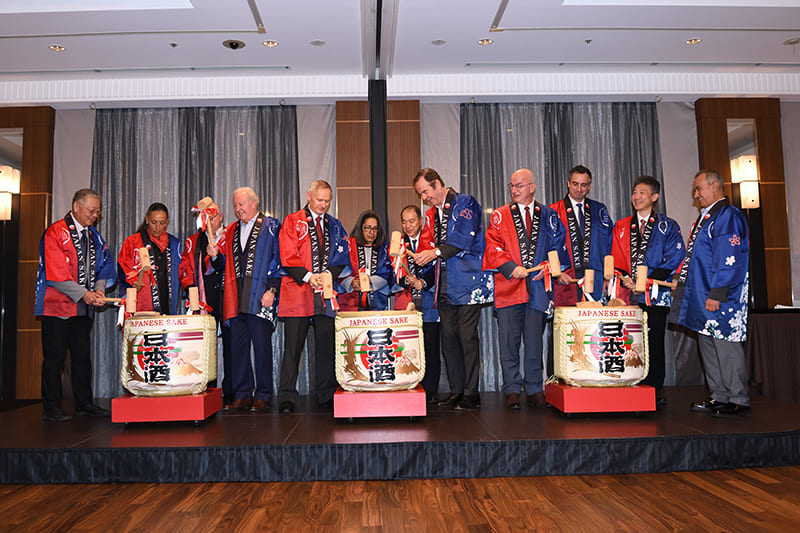
Before the dinner started, ambassadors from nine countries, clad in traditional happi coats, broke open three sake casks lined up on the stage in a traditional ceremony called kagami biraki (literally, mirror-opening). As they hammered the wooden lids with mallets, participants clapped and cheered. Following this, a toast was made with Kaika Awa Sake, led by JSS Managing Director Akira Koga.
The first of the day’s featured sakes was Jikkoku Junmai Ginjo, which has a smooth texture, a fruity note and soft umami. It was paired with an appetizer platter featuring specialties from four countries. The lineup — Italian prosciutto and Parmigiano-Reggiano, Chinese jellyfish and daikon, Thai fresh spring rolls, and Korean grilled scallops and squid with choregi dressing — was a perfect way to impress upon the diners that sake is a versatile beverage that pairs well with cuisines from diverse countries.
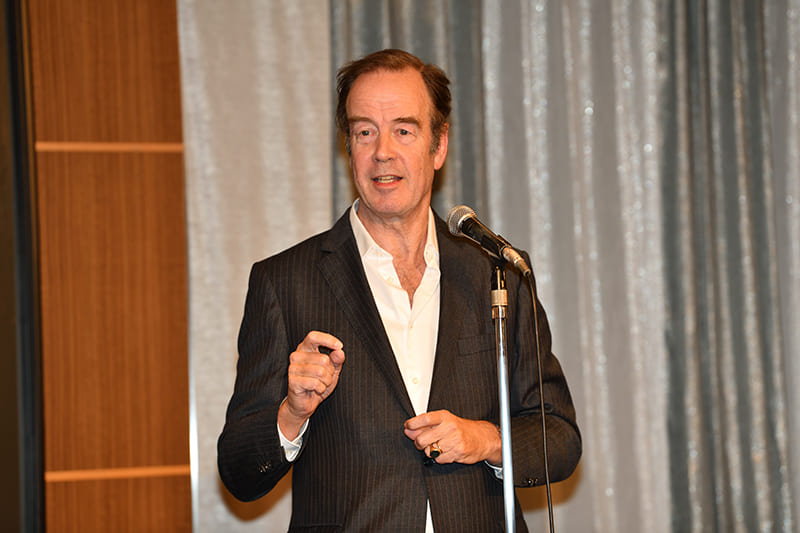
Five courses were served, from appetizers to desserts, along with eight brands of sake. Maksim Polkin, a sake educator certified by the Wine & Spirit Education Trust, had selected the brands of sake to go with the dishes and now lectured on them. In addition to key points on pairing sake with food, Polkin discussed the history of sake, its relationship with climate, how it is brewed — including rice-polishing ratios and kōji mold — optimum drinking temperatures for different types, storage methods and the differences between sake and wine, all in an easy-to-understand manner.
The second featured sake was Yamahoushi Junmai Bakurai Karakuchi Genshu Namazake. It is the driest sake in the world, characterized by a grapefruit-like aroma and punchy pungency. The dish to go with it was the New Otani’s original rasam soup. The remarkable pairing of a spicy, sour South Indian food and an extremely dry sake was a major surprise, and the participants admired the innovative combination.
Another sake paired with the soup was Shirakawago Junmai Nigori Reitou Namagenshu. Participants nodded in agreement at Polkin’s words that such nigori sakes, which are unpasteurized and thus retain their original flavors, go well with spicy foods.
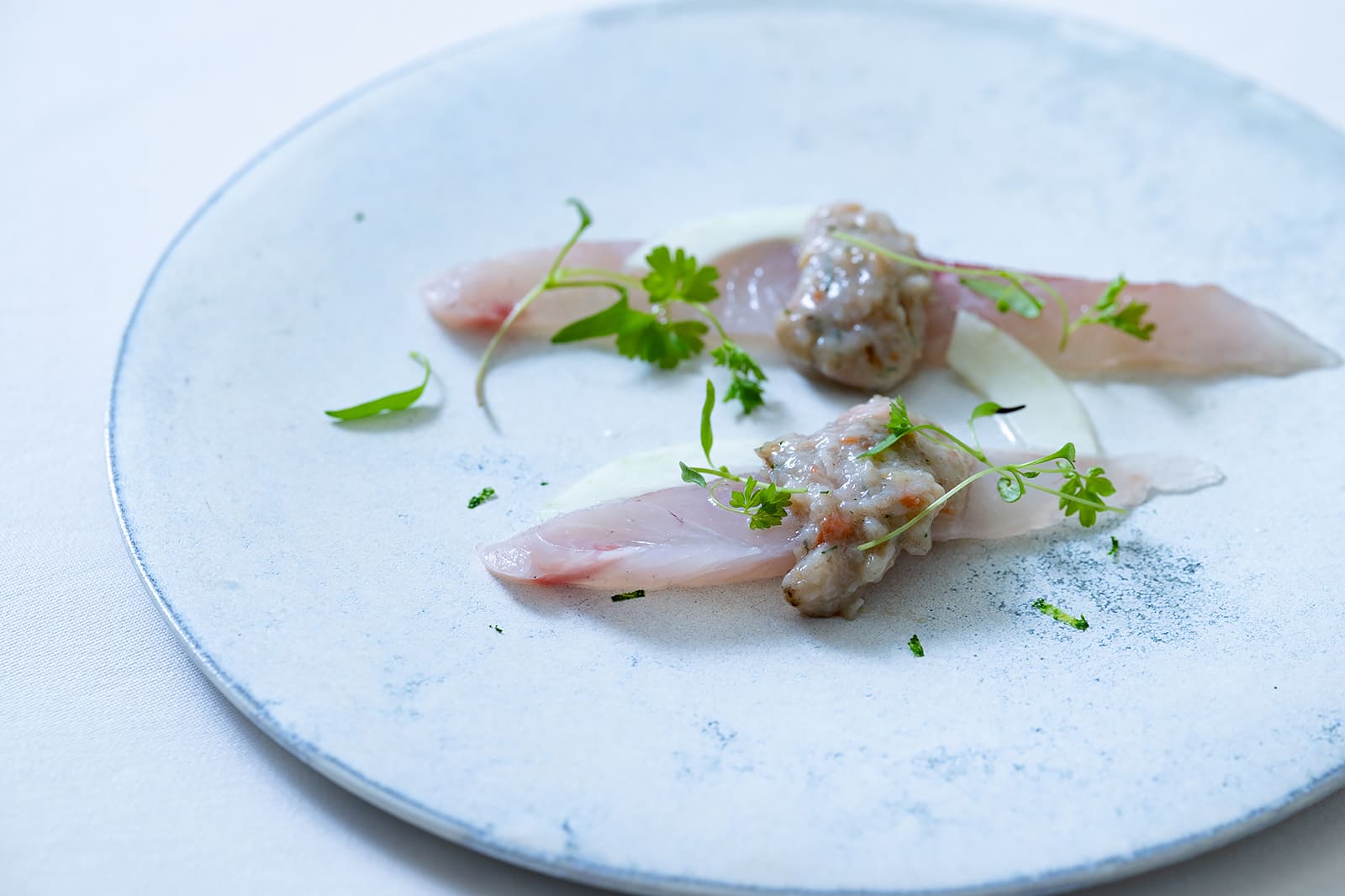
The next dish was pan-fried red sea bream and lobster from Ehime Prefecture with sauce americaine. The flavorful sauce, painstakingly made using a lobster stock, made it an irresistible dish. Paired with it was Yonetsuru Chokara Junmai Daiginjo, which offers a light crispness but has deep umami at the same time. Polkin explained that sake contains five times as much amino acids as wine, and its umami gets a boost when its glutamic acids and amino acids are combined with the flavor-enhancing inosinic acids in seafood. Participants appeared impressed by this.
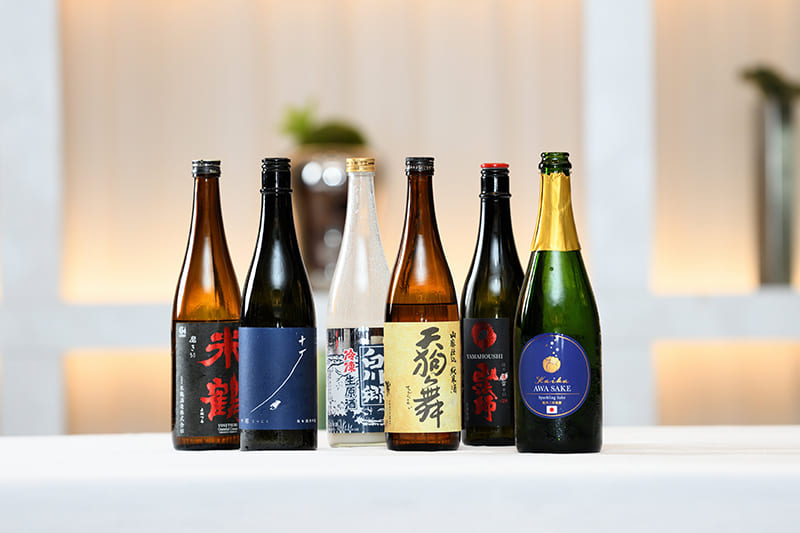
Then came the day’s main dish: North American fillet steak and seasonal vegetables with a sauce made from Bordeaux red wine and subtly flavored with yuzu koshō, a condiment of citrus fruit and hot peppers, paired in perfect harmony with the junmai-shu sake Tengumai Yamahaijikomi Junmaishu. Tengumai is a brewery in Ishikawa Prefecture, and Polkin urged the participants to support Noto’s sake to help the region rebuild from the earthquake of January 2024.
Dessert was cantaloupe coupe with Hachijojima Jersey-milk gelato. The aromatic cantaloupe with a sugar content of 14 degrees or higher was paired with Shirataki Shuzo’s Kiwi-Derived Yeast Sake by Jozen, a rare junmai sake fermented with a yeast harvested from kiwi fruit; its fruity aroma and sweet-and-sour taste are perfect for a dessert drink. After that, coffee was served with a 23-year-old Chikubushima Kochuseiso-wo-Kasaneru, an ideal after-dinner drink with a deep flavor.
The day’s dishes offered all five basic tastes of sweetness, saltiness, sourness, bitterness and umami, as well as spicy and astringent flavors. The event successfully conveyed to the participants the charm and depth of sake, which enhances the taste of food it is paired with, whether Japanese or from anywhere else in the world.