March 09, 2026
Fukushima coast rebuilds toward an innovative future





In the Hamadori area along the Pacific coast of Fukushima Prefecture, which suffered immense damage from the Great East Japan Earthquake and tsunami on March 11, 2011, and the nuclear disaster following the accident at Tepco’s Fukushima No. 1 nuclear power station, efforts are underway not only to help original residents return to their former lives, but also to attract new people, foster new technologies and industries, and build the future of this region.
The area allows visitors to witness both remnants of the disaster, preserved as they were at the time of the earthquake and tsunami, and communities growing around new commercial, industrial and academic facilities. Ukedo Elementary School in the town of Namie, where tsunami damage has been preserved inside the building, is one place where visitors can learn about the horror of disasters and the importance of swift evacuation.
The school lies 300 meters from the coast and 15 kilometers north of the power plant. The 82 children and staff members who were inside the building when the earthquake hit quickly headed to Ohirayama, a small mountain 1.5 km away that had been designated as the evacuation site. Despite the tsunami that struck the building about 40 minutes after the earthquake, submerging the first floor up to the ceiling, they were all safe. Since 2021, the school has been open to the public for an admission fee of ¥300 for adults.
The Great East Japan Earthquake and Nuclear Disaster Memorial Museum is located about 2 km south of the school, in a district in the town of Futaba that was also washed away by the tsunami. An evacuation order issued for people living in a 20-km radius around the plant was partially lifted in the district in 2020. Following decontamination work, facilities including the museum were constructed. Visitors can learn about what happened in the disaster and after the nuclear accident, the long-term impacts on the town and its people, reputational damage and recovery efforts. The Fukushima Reconstruction Memorial Park is near completion along the coast near the museum and is scheduled to open on April 25.
Steadily progressing along the path to recovery, efforts are also being made to boost the production and promotion of agricultural products and processed goods.
Just south of Futaba, the town of Okuma had a population of approximately 11,500 before the disaster. The evacuation of the entire population continued until 2019, when the order was lifted for some areas of the town. In one of these areas, Fun Eat Makers, an agricultural facility that produces, processes and serves vegetables, opened in 2025.
The facility uses hydroponic technology to grow vegetables such as lettuce and tomatoes. They can be purchased there and at markets in neighboring areas, and can also be enjoyed at an on-site restaurant that offers meals using fresh vegetables from the farm and other locally produced ingredients.
Okuma was originally known for its fruit, including kiwifruits and pears. In 2019, a project to revive kiwi production began, spearheaded by locals and young people from outside the area. One of the outsiders was Takuya Haraguchi, a university student at the time. Captivated by the fresh sweetness of the kiwis grown by a former Okuma kiwi farmer and his techniques for cultivation and ripening, Haraguchi established ReFruits Inc. in Okuma in 2023. The company engages in kiwi cultivation and the manufacture of kiwi-based products, as well as providing visitors with agricultural experiences. ReFruits aims to restore Okuma’s prosperity as a kiwi production area and is gradually expanding its kiwi orchards.
South of Okuma, the town of Tomioka also lay uninhabited for six years due to evacuation orders. In 2016, experimental grape cultivation began in the town. By March last year, 16,000 grape vines — matching the town’s predisaster population — had been planted. Shubun Endo, the representative of Tomioka Winery, reflected that when the project was launched, many people said it would be impossible to cultivate grapes there for the first time ever — and in a place that had once been deserted. “Thanks to some of the local people who found hope in winemaking in this place, and people who came to help from outside the town, we were able to get this far,” Endo said. Wines produced there can be purchased at the winery’s shop or enjoyed alongside local ingredients at its on-site restaurant.
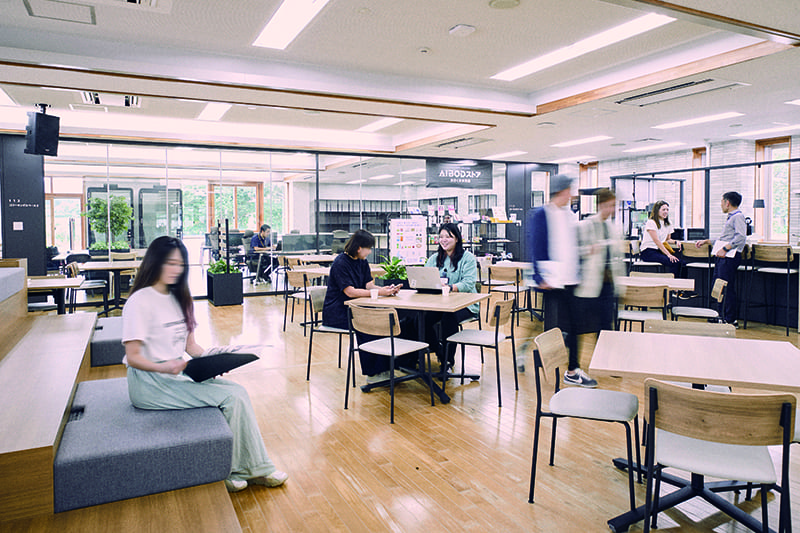
The disaster-affected towns are dedicated to supporting local businesses and attracting outside companies in various ways. F-BICC (the Futaba Business Incubation and Community Center), located next to the museum, offers rental offices, meeting rooms and co-working spaces. Creva Okuma is a similar facility run by Okuma, standing right in front of Ono Station, that houses a rental hall, meeting rooms, a co-working space and offices currently rented to about 30 companies and organizations. The nearby Kuma Sun Terrace is a commercial facility housing stores, cafes and restaurants.
Okuma also has the Okuma Incubation Center, which is used by about 160 companies and organizations. The building, once an elementary school, was renovated to incorporate security systems and various services for tenants while preserving elements both outside and inside that evoke nostalgia for local residents.
Among the diverse industries growing in this region, the key fields expected to support local livelihoods as well as lead in technological research and development are energy and robotics.
Okuma is home to a bioethanol plant operated by the Research Association of Biomass Innovation for Next Generation Automobile Fuels (raBit). To avoid using food crops such as sugarcane and corn, the association aims to establish technologies to produce cellulosic ethanol using nonedible raw materials such as wood and rice straw. Along with identifying and addressing challenges unique to each feedstock and improving efficiency in the bioethanol production, the research also focuses on solving issues involving the use of bioethanol in vehicles and developing a model to predict how much fuel a feedstock can produce.
Namie is implementing the Namie Hydrogen Town Plan. The town is also home to the Fukushima Hydrogen Energy Research Field (FH2R) along its coast. The FH2R is equipped with a 10-megawatt hydrogen production unit powered by solar energy generated there. According to the New Energy and Industrial Technology Development Organization (NEDO), a national research and development agency, the production unit is one of the largest in the world. Various demonstration projects are underway to deliver and utilize the hydrogen, including installing overhead pipelines; developing low-cost, lightweight and compact cylinders; and operating buses that run on hydrogen fuel cells.
The city of Minamisoma is home is also home to one of the two sites of the Fukushima Robot Test Field, which fully opened in 2020 to provide environments and technologies for testing robots, promote exchanges among domestic and international robot researchers and operators, contribute to the development of security and social-implementation frameworks for robots, and nurture the next generation of human resources in this field.
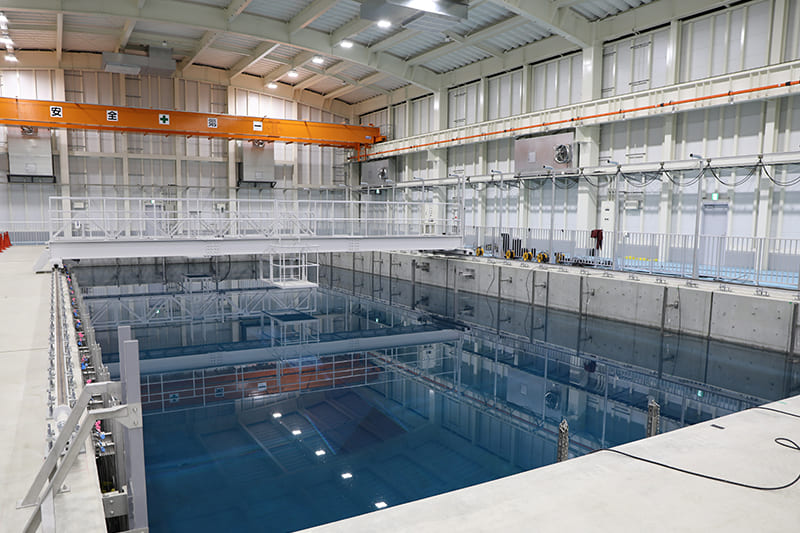
The other site is just south in the town of Namie. Having two sites makes it possible to test-fly unmanned aircraft over longer distances. The Minamisoma site also has other facilities related to unmanned aircraft, including a wind tunnel for testing flight performance and a site for testing durability. Its underwater and maritime facilities include fields that simulate flooded residential areas as well as dams, rivers and harbors. Its facilities for infrastructure-inspection and disaster-response robots include mock buildings and sites to enable testing in realistic environments.
Robot research and development is also conducted at the Fukushima Institute for Research, Education and Innovation in Namie. Its other research areas include agriculture, forestry and fisheries, energy, radiation science and medicine, the industrial application of radiation and the collection and dissemination of data and knowledge on nuclear disasters. The institute engages in various sponsored research projects in these fields and aims to expand collaborations with overseas universities and research institutions to comprise up to 30% of all projects.
The impacts of the earthquake, tsunami and nuclear accident in the Hamadori region have been long-lasting, yet the speed of recovery since the evacuation orders were lifted has been remarkable. And the things people are doing there now have implications not just for Fukushima — they have the potential to contribute to the sustainability and resilience of Japan and around the world.