January 05, 2026
2026: Advancing sustainability together with growth




In October 2020, in search of a new normal during the COVID-19 pandemic, The Japan Times launched Sustainable Japan to convey what is happening in Japan regarding sustainability and how Japan can contribute to the realization of a sustainable society.
Starting with key people who have been active in Japan and overseas since 2018, activities of the Japan Times ESG Consortium and Satoyama Consortium have been disseminated overseas by networking companies and organizations that have been active in various ways toward the realization of a sustainable society. Combining these, The Japan Times launched the new Sustainable Japan Network in June 2021
Government expands efforts on environment and health
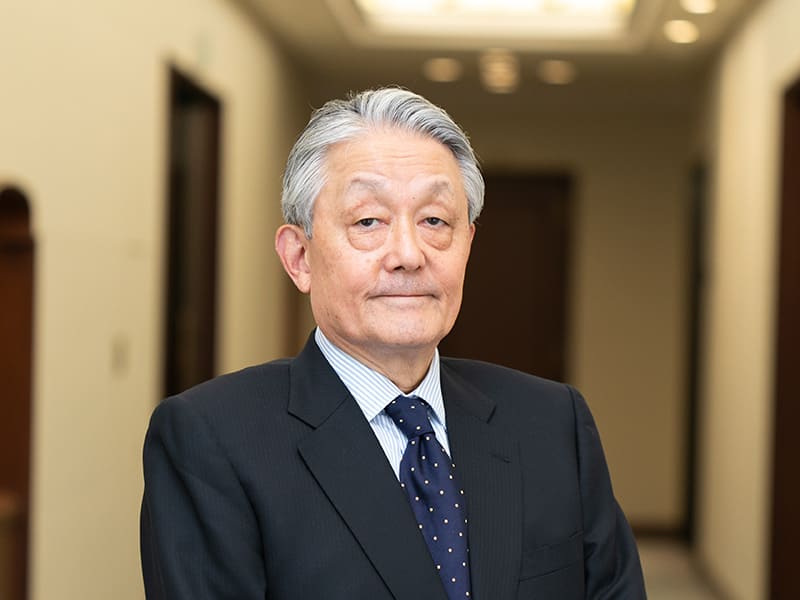
Hirotaka Ishihara
minister of the environment
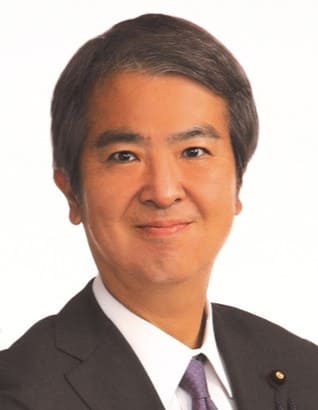
As we welcome the new year of Reiwa 8, I would like to offer a few reflections on the advancement of environmental management and extend my New Year’s greetings.
At COP30, held under the United Nations Framework Convention on Climate Change last November, I attended in person and participated in ministerial-level meetings and bilateral discussions. The conference concluded with agreements to encourage the early submission of nationally determined contributions (NDCs), accelerate mitigation efforts, set an aspirational goal for adaptation finance and establish indicators to measure progress in adaptation — issues that will continue to be discussed this year. In 2026, Japan will continue to strengthen cooperation with the Global South, including through the realization of the Asia Zero Emission Community (AZEC) initiative, and contribute to the development of international rules, such as negotiations on a treaty to address plastic pollution.
With regard to recovery and reconstruction following the Great East Japan Earthquake and the nuclear accident, we will steadily implement decontamination efforts in Specified Living Areas for Returnees and work toward the final disposal outside Fukushima Prefecture of removed soil and waste by March 2045. At the same time, the government will work together to promote the use of removed soil for managed recycling and advance future-oriented initiatives that create and rediscover regional strengths. We will also continue radiation health management and marine monitoring related to Advanced Liquid Processing System-treated water.
In response to the 2024 Noto Peninsula earthquake, we will continue to support affected municipalities through publicly funded demolition and disaster waste management while promoting tourism and community development that draw on the peninsula’s rich natural resources.
To achieve net-zero greenhouse gas emissions by 2050, we will expand the introduction of renewable energy that coexists with local communities, advance and scale up pioneering initiatives in leading decarbonization regions, support the decarbonization of housing and buildings, promote the electrification of commercial vehicles and accelerate the deployment of perovskite solar cells. In addition, through initiatives such as decokatsu lifestyle changes and green procurement, we will stimulate demand for decarbonized products and aim to realize both decarbonization and economic growth through Japan’s GX (green transformation) efforts.
Based on the policy package on mega-solar projects compiled at the end of last year, we will curb renewable energy projects that fail to coexist with local communities while firmly promoting renewable energy that should be encouraged, such as community-led projects driven by local governments and self-consumption systems installed on homes and buildings.
Japan will position the transition to a circular economy as a national strategy, aiming to create a virtuous cycle between resource circulation and economic growth. Through advanced recycling of metals and other materials, the development of networks and hubs linking recycling industries with manufacturing and the full utilization of locally circulating resources, we will strengthen industrial competitiveness, enhance economic security and revitalize regional economies. We will also continue to improve systems and the regulatory environment for the recycling of solar panels.
In advancing nature-positive initiatives, we will work toward achieving the “30 by 30” target — protecting more than 30% of land and sea by 2030 — by promoting the certification of nature-positive sites under the Act on Promoting Activities to Enhance Regional Biodiversity, which came into force last April. We will also enhance the appeal and use of national parks while addressing overtourism, thereby realizing a virtuous cycle between conservation and sustainable use of nature.
By implementing environmental policies in an integrated manner, we will pursue the simultaneous resolution of environmental, economic and social challenges through the realization of three key pillars: net zero, a circular economy and nature positivity.

As part of the Ministry of the Environment’s enduring mission to protect human life and the environment, we will address bear-related damage by ensuring the smooth operation of the emergency hunting system under the revised Wildlife Protection, Control and Hunting Management Act, which took effect last September. Based on the comprehensive package of countermeasures decided upon at an interministerial meeting last November, we will work closely with relevant ministries and local governments and act with a strong sense of urgency.
This year, we will steadily advance measures to address pollution-related health damage, including Minamata disease, which marks 70 years since the official recognition, asbestos-related health relief, heatstroke prevention and other climate change adaptation measures, a nationwide survey on children’s health and the environment, measures to address PFAS chemicals and countermeasures against invasive species.
In the area of nuclear emergency preparedness, we will work closely with local governments to enhance and strengthen disaster preparedness systems by refining regional disaster prevention and evacuation plans through on-site drills and other initiatives.
By deepening cooperation with all relevant parties, I reaffirm my commitment to dedicating my utmost efforts to environmental management, and I conclude with my best wishes for the new year.
Japanese market on track for further reform and growth
Hiromi Yamaji
CEO of Japan Exchange Group
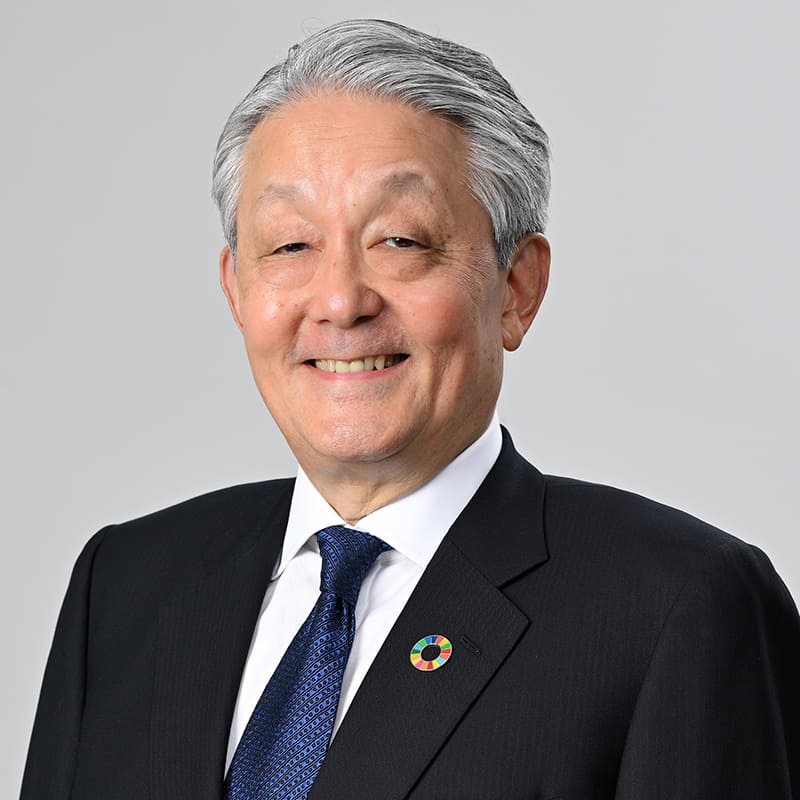
Today marks the first trading day of 2026. Despite the many challenges we have faced, the beginning of the year allows us to reflect on the new opportunities and possibilities that lie ahead.
As a market operator, Japan Exchange Group is prepared to address market needs and continue making progress in 2026. A brief look at last year gives us a good idea of how far we have come. The momentum in the Japanese capital market has been strong. Last year was no exception.
Both the Topix and the Nikkei 225 reached record highs multiple times in 2025. The total market capitalization of the Prime market has nearly doubled since 2022, surpassing ¥1,100 trillion, though the number of listed companies has decreased by 13%.
Japanese listed companies have voluntarily improved their corporate value and made great progress. There is clear evidence of changes in the mindset of Japanese management in the form of increased corporate actions and capital expenditures. We are now in a new era where inaction is too risky.
Global investors have taken note of this transformation. Statistics show that foreign investors’ capital flow increased significantly in 2025.
As global investors’ interest grows, so does the level of engagement expected of Japanese companies, making the mission to improve the attractiveness of the Japanese market more challenging.
However, the transformation happening in Japan is not temporary, but structural, and therefore I believe this momentum will certainly continue.
The structural shift is first seen in the market’s changes. Global investors’ attitudes toward Japan have changed, but also Japanese domestic investors have changed compared to a decade ago.
Many domestic institutional investors now have voting criteria that encourage companies to improve ROE, reduce cross-shareholdings and increase board diversity.
Their level of engagement and commitment to stewardship has increased.
Additionally, Japanese retail investors have begun shifting their savings into investments under the Nippon Individual Savings Account (NISA). Originally introduced in 2014, NISA was significantly expanded in January 2024, creating a new type of investor base in Japan.
Since NISA’s introduction 11 years ago, close to ¥70 trillion has been invested through it, but nearly half of the total investment was made in the last two years.

Furthermore, approximately 40% of these investments have been made directly in Japanese individual stocks, primarily high-dividend stocks. The younger generation is especially driving this momentum.
Since the expansion, 48.8% of the new accounts opened were owned by people under 50 years old, most of whom were younger than 45.
Additionally, 44.6% of the total investments made through NISA come from individuals under 50 years old. Thus, the next generation of Japanese retail investors will continue to lead the market through the new NISA.
These market changes have also accelerated structural changes in Japanese companies.
However, it is important to note that Japanese corporate governance reform is not a recent initiative but rather a long-standing effort.
The Tokyo Stock Exchange (TSE) began promoting these efforts more than two decades ago. Then, under the leadership of Prime Minister Abe, corporate governance reform became one of the three pillars of Japan’s growth strategy.
Since then, the government has supported reform as an integral part of Japan’s strategic focus, recognizing the importance of private-sector growth.
A significant milestone occurred when the Financial Services Agency (FSA) introduced the Stewardship Code and the Corporate Governance Code in 2014 and 2015, respectively.
Over a decade has passed, and there are clear signs of change, such as an increase in the number of independent directors.In 2014, only 6.4% of companies in the first section had a board with one-third or more independent members. By 2025, this figure had grown to 98.8% of Prime-listed companies.
The reform is shifting its focus from “form” to “substance,” including meaningful discussions at the board level and constructive dialogue with investors.
Thus, TSE launched a series of new projects, beginning with the introduction of the Prime, Standard and Growth market segments in April 2022.
Each market segment has a clear concept: Prime is for global companies, and Growth is for startups.

Then, at the end of March 2023, the TSE requested that the management of Prime and Standard companies be mindful of the cost of capital and share price. After around three years, the response has been positive.
Over 90% of Prime companies and 50% of Standard companies have responded by disclosing plans to improve capital efficiency and share price.
However, our goal is not to reach a 100% response rate. We want to encourage companies to continue their efforts to achieve mid- to long-term growth and improve their corporate value.
Unless companies voluntarily take action, progress will not be sustainable.Incentivizing change takes time, but leads to steady, long-term results. Constructive engagement between investors and companies is key to achieving company growth by bringing fresh insights and a better understanding.
As a market operator, we are committed to maintaining a fair, transparent and globally accessible market — an environment in which good dialogue can flourish.
This is just the beginning, not the end. Even this year, we are committed to making the market more attractive by responding to feedback from the market. Many changes will take place in the next few years.
For example, the FSA has implemented the Sustainability Disclosure Requirements’ first phase, which includes Scope 3 disclosure. Large-cap companies are expected to begin preparing this year. At JPX, we will begin preparing to comply with the requirements.
Overall, there is room for improvement, which is precisely why this is an attractive opportunity. I am confident that we will see many positive changes in the Japanese market this year.