March 23, 2026
Mt. Tsukuba area seeks to carve new future for its historic granite
Sustainable Japan Network




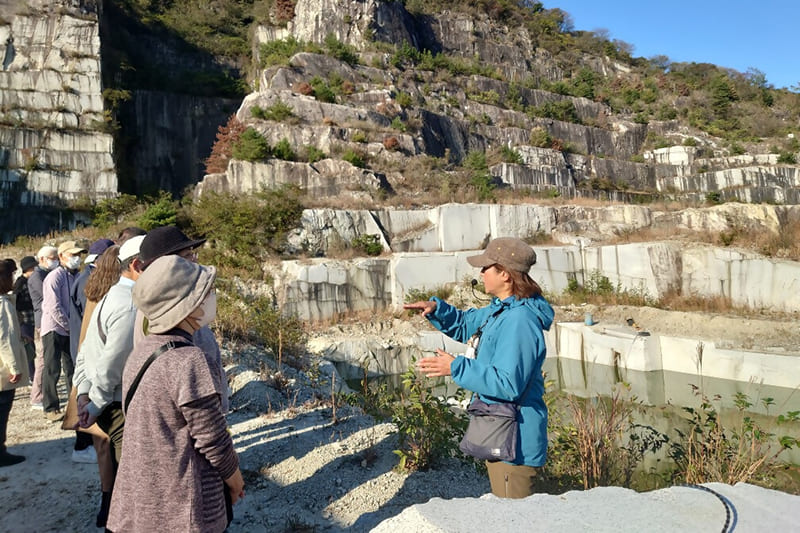
Around Mount Tsukuba in Ibaraki Prefecture lies a major and historic quarrying area. The Tsukuba massif granite of the Mt. Tsukuba Area Geopark was certified by the International Union of Geological Sciences in 2024 as one of the first 55 IUGS Heritage Stones — natural stones that have been acknowledged not only for their geological value, but also for their use in significant architecture and monuments, making them integral aspects of human culture.
Archaeological sites show that stone tools were produced here in ancient times, and various stone monuments, statues and buildings indicate that the local stone industry started around seven centuries ago.
However, in a recent interview with The Japan Times, Mt. Tsukuba Area Geopark Promotion Council specialist Kaoru Sugihara, a geologist and former professor, said that due to declining demand for stone for buildings and tombstones, coupled with increased imports of foreign stone, the number of members in the area’s three associations for stone producers in 2024 had fallen to less than a quarter of its 1992 level.
While the area’s stone industry has found international recognition for its cultural significance, it faces a sustainability crisis. As part of efforts to revitalize the industry, the council organized two bus tours last fall to foster local pride and encourage locals to recognize stone culture as part of their regional identity.
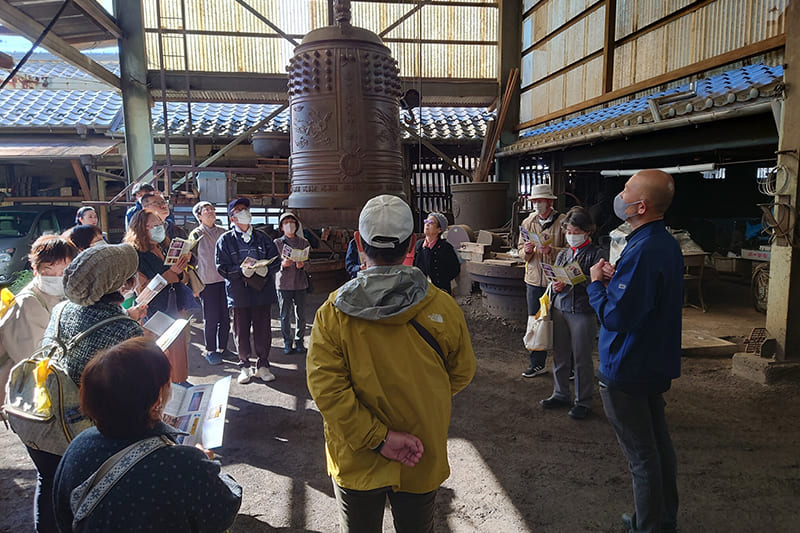
The first tour, held on Nov. 12, featured visits to a casting factory, a sake brewery and a quarry in the major quarrying areas of Maka-be, Kasama and Inada. Sugihara explained that the geopark’s theme includes “stone, soil and water connecting nature and people,” a concept reflected in the tour’s destinations. “The Kotabe Chuzo casting factory produces temple hanging bells cast in molds made of clay derived from local weathered granite. Nishioka Honten brews sake using local groundwater containing abundant minerals derived from granite. The granite quarries around the Inada district, also called the Ishikiri Mountain Range, offer an opportunity to learn about local stone. By visiting these places, we hope to help local people understand the unique features of their home and foster their civic pride.”
The second tour, on Nov. 15, visited several places in Tokyo with structures made of Tsukuba massif granite. They included Tokyo Station Marunouchi Honya, the main building of Tokyo Station; and Maruno-uchi Tokyo Station Square, which use Inada granite, one of the major types of granite produced in the city of Kasama, located northeast of Mount Tsukuba. The tour also visited the Nihonbashi bridge, which uses Inada granite as well as Makabe stone from the city of Sakuragawa’s Makabe district, north of the mountain. At the end of the tour, the participants enjoyed a 360-degree view of the Tokyo metropolitan area and beyond from the Tokyo Skytree Tembo Deck.
Yuji Ito, the secretary-general of the Mt. Tsukuba Area Geopark Promotion Council, said a survey filled out by participants after the tours showed that they were satisfied, especially because the tours included visits to places that usually do not accept individual visitors. “Some people said they enjoyed the detailed explanations provided by specialists at the casting factory and sake brewery on the tour of the Makabe, Inada and Kasama districts,” he said. Sugihara noted that local business owners and professionals can contribute much more than tour guides could, leading to greater understanding and satisfaction among participants. The tour included lunch at a restaurant featuring Japanese yam, a local delicacy. Sugihara stressed the importance of incorporating local gastronomy into tours aimed at promoting regions. The council is planning a few more tours this year.
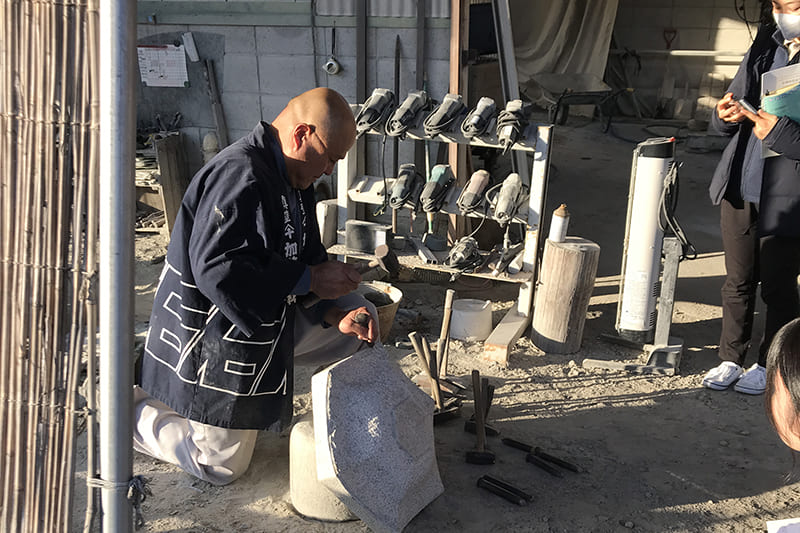
To foster greater interest and familiarity with local stone, the council collaborates with local stone suppliers on product development. One product already on the market is the Gura Gura-Nite stone toy, a set of four granite stones shaped into various polyhedrons and two gabbro pebbles collected from the foot of Mount Tsukuba. Players can stack them up or build an arch. The stones can also be enjoyed as art pieces or paperweights. “Putting them back in the box is like solving a puzzle,” Sugihara said.
This product also serves the purposes of effectively utilizing scrap materials and improving craftsmen’s skills. Sugihara explained that typically over 70% of stone quarried from mountains ends up as waste. “We are seeing more foreign workers in factories,” he said. “For new workers, starting with making things like this using scrap would be great training because mistakes are OK.” Sugihara also expressed hope that such initiatives will spark further collaborations across different fields, fostering innovation.