June 22, 2026
GLIN Impact Capital seeks to build virtuous economic cycles




Over the past century, the global economy has grown dramatically. Rapid expansion in world GDP has lifted living standards and improved the lives of millions of people around the globe. Yet that same growth has come at a cost.
Atmospheric carbon dioxide concentrations have risen in tandem with economic output, fueling an increasingly severe climate crisis. The Gini coefficient — a widely used measure of income inequality — has also trended upward, a reminder that the fruits of prosperity have not been shared equally.
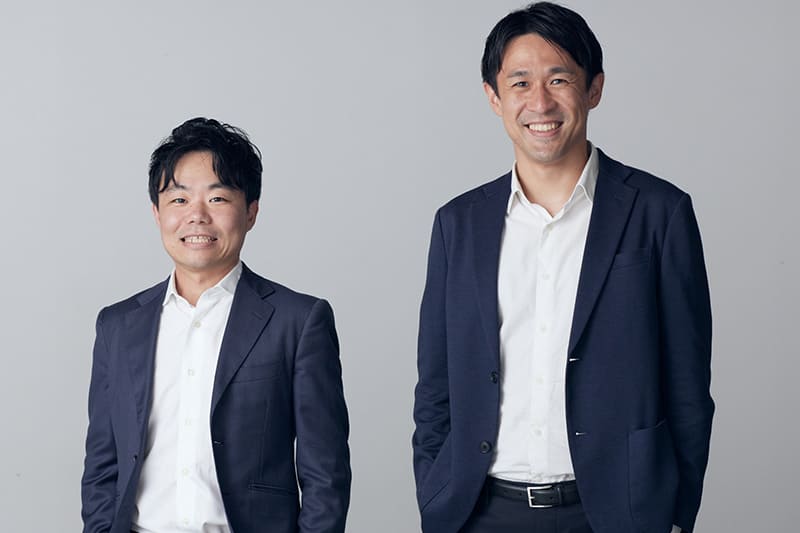
GLIN Impact Capital is one impact investment firm that supports businesses tackling social and environmental challenges, with the goal of aligning economic growth with positive societal impact. Founded in 2020, the firm builds the conditions for impact-driven businesses to grow, connecting them with the talent, capital and networks they need. Its mission is “to build a more sustainable capitalism” — a society in which economic growth and the resolution of social challenges reinforce each other.
Co-founder and general partner Masahiro Hata said: “The concept of using ‘impact’ to describe measurable social and environmental progress in Japan is still relatively recent. In the impact finance space, Japan was often said to be lagging behind global trends, but companies here have long pursued business models that create value for sellers, buyers and society alike — they just hadn’t framed it that way. If businesses that create positive impact can learn to articulate it, they can earn broader support, attract more resources and grow. We want to help build an environment where that kind of virtuous cycle can hold.”
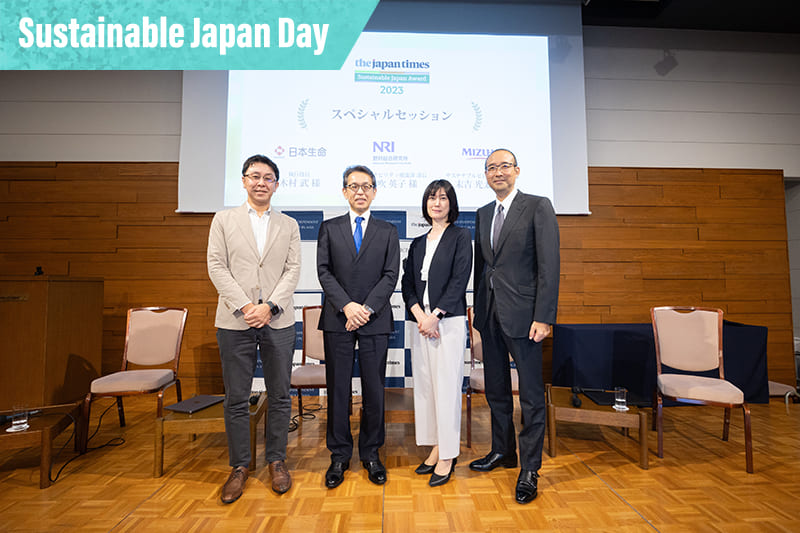
The company was an early mover in Japan’s impact investing market, building its activities around three pillars: investment, consulting and ecosystem development. Beyond supporting individual companies tackling environmental and social challenges, it has contributed to the development of national guidelines and helped shape the broader market infrastructure for impact investing in Japan. Those efforts earned it the ESG Excellence Award at The Japan Times’ Sustainable Japan Award 2025. Its work has also attracted international recognition, with its approach featured at the world’s largest impact investing forums and adopted as a case study at Harvard Business School.
The first pillar, investment, raises capital from institutional investors and deploys it into mid- to late-stage companies tackling challenges in three domains: climate change, healthcare and inclusivity. Beyond capital, the firm provides hands-on support across three stages: helping portfolio companies measure, manage and disclose their impact; scaling their operations; and expanding internationally.
The second pillar, consulting, helps companies identify and articulate the social and environmental value they create through their operations, and incorporate that impact into their broader management strategy. This includes translating that impact into clear, structured disclosure. The goal is not simply to disclose, but to help clients build new customer relationships, strengthen talent acquisition and deepen dialogue with investors.
The third pillar, ecosystem development, reflects the reality that impact finance remains in its infancy. Without agreed-upon rules and standards, even well-intentioned actors struggle to get started. “When there are no guidelines or procedures to follow, it’s hard for anyone to take the first step,” Hata noted. To address this, GLIN has also served in advisory roles for impact-related initiatives supported by the Financial Services Agency, the Ministry of the Environment and the Ministry of Economy, Trade and Industry, contributing its expertise to the development of guidelines on what impact means and how to measure it. The firm also plays a key role in growing the community of practitioners: It co-chairs the venture capital working group of the Japan Impact-driven Financing Initiative, a network of over 80 financial institutions committed to expanding impact finance in Japan, and serves as a gateway connecting Japanese players with global investors.
As interest in impact investing continues to grow, the market may be approaching a historic turning point. The Government Pension Investment Fund (GPIF) — the world’s largest pension fund — has included “exploring impact-conscious investment” in its medium-term management plan for 2025 to 2029.
The precedent set by ESG investing offers a compelling analogy. When GPIF signed the U.N.’s Principles for Responsible Investment in 2015, it sparked a wave of interest among Japanese institutional investors. By 2017, the fund had begun actively investing along ESG lines, and the ripple effect on the broader market was enormous — Japan’s sustainable investment assets expanded rapidly in the years that followed. “GPIF putting impact investing on the agenda is a powerful signal,” Hata said. “It tells the market that impact is no longer a niche conversation.”
Looking ahead, Hata sees “systems investing” as the next frontier. As climate change, poverty and resource scarcity continue to worsen, investing at the level of individual companies may not be enough to drive the structural change these challenges demand. The emerging approach seeks to catalyze change across entire social and economic systems, with multiple players joining forces around shared goals. Questions remain — including who should play the coordinating role. But the underlying goal is clear: to deploy limited capital more effectively, and to help build a society in which future generations can thrive in harmony with the natural world. It is a frontier GLIN intends to help shape.