August 03, 2026
NRI calls for national discussions on updating SDGs




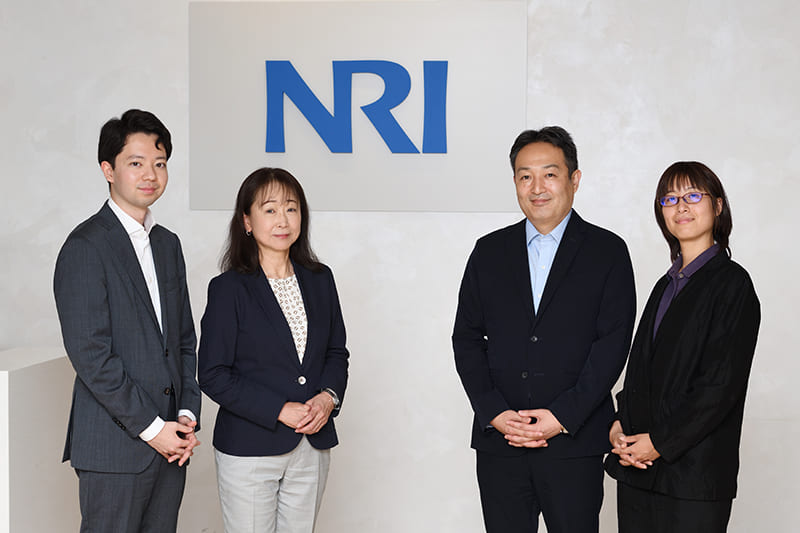
As the 2030 deadline for the United Nations’ sustainable development goals approaches, the Nomura Research Institute has called for nationwide discussions on the goals focusing on what Japan and the world should do next: the Beyond 2030 Agenda.
Before potential new global targets are set, the institute launched a study group this year to bring together experts from across fields to examine how Japanese business can help address future global challenges.
Amid growing concern over slow progress toward the goals, global discussions have already begun on how to update them for the future. According to the U.N.’s 2026 report on the SDGs, only 36% of the 139 targets are on track or making moderate progress, while nearly half are moving too slowly and 15% are in reverse.
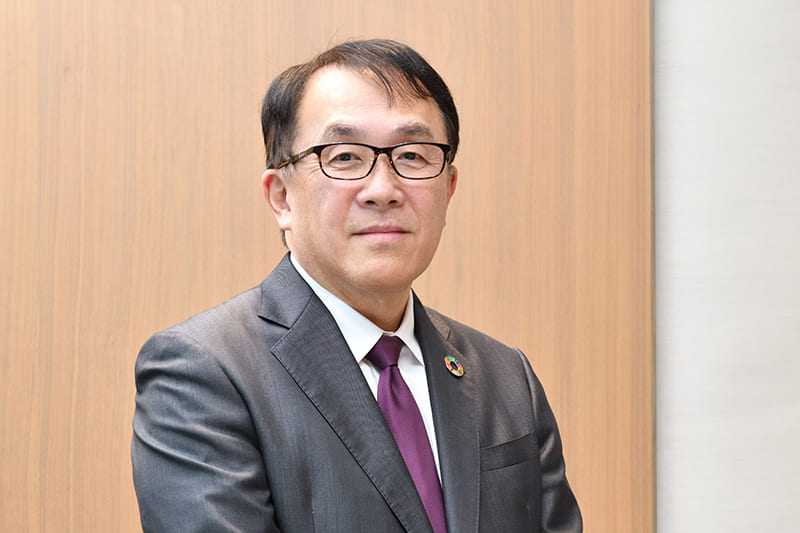
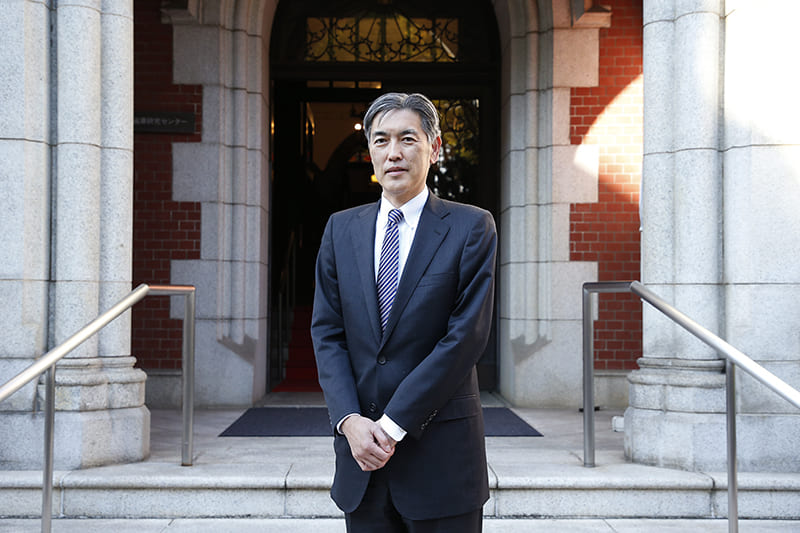
“They present a sweeping vision, but people often struggle to see the goals as their own issues,” said Tomohiko Taniyama, senior chief researcher at NRI’s Center for Strategic Management & Innovation. “Beyond the goals themselves, there are also challenges in how they are implemented in society.”
In 2015, all U.N. member states adopted the 2030 Agenda for Sustainable Development. At its center are the 17 goals, which call for action and cooperation by all countries. The goals’ wide-ranging issues include ending poverty, improving health and education, reducing inequality, easing climate change, preserving marine life and driving sustainable economic growth.
Global attention has not been evenly distributed across these various goals. “Goals related to clean energy and global warming have made some progress, supported by business and finance, but other goals have failed to generate enough business momentum to move people and capital, resulting in limited progress,” said Masayuki Isoya, a consultant at NRI’s Energy Industry Consulting Department.
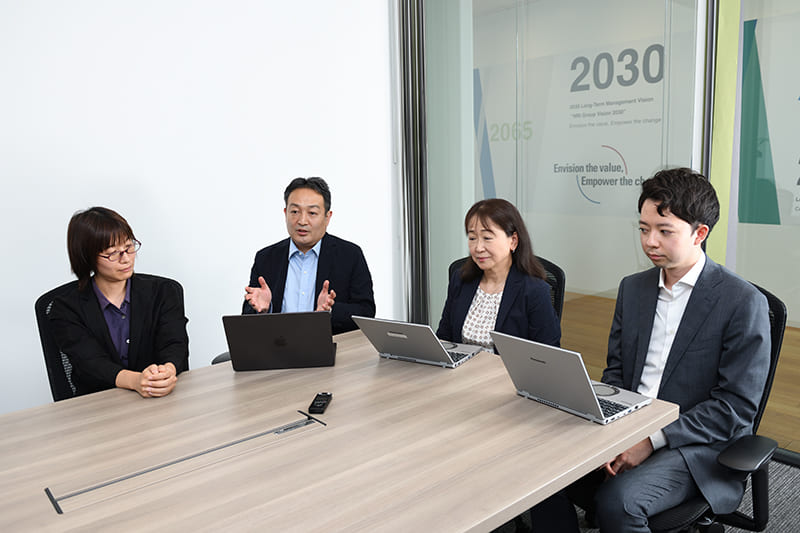
To better understand the latest global opinions on how to revise the current SDGs, NRI conducted interviews with 12 international organizations in February, including the U.N. Conference on Trade and Development (UNCTAD), the United Nations Development Programme (UNDP), the International Labour Organization (ILO) and the World Health Organization (WHO). As a result, the research institute identified three key areas for revising the goals: the time frame, the topics covered and social implementation.
On the time frame, it is essential to set long-term goals that include future generations. On the topics, new issues such as artificial intelligence have emerged over the past decade, while some existing themes have become more complex. Finally, we need to build a solid system to achieve the social targets, and they must work for people in different regions and from diverse perspectives. “Localization will likely be a key concept for social implementation in helping people understand the grand vision in their own contexts,” said Mai Nakata, a senior consultant at NRI’s Management Consulting Department.
“The ideal approach to achieving the SDGs was to work on all three main areas — environment, economy and society — at the same time. But the reality is that the environmental agenda moved far ahead as it became closely tied to green energy and its business, leaving social issues behind,” Taniyama said. So people started to think they should tackle social issues anew and work toward possible solutions, he added.
In the process of reaching the development goals by 2030, social issues have not only made little progress but have wide ramifications, said Isoya. “Unlike the environmental agenda, social issues are multidimensional because they are shaped by historical and regional context,” he said. “Countries approach them from different standpoints: Some are still pursuing economic growth, while others are already wealthy. Viewpoints are also different among developed nations. For example, the gap between rich and poor is wide in the United States, but far narrower in Northern Europe.”
One example of multidimensional social issues is “care.” For developed countries, the concept of care is linked to the rising importance of healthcare and elderly care amid rapidly graying populations. In developing countries, however, the word “care” is often linked to gender inequality because women and girls are burdened with the unpaid labor of caring for children and elderly parents, which deprives them of job opportunities. “Experts say the economic value of the unpaid care and domestic work should be made visible, as it underpins the socioeconomic system,” Nakata said.
“The new focus is that ‘care’ is not just a labor burden, but a broader concept of supporting those who are willing to participate in society with dignity and autonomy. It also means the acts of caring for oneself, for others and for the planet,” she said.
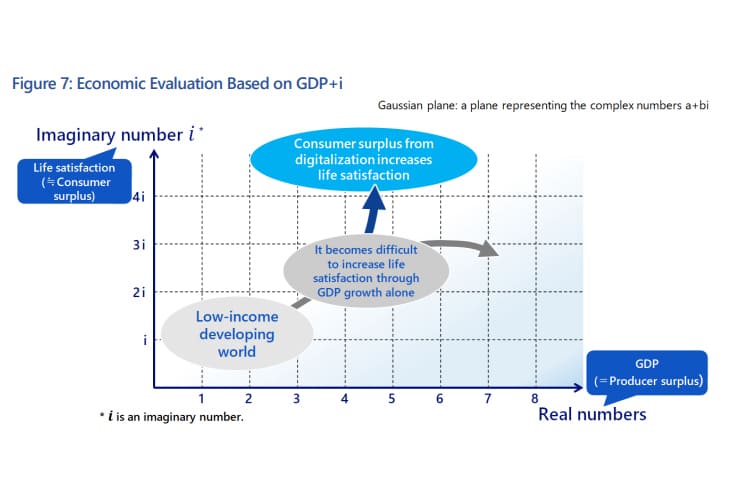
Moreover, in the Beyond 2030 Agenda, society-related concepts that are gaining new attention are people’s happiness and well-being, Isoya continued. Some experts define well-being as a broader concept covering not only people but the whole planet, making it easier to examine social and environmental agendas together, he said.
The current indicators for the SDGs do not include subjective measures, such as assessing how happy people are in their lives. Isoya said that bodies such as the Organisation for Economic Co-operation and Development are studying ways to gauge personal happiness, and that such indicators are likely to be included in the post-SDGs agenda.
Another key social issue is the aging of populations across many parts of the world. Forecasts for the coming decades show that population growth will gradually halt and decline in more countries, though global demographic debates long focused on the fear of population explosions, Isoya said. This topic involves various points of discussion, he said: Besides issues of medical and nursing services for the elderly, they include preventive medicine, ageism and reskilling to support longer life.
NRI experts also said totally new elements of social issues have emerged in recent years as artificial intelligence and certain aspects of culture that do not appear in the current SDGs started to have large impacts.
Global experts are highlighting the importance of culture and its contribution to the economy, calling it the creative economy or “orange economy.” In recent years, they have come to acknowledge culture as a “global public good,” insisting that it plays an essential role in a broad range of sustainable development goals, including climate change, poverty, gender equality and digital inclusion, Nakata said. “The world is shedding a spotlight on culture’s value as the foundation to live as a human being, not just as the power to motivate the economy and society,” she said.
As a wide range of topics is likely to emerge for the post-SDGs agenda, how can Japan contribute to the world?
NRI experts said Japan could support the world in several ways, including through its technology and its ability to build platforms and foundations for addressing challenges in labor and nursing care. Taniyama said Japan’s experience in revitalizing remote communities could also make a valuable contribution.
Currently, global experts are working on future-generation indicators for the post-SDGs era. They are known as “Beyond GDP” indicators, reflecting concerns that GDP remains as part of the current SDGs targets. In a recent report, expert groups proposed indicators under 22 themes for achieving the fair, inclusive and sustainable well-being of people and the planet.
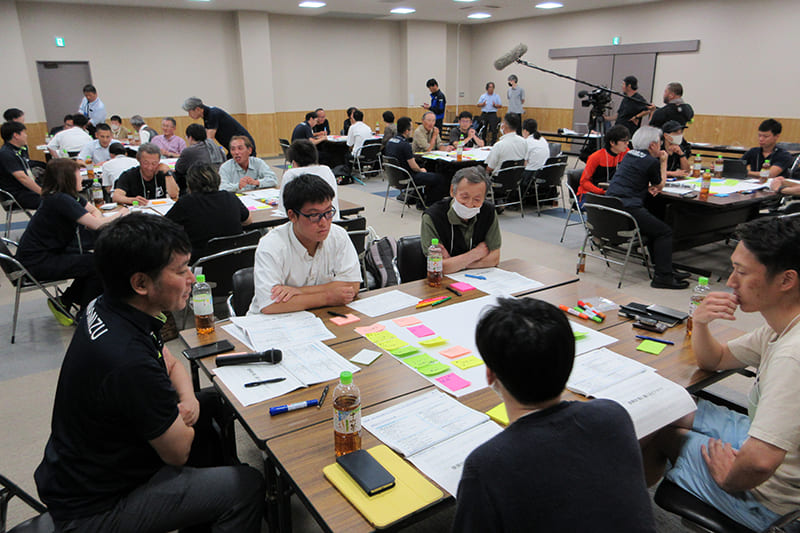
In April, the research institute held its first roundtable meeting on the Beyond 2030 Agenda. It plans to hold more meetings to share global trends and develop new proposals with Japanese companies, academics and central and local governments, aiming to compile a final report early next year. “Rather than only discussing ideas and concepts, we hope to put forward proposals from Japan on how to implement them in society,” Taniyama said.