October 30, 2026
Mano’s wood-fire cuisine conveys mountain blessings
Destination Restaurants 2026


PHOTOS: TAKAO OHTA
Karuizawa, a mountain resort area just over an hour from Tokyo by shinkansen, has long been popular with vacation-home owners and tourists. But recently more and more people are coming to Karuizawa for its cuisine. Among the restaurants drawing visitors to the area are Restaurant Naz, a 2023 Destination Restaurants winner, and Mano, one of this year’s honorees.
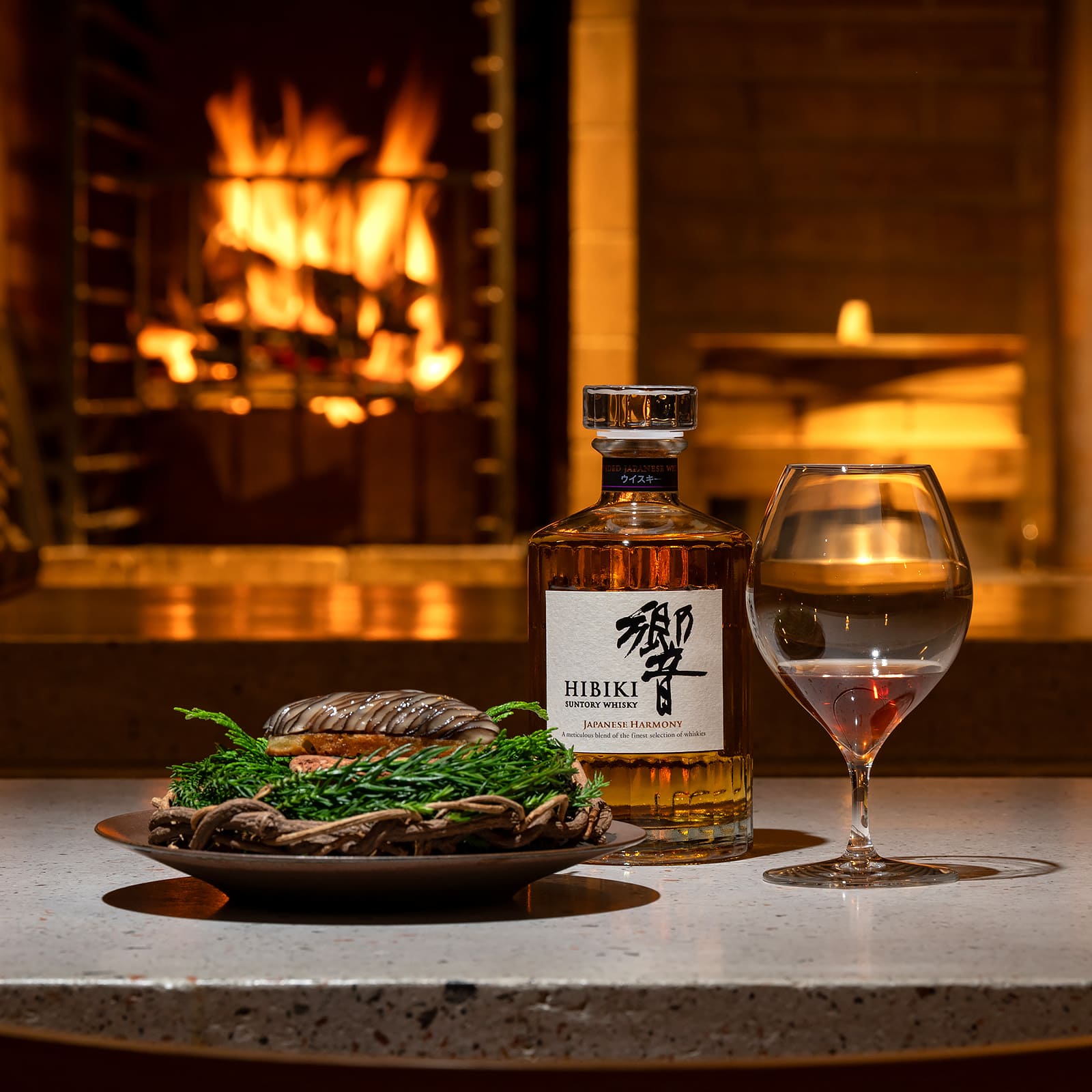
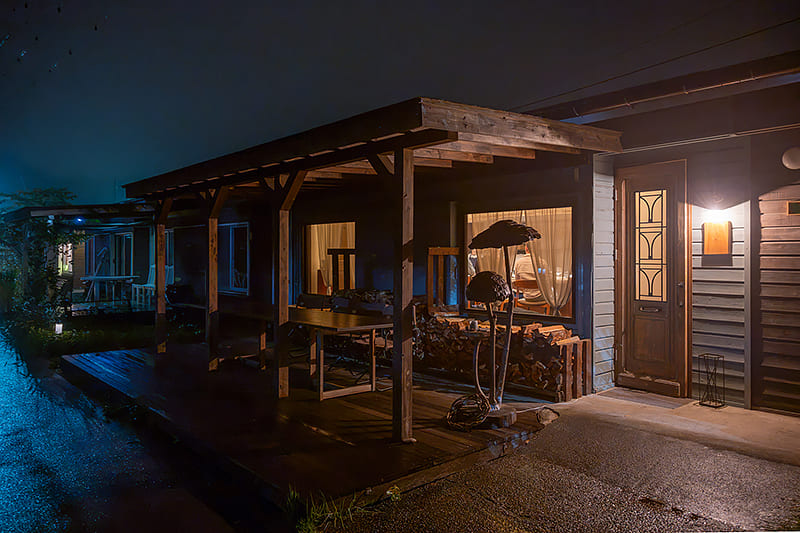
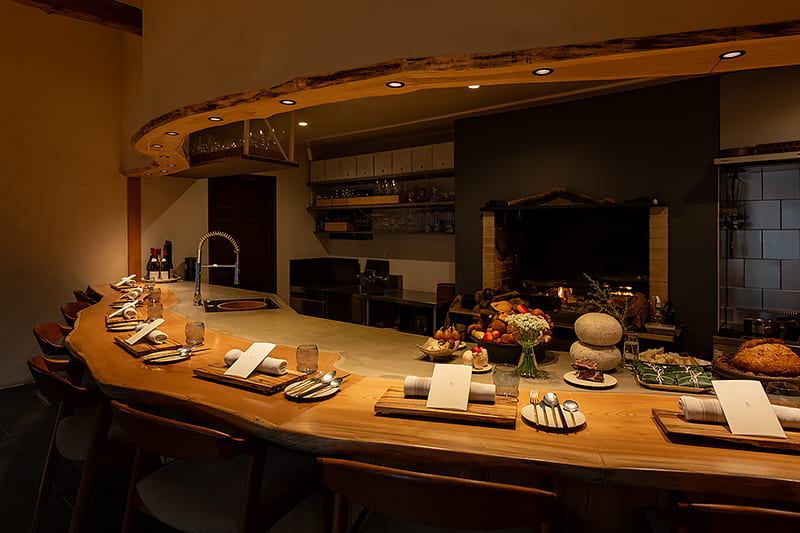
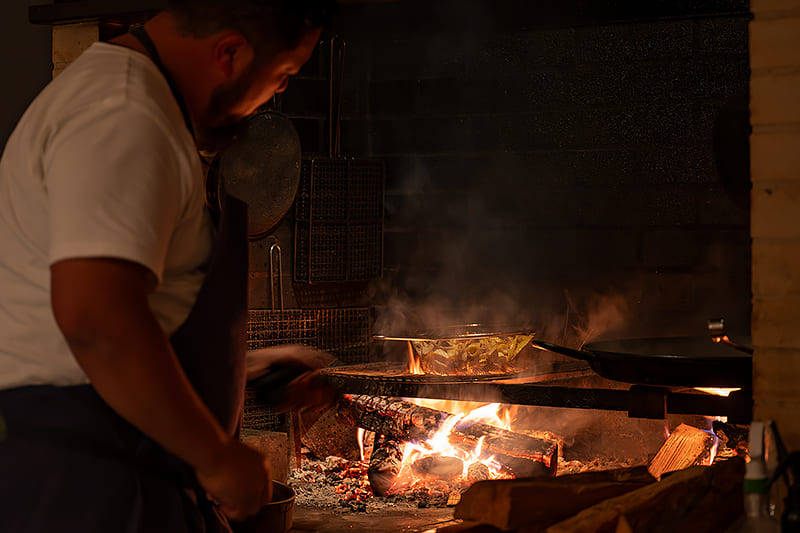
Mano opened in July 2024 in Minami-Karuizawa, a nature-filled area at a slight remove from Karuizawa’s town center with its bustling tourist scene. The restaurant has eight counter seats. Behind the counter a wood fire burns, sending up bright flames. For owner-chef Ryuichi Nishimoto, who discovered firewood cooking as a child on a family camping trip, choosing wood fire as a heat source was a natural progression.
Over the past decade, restaurants with wood-fire cuisine such as Asador Etxebarri in Spain’s Basque region have become a focus of attention. But each one uses fire differently.
Nishimoto spoke about the subject with intensity. “A lot of restaurants with wood-fire cuisine actually use embers. When you burn firewood until the flames are gone and cook with live embers, which have a far-infrared radiation effect, the heat is stable, so it’s easier to use. But I want to utilize all the heat I can, starting just after the fire is lit — otherwise the fire that burns before it turns into embers goes to waste.”
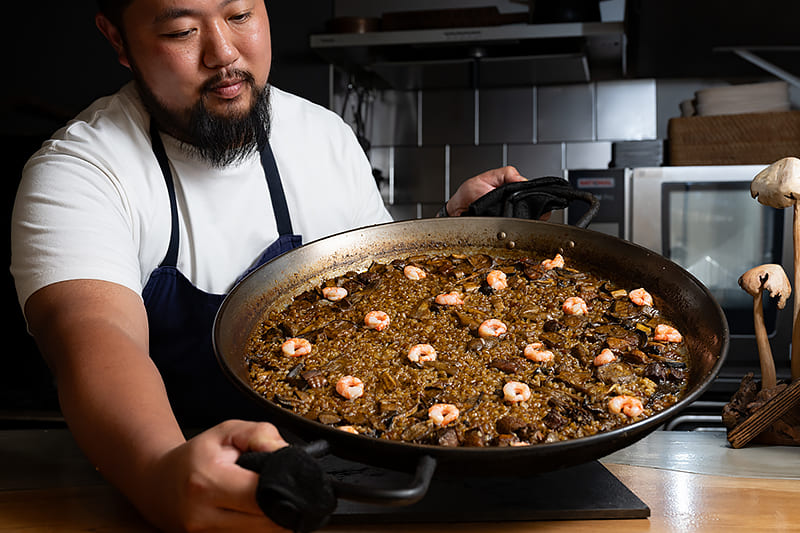
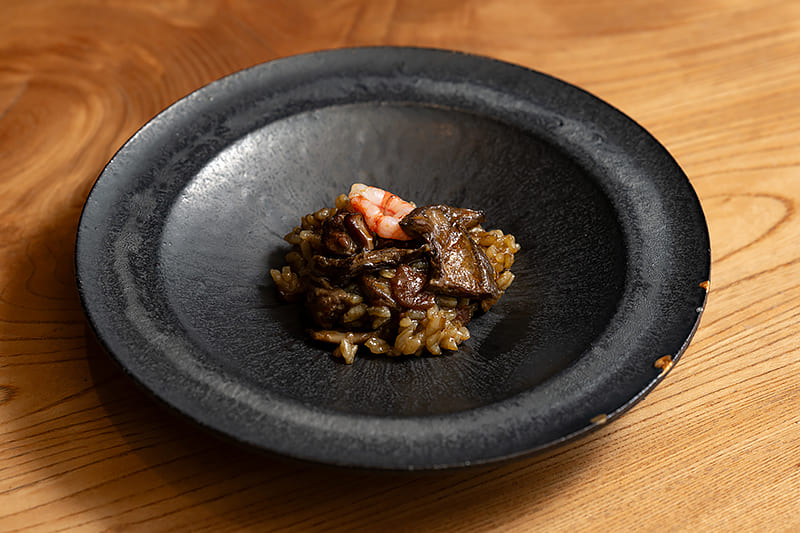
The 10th course, “Rice with boletus, chicken and shrimp,” is a paella rich in umami from ingredients such as mushrooms, sweet shrimp and chicken.
Born and raised in Shizuoka Prefecture, Nishimoto started gathering wild vegetables on riverbanks and rice-field paths from around the age of 3 and pored over pictorial guides to wild vegetables (rather than the pictorial encyclopedias of monsters popular with other children), so Mano’s cuisine is truly the embodiment of his way of life. He started cooking with wood fire not because it was a popular trend, but as the natural result of delving deeply into things he has been engaged and interested in since childhood.
After graduating from the Tsuji Culinary Institute in Osaka, Nishimoto worked at a Spanish restaurant in Osaka before traveling to Spain, where he honed his wood-fire cooking skills. Based in Kita-Karuizawa after returning to Japan, he worked at a company engaged in a circular-economy business encompassing areas from forestry to tourism, and studied subjects including forest environments and firewood. On the foundation of these experiences, he continues to explore his own unique approach to wood-fire cuisine.
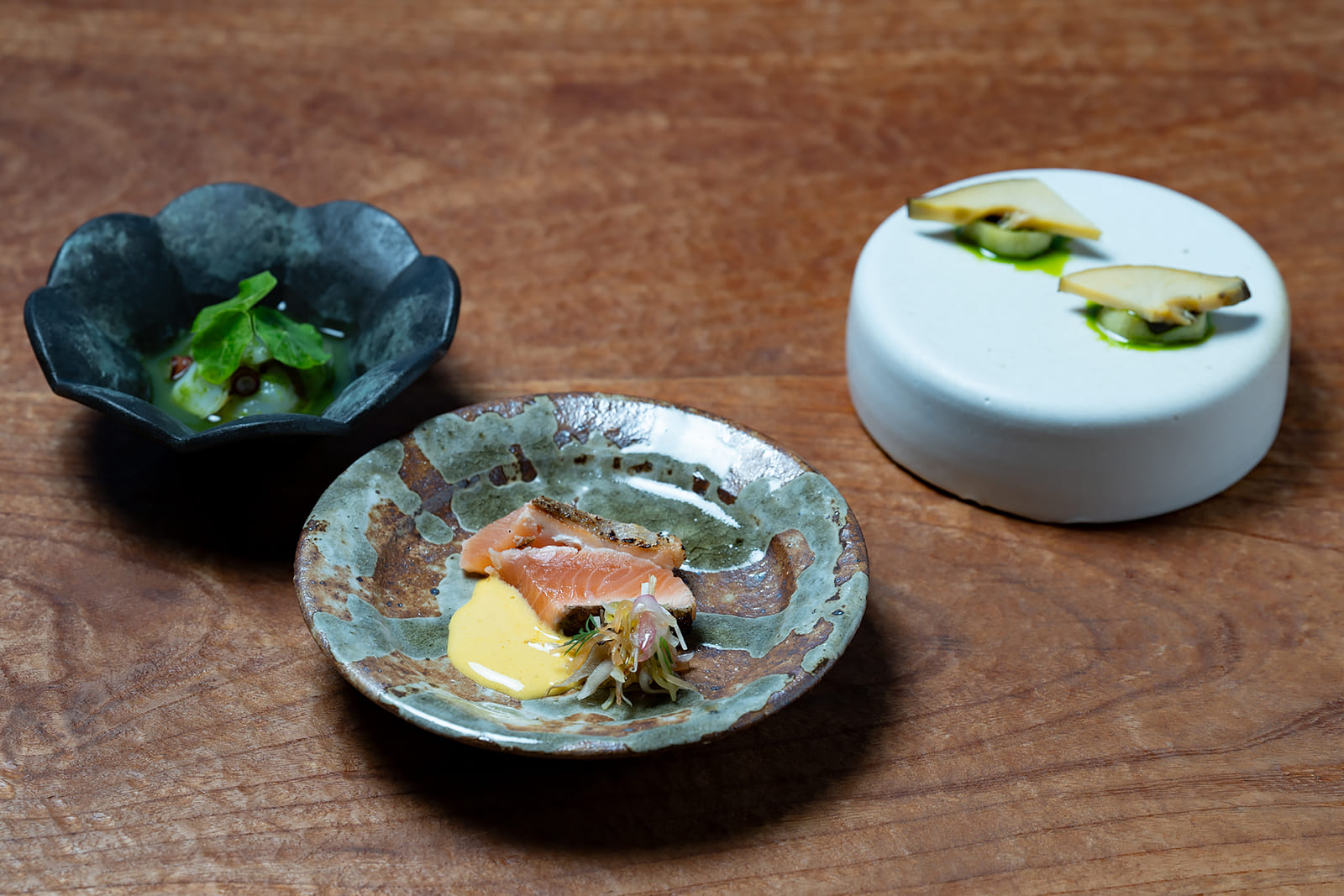
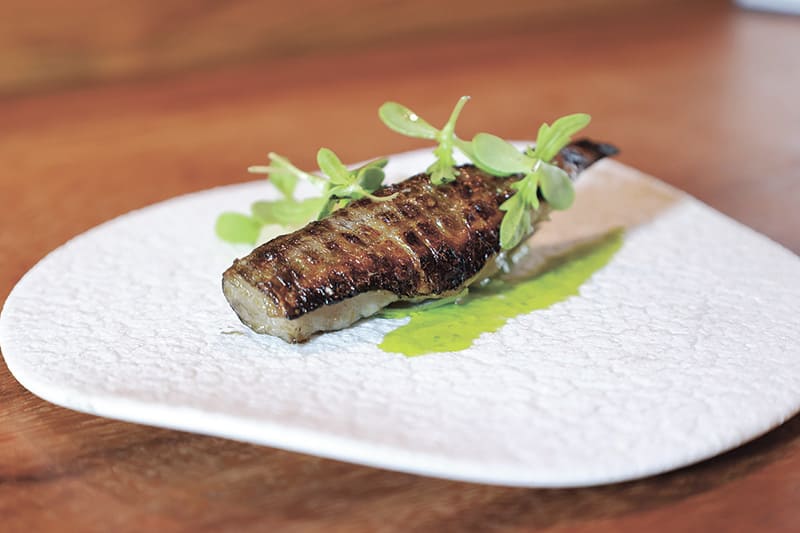
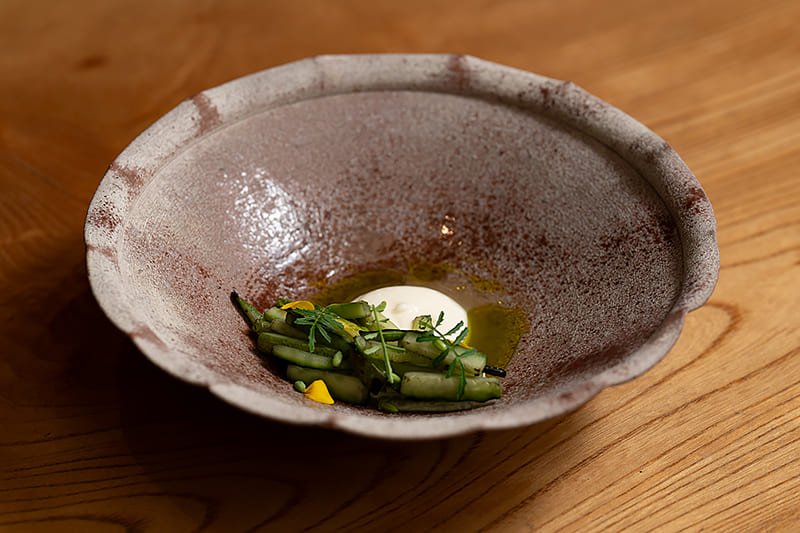
Depending on the ingredients, Nishimoto uses either of two types of firewood: long-burning Japanese oak (nara) or hot-burning Japanese larch (karamatsu). Ingredients are sourced mainly in the surrounding area. While products such as traditional local Saku Kodai cucumbers and whitespotted char (iwana) are purchased from producers, dishes may also include river fish and mountain vegetables caught and foraged by Nishimoto himself. In autumn, colorful mushrooms gathered by Nishimoto and staffers in the Northern Alps foothills play a leading role.
Nagano Prefecture(Innovative)
Mano
553-3 Hocchi, Karuizawa-machi, Kitasaku-gun, Nagano Prefecture
https://www.instagram.com/mano_karuizawa/
When he worked as a sous-chef at a restaurant in the Nagano Prefecture village of Hakuba before striking out on his own, Nishimoto entreated a master of mushroom foraging in his 80s to accept him as a student and learned more about how to identify mushrooms, where to find them and how to eat them. Gathered several times a week starting in the morning, these blessings of the mountains are a veritable feast.
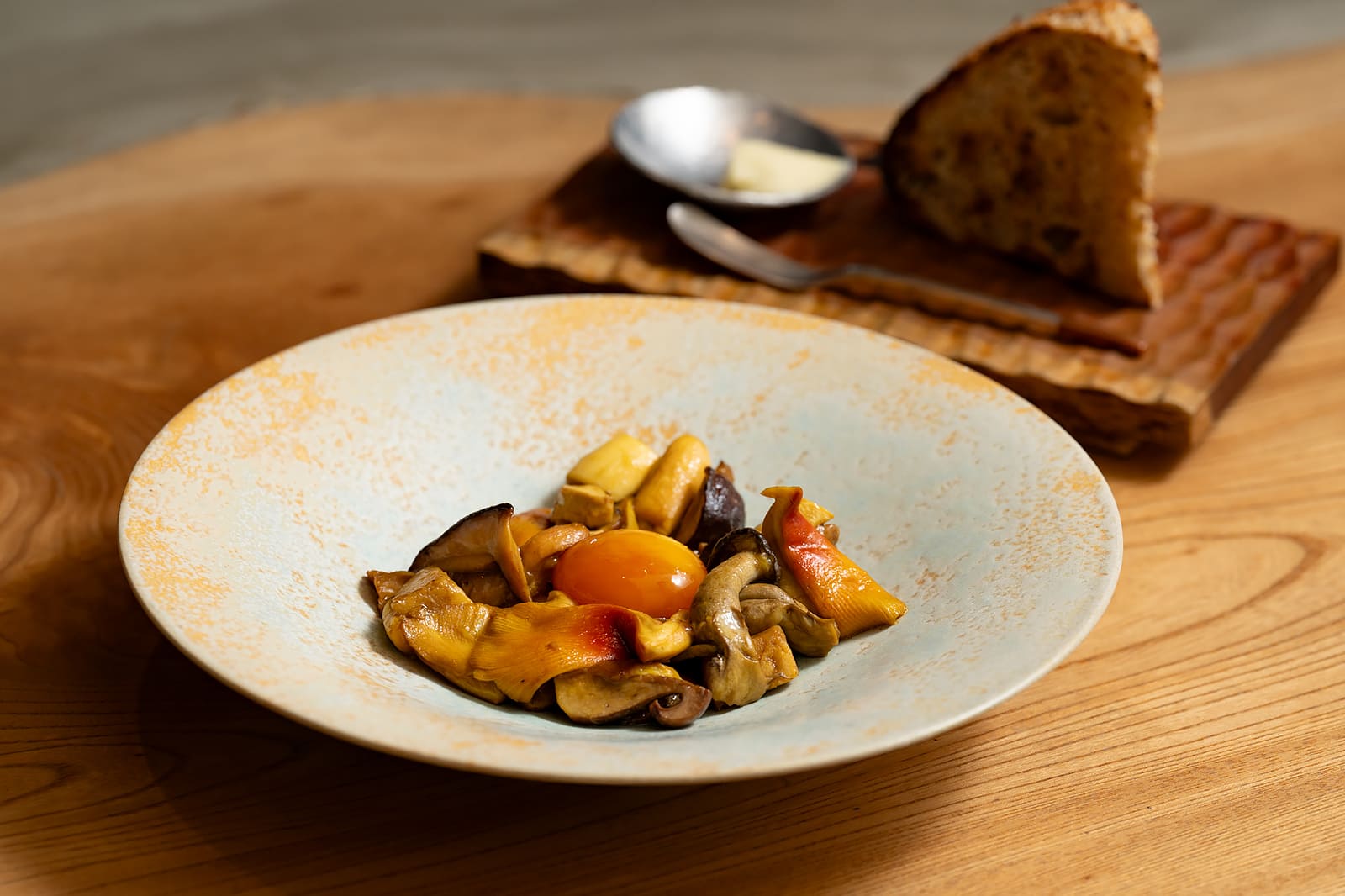
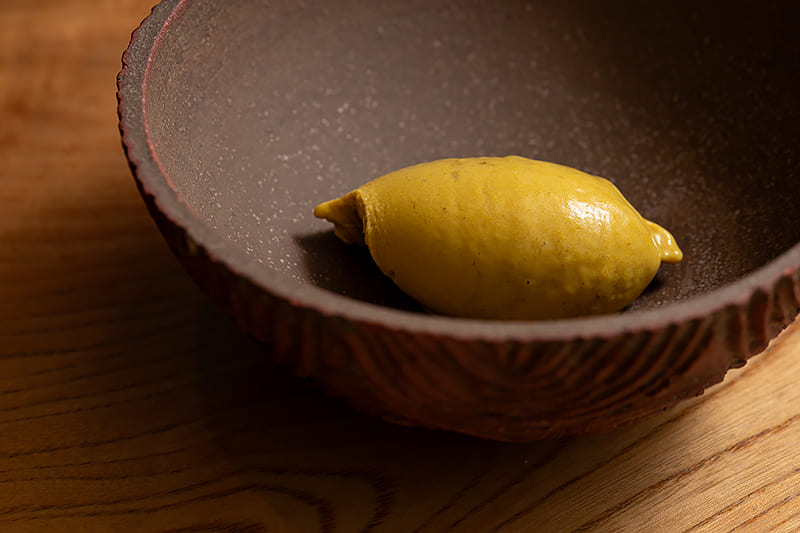
A dish that might be called the crystallization of these bounties is the “mushroom and egg yolk” served in the course menu, priced at ¥17,600 ($120), tax included. On one autumn day the dish was made with 13 types of mushrooms, including six kinds of boletus as well as giant funnel, Caesar’s mushroom and Ramaria fumigata, a type of coral fungus. Mushrooms break apart easily when raw, so they are steamed to increase firmness before being cooked over the high heat of a wood fire. The amino acids of each type of mushroom combine to produce an exponential increase in umami. The flavor of the dish differs each time, depending on the types of mushrooms that are foraged. This is truly the flavor of the mountains at a particular time.
From late autumn through winter, the star of the course menu is game meat. Throughout the year, bounties from the mountains are incorporated into everything from appetizers to desserts to end-of-meal herbal teas, with wood fire’s distinctive aromas enveloping some ingredients lightly and others heavily, accenting each course. Firewood is both a heat source and a seasoning. Nishimoto’s aim is to use cooking methods and ingredients that are as primitive as possible. “That’s why I don’t feel comfortable categorizing it as ‘innovative’ cuisine,” he said.
At the opposite end of the spectrum from Mano’s approach is the popular image of Karuizawa, an area that developed from the postwar period on as a consumption-oriented tourism destination offering leisure facilities and shopping. Nonetheless, Mano has proven that even a small eight-seat restaurant can enhance local brand value and attract visitors without heavy capital investment or large-scale employment if it clearly conveys the area’s merits. This will surely prove to be a new breakthrough for regional economic development.
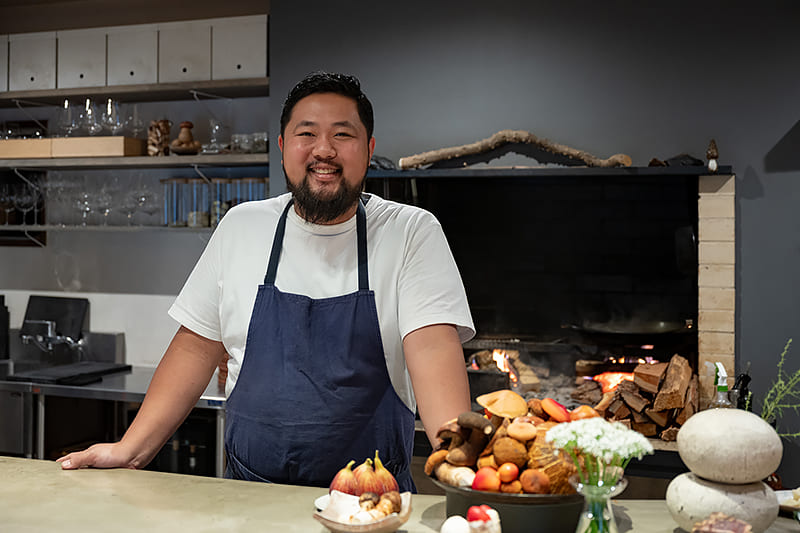
Ryuichi Nishimoto
Born in Shizuoka Prefecture in 1996. After graduating from the Tsuji Culinary Institute, Nishimoto was employed at a Spanish restaurant in Osaka, subsequently worked in Spain for a year and a half, then gained forest and firewood experience at Kitamoc, a company engaged in forestry management and other activities in Kita-Karuizawa. Starting in 2020, he demonstrated his culinary skills at a restaurant run by the company Snow Peak in the Nagano Prefecture village of Hakuba. He opened Mano in July 2024.
軽井沢の山の恵みを、薪火料理で表現する一軒
幼少時のキャンプがきっかけで薪火料理に目覚めたという『mano(マノ)』オーナーシェフ、西本竜一が熱源に薪を選んだのは自然な流れだった。西本はスペインで薪火料理の技術を身につけ、北軽井沢で林業や観光業を行う会社で森の環境や薪についても学んだうえでこの料理を追求している。
西本が扱う素材は主に近隣でとれたものだ。ときに西本自ら、川で獲った魚や、山で採ったキノコ、山菜を使うこともある。前菜から最後のハーブティーまで通年、山の恵みが盛り込まれるなか、薪火ならではの薫香を強弱つけてまとわせ、コースにアクセントをつけていく。薪は熱源であり、調味料でもある。『mano』の料理は、3歳の頃から山菜を採っていたという西本の生き方そのものなのだ。
そんな『mano』は大型設備投資や大量雇用をせずとも、土地のブランド価値を高め、人を呼び込むことができると証明した。それは間違いなく、地域経済発展のための新たな突破口になるだろう。
Return to Sustainable Japan Magazine Vol. 57 article list page