August 31, 2026
Cosplayers from around world unite in Nagoya summit




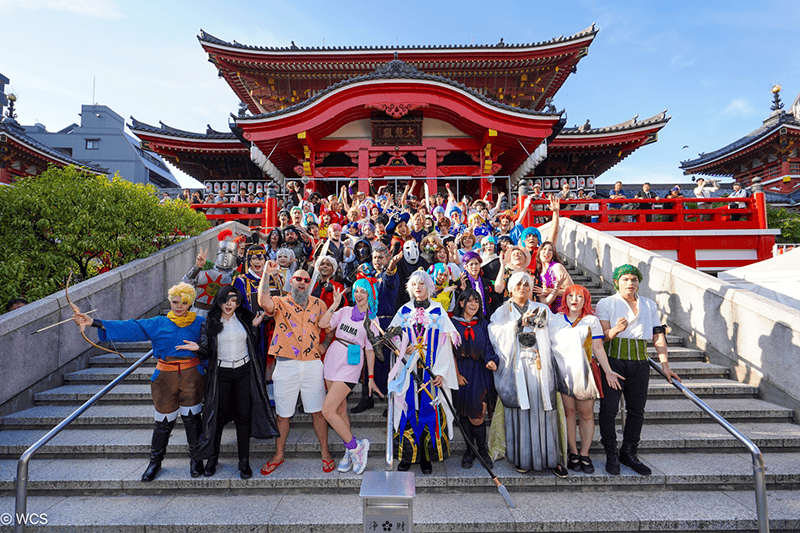
Cosplayers dressed as characters from Japanese manga, anime, video games or TV shows gathered from around the world on the weekend of July 31 to Aug. 2, bringing splashes of color to the streets of Nagoya. The World Cosplay Summit 2026 welcomed representatives from 40 countries and regions. With the city itself becoming part of the stage, participants connected across national and cultural boundaries through their shared passion for Japanese pop culture.
Held annually since 2003, primarily in Aichi Prefecture, the World Cosplay Summit is one of the world’s largest cosplay events, aimed at promoting international cultural exchange through cosplay. At the World Cosplay Championship, teams selected through qualifying competitions in their respective countries and regions come together to compete in costume craftsmanship, acting and stage performance. This year’s final was held on Aug. 2 at the Aichi Prefectural Arts Theater’s Main Hall, where representative teams took to the stage to compete for the world title.
However, the WCS extends far beyond the championship stage. A wide range of programs took place at venues across Nagoya, primarily Oasis 21, a multipurpose complex in the heart of the city, as well as Hisaya-odori Park and the Osu shopping district. Across these venues, cosplayers, photographers, fans and tourists from Japan and abroad came together to meet and connect through cosplay. Oasis 21 alone drew a total of 259,000 visitors over the course of the event.
At the opening ceremony on July 31, a red carpet was rolled out along the grand staircase at Oasis 21, where representatives from participating countries and regions and other guests appeared in colorful costumes. Aichi Gov. Hideaki Omura and Nagoya Mayor Ichiro Hirosawa also joined the festivities in costume.
A day earlier, during a courtesy visit by representative cosplayers, Omura welcomed the group dressed as Muzan Kibu-tsuji from “Demon Slayer.” “Welcome to Aichi and Nagoya,” he said, expressing his hope that the three-day WCS would be a success and encouraging the participants to enjoy both Japan and the event. Hirosawa appeared as Himmel from “Frieren: Beyond Journey’s End.” “We are delighted that Nagoya is the home of the World Cosplay Summit,” he said, describing cosplay as “a treasure that Nagoya is proud to share with the world.” He added that the city would continue to support cosplayers as a “cosplay host town.”
Corporate sponsors supporting the WCS were also represented on the red carpet. Satoshi Osumi, head of Japan Post’s Tokai regional office, appeared in the uniform of a Meiji Era (1868-1912) postal worker alongside the company’s bear mascot, Posukuma. Japan Post seeks to connect people, communities and the world while staying close to individuals throughout their lives and bringing warmth to their hearts. At the WCS, the company not only engaged with visitors but also helped participating delegations arrange the shipment of their belongings, supporting an environment in which cosplayers from overseas could take part in the event with greater peace of mind.
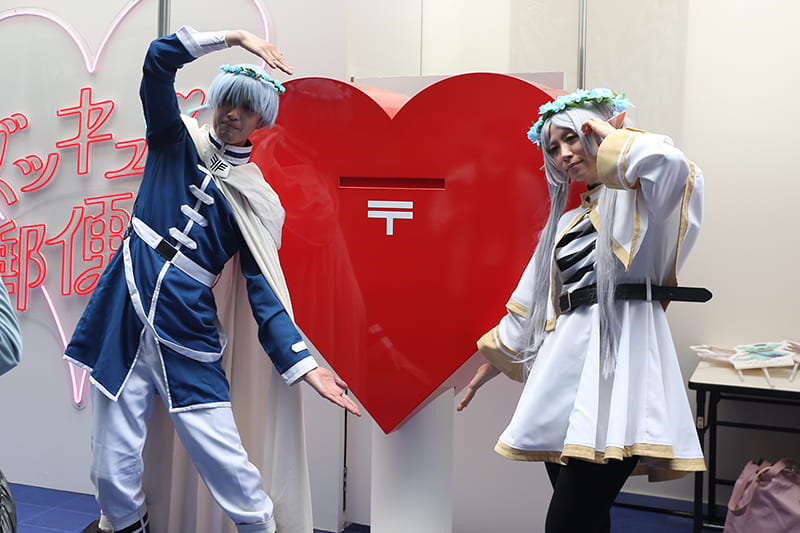
At Oasis 21, Japan Post also set up a booth inspired by its “Zukkyun Post Office” concept. Featuring heart motifs and the Japanese concept of “kawaii,” or cuteness, the pop-up has proved popular with younger generations, particularly Gen Z. The first Zukkyun Post Office opened for a limited time in Tokyo’s Shibuya district in August 2023, and subsequent pop-ups have been held in locations including Ikebukuro and Osaka as part of Japan Post’s efforts to make post offices feel more familiar and accessible to younger people.
At the WCS booth, visitors could pose for photos against a large red heart and neon signs, and those who shared their photos on social media using a designated hashtag received a photo card featuring an image taken on the spot. Posukuma also made an appearance, engaging with cosplayers and fans from Japan and abroad.
Meanwhile, Nagoya-based Brother Industries has supported the WCS for many years, helping cosplayers pursue their creativity through its manufacturing technologies. Cosplay involves far more than simply sewing costumes; embroidery, embellishments, props and other details crafted by cosplayers themselves all play an important role in bringing characters and their worlds to life.
At this year’s booth, Brother showcased products including embroidery machines and printers, along with T-shirts and other items created using its technologies. Original WCS characters were also on display. Such technologies give cosplayers more ways to turn their ideas into reality and expand the possibilities of creative expression.
The following day, Aug. 1, the Osu Cosplay Parade, one of the WCS’s signature events, took place around Osu Kannon Temple and the surrounding shopping district. Around 1,000 cosplayers — including representatives from participating countries and regions as well as other participants from Japan and abroad — paraded through the streets in an array of costumes, drawing crowds of spectators who waved and took photos along the route.
At the championship on the following day, the representative teams took to the stage, showcasing not only the craftsmanship of their costumes but also their acting, stage production and ability to bring their chosen works to life. The championship was livestreamed, allowing cosplay fans around the world to follow the competition unfolding onstage in Nagoya.
The judging panel included voice actor Toshio Furukawa, known for roles including Piccolo in “Dragon Ball”; singer and TV personality Shoko Nakagawa; and kabuki actor Seishiro Sawamura. In addition to the overall rankings, awards were presented across a wide range of categories, including action, dramatic performance, sewn costumes, costume construction, wigs and sound, recognizing the diverse skills that go into cosplay, from costume making and performance to sound design.
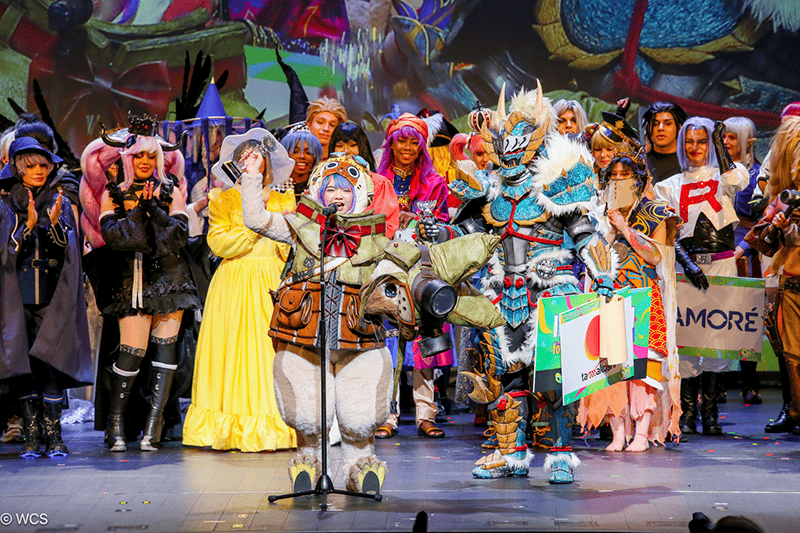
The 2026 grand prize went to Hong Kong representatives AR Lu and Ronnie Kui for their performance inspired by “Monster Hunter.” As the winning team, they also received the Foreign Minister’s Prize, presented by the Ministry of Foreign Affairs, a member of the WCS Executive Committee. As part of the grand prize, the pair will be invited to serve as judges at the World Cosplay Championship in 2027. They also received the Tamakoshi Award in the alumni category.
Second place went to Canadian representatives Autumn’s Cosplay and CNR-Cosplay, who portrayed Akira Gunji and Sho Tenkubashi from the manga “Tokyo Aliens.” They also received the Brother Award in the sewn costume category. Team Brazil Avner and Gih took third place for their portrayals of Alphen and Shionne from the video game “Tales of Arise,” while also receiving the Assist Wig Award.
Representatives from around the world, including Kuwait, Latvia, Indonesia, Australia, South Africa, Trinidad and Tobago, and India, also received special awards in categories ranging from action and dramatic performance to costume construction and sound.
For team Hong Kong, winning the championship marked the culmination of a year of preparation. “We spent a year making the costumes and put our hearts into them, so I was really happy that we could perform in front of everyone,” Ar Lu said.
Ronnie Kui was still taking in the victory. “I still can’t believe we won,” he said. “All the teams were amazing, so I was really surprised. I’m simply grateful that our performance received such a high score.”
The duo chose “Monster Hunter,” a game Kui loves. AR Lu took on the role of Airou, the feline companion that assists hunters in the game. The hunter’s armor was made entirely by hand, with particular attention paid to its coloring. “The part we focused on most was the coloring. We painted it using UV light,” AR Lu said.
From the championship, where contestants compete in costume craftsmanship and stage performance, to the parade spilling into the streets and to the and support from corporate sponsors, the WCS ultimately highlights the connections that grow from a shared passion for cosplay.
Speaking to participants from around the world at the opening ceremony, WCS Executive Committee Chairman Tokumaru Oguri described the gathering as a form of international cultural exchange built around a common passion. “I think it is wonderful that we can share such an exciting yet peaceful time together through something we all love,” he said. “I hope we can pass this on to the children of the future.”
Now in its 24th edition, the WCS is not only a celebration of cosplay but also a platform, demonstrating how pop culture can connect people across borders and languages.
In his closing remarks, Furukawa noted that some countries had been unable to participate this year due to international circumstances and other unavoidable factors, while more than 30 additional countries and regions had expressed interest in joining the WCS in the future. “Once again, we were reminded that this culture has the power to connect people beyond borders, languages and cultural differences,” he said.
After years of bringing cosplayers from around the world together in Nagoya’s summer heat, the WCS will move to a new season next year, continuing its tradition of connecting people through cosplay.