December 26, 2025
Originator Profile tech could help people avoid bad info




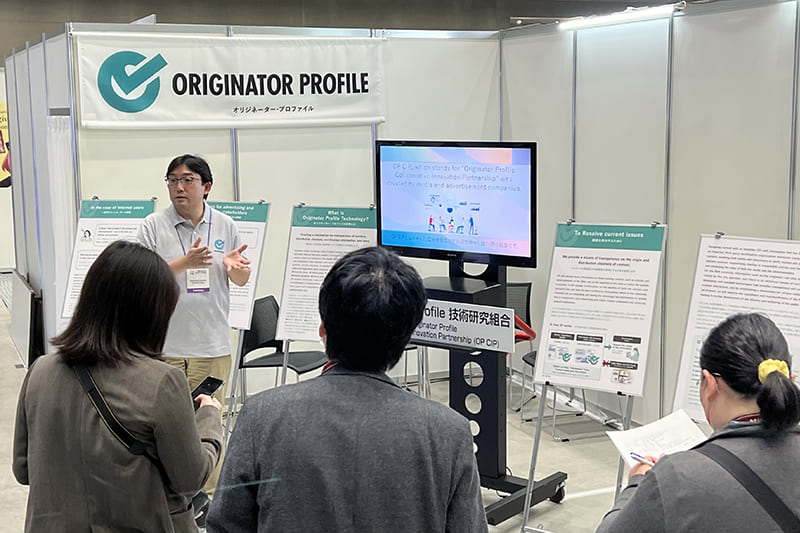
Originator Profile (OP) technology is designed to enhance the soundness of the internet environment by enabling users to verify difficult-to-modify identification information for online content. This helps users confirm the authenticity of advertisers, content providers and website operators, as well as determine whether the content they are viewing comes from trustworthy sources. This reduces the risk of being misguided by disinformation, misinformation or ad fraud.
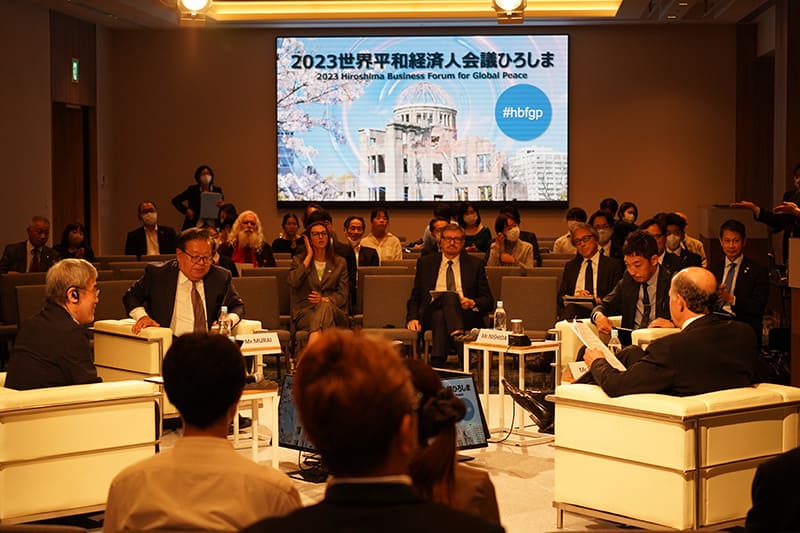
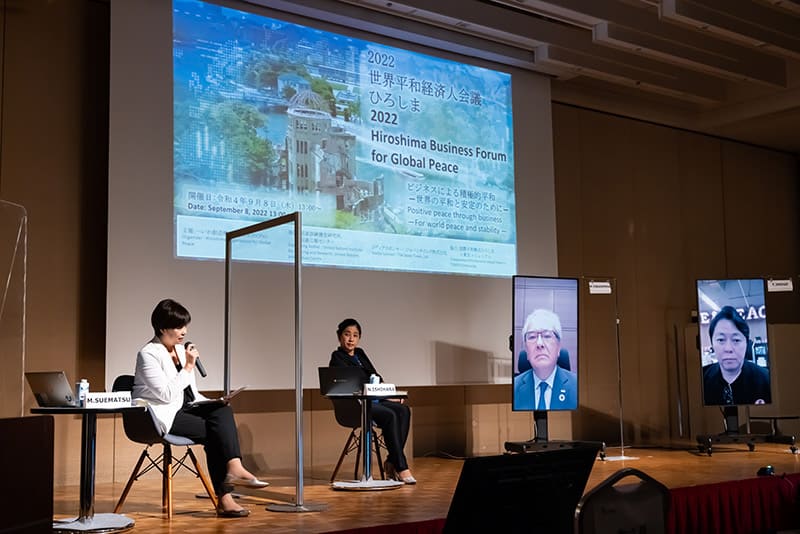
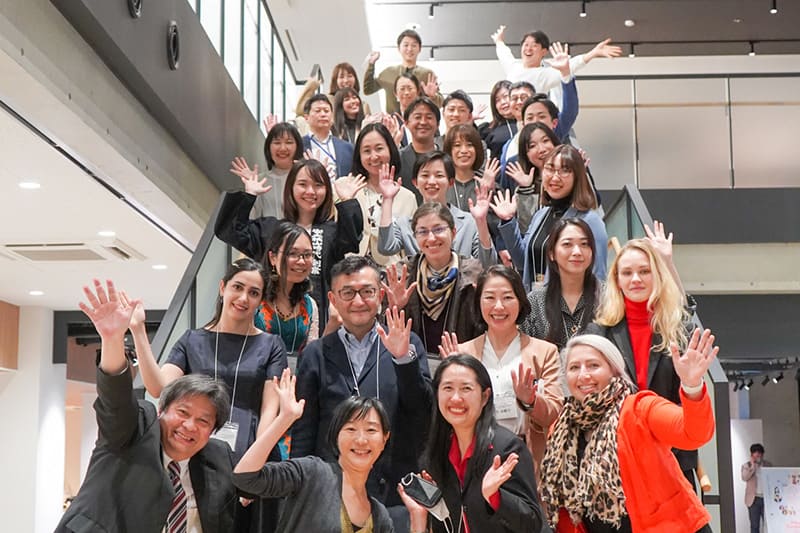
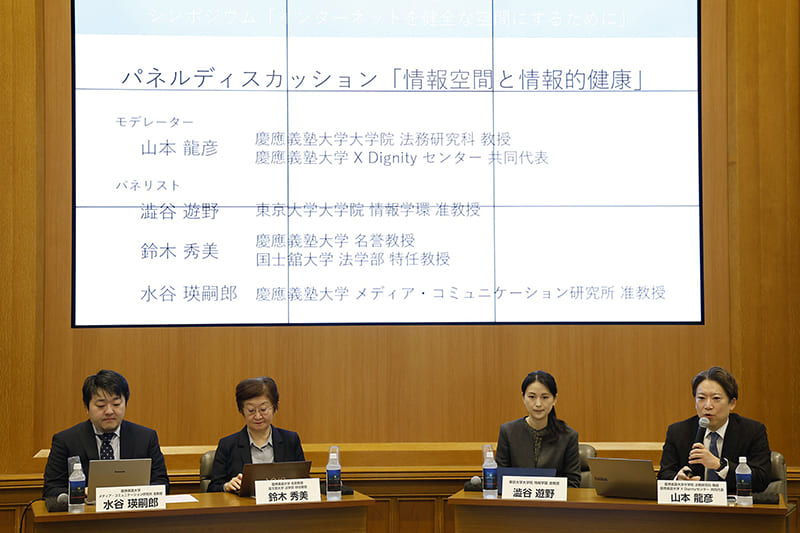
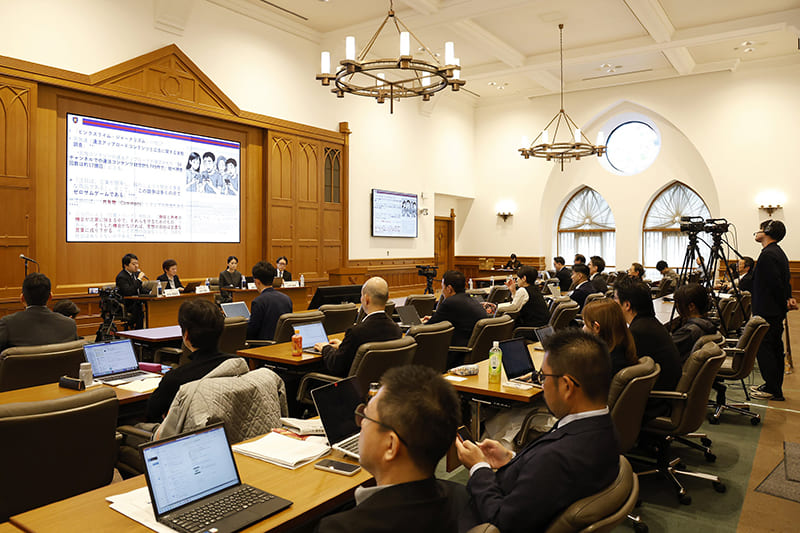
To discuss the role OP will play in making the internet healthier, a symposium gathered speakers mainly from academia at Keio University in Tokyo’s Minato Ward on Oct. 27. It was organized by the nonprofit initiative Originator Profile Collaborative Innovation Partnership (OP-CIP) and the Keio University X Dignity Center.
In the first panel discussion, moderated by Tatsuhiko Yamamoto, a professor at Keio University Law School and co-director of the center, experts discussed the challenges facing the information space driven by the attention economy. They highlighted the growing importance of incorporating new technologies, such as OP, that bring the concept of trust into the information space.
During the discussion, it was pointed out that in today’s information space driven by the attention economy, people tend to acquire information in a
biased manner, and that the safety and reliability of this information often remain unverified.
The importance of acquiring information in a balanced way and being conscious of the authenticity of information in order to gain immunity to misinformation was emphasized. Eijiro Mizutani, an associate professor at the Keio University Institute for Journalism, Media and Communication Studies, said, “The critical question is who should identify reliable information and by what standards.” The experts agreed that to resolve this through an approach that does not involve enforcement via legal frameworks, technologies like OP are necessary.
The discussion also highlighted the importance of improving people’s information literacy and creating mechanisms that draw more attention to reliable sources such as public organizations and news organizations, as well as fostering a market where responsible information providers are properly appreciated.
After the first panel session, Keio University distinguished professor Jun Murai, an advocate of Originator Profile technology and chairman of the OP-CIP, gave a lecture about how the internet has evolved and why OP is necessary.
Murai has been involved in the development of the internet since its early days. He pointed out that internet access has spread to about 70% of the world’s population in just 30 years, stating that several key factors have been essential for this growth.
One of these is the fact that the internet is based on open standards. “This allows anyone to create services that can be operated without any investment on their part,” Murai said. Another key is that the internet is an autonomous, decentralized system. Because it lacks central control, everything is interconnected and the connections expand infinitely.
“Everyone has come to rely on this internet, which creates the issue of responsibility. Global internet governance is needed to discuss who bears this responsibility and how,” he said.
However, he explained, the internet is merely a space for relaying information and is structured so that “the responsibility of the sender and the receiver — the end systems — is extremely heavy.”
He said it is important to incorporate new trust mechanisms like OP to tackle the challenges of understanding “who these end systems are,” determining “whether they are trustworthy, and thinking “how to create a space where end systems can be trusted.”
He concluded by emphasizing that this issue is about ethics, a value highly regarded in Japanese philosophy. He added that this makes it a challenge in which Japan should take the lead.
Shigeya Suzuki, a project professor at the Graduate School of Media and Governance at Keio University, delved into what exactly OP does. He began by saying that the primary purpose of OP is to enable users to identify the information’s publisher, the originator, and verify that it has not been tampered with. He explained that OP does this by using digital signature technology.
“The OP’s core profile determines who the originator is. Subsequently, the results of a third party’s verification of the core profile’s contents are appended in the form of profile annotations,” he said. These profile annotations are designed based on the concept of decentralized governance and are not controlled by a single manager, thus enabling the exchange of information among multiple stakeholders.
Suzuki revealed that experiments to introduce OP are taking place primarily in the dissemination of information by a local government and through web media and digital advertising. Development is underway to provide OP as a CMS plugin, and the possibility of offering OP as a cloud service is also being discussed. Furthermore, in November, the OP technology’s specification document and source code were made public on the website of the OP-CIP.
Seitaro Fujita, director-general for policy coordination for the Minister’s Secretariat in the Ministry of Internal Affairs and Communication, made a presentation about the ministry’s efforts in promoting measures against disinformation and misinformation on the internet through three pillars: institutional responses based on law, the improvement of citizen’s internet literacy and the development of technology.

He explained that laws have been amended to require large platform operators to quickly remove information when necessary and enhance transparency on their operations. Another notable achievement of the amendments was the simplification of the process of requesting information about originators.
Fujita also said that the government is tackling complex issues related to digital advertising, the spread of disinformation and misinformation during disasters, and the safe use of the internet by youths through public-private awareness projects and support for technological development such as OP.
Tatsuya Kurosaka, a project associate professor at Keio University’s Graduate School of Media and Governance, secretary-general of the OP-CIP and deputy director of the Keio University X Dignity Center, gave a lecture about the difference between OP and provenance management of information.
Kurosaka explained that the key to provenance management is ensuring that information reaches recipients through a properly managed and verifiable process, and that this verification is performed by those responsible for releasing the information, not by the recipients. Using a news article as an example, he explained that provenance management is used by media companies to verify the workflow behind an article’s creation.
Conversely, OP is a technology that allows end users to verify the authenticity of what they are reading. He described the two technologies as complementary, saying, “These two combined may bring us better stability and credibility.”
He also made clear that OP is not intended for fact-checking as such or for selecting or evaluating the originators of information. “We do not intend to face the philosophical question of what a fact is head-on, because it is an unsolvable question,” Kurosaka said. “But we want to create a situation where it is easier to do fact-checking and people are less likely to be deceived.” He concluded by saying that the OP-CIP aims to begin OP’s initial rollout within the current fiscal year.