December 08, 2025
Japan agency aims for both decarbonization, growth





Japan’s efforts to go forward with carbon reduction together with economic rationality are drawing attention in the global investment world, even as a series of companies and financial institutions have seemed to backpedal on their climate targets in the past year.
In particular, the return of U.S. President Donald Trump to office and the United States’ withdrawal from the 2015 Paris climate agreement prompted fossil fuel companies to intensify their efforts against environmental, social and corporate governance initiatives.
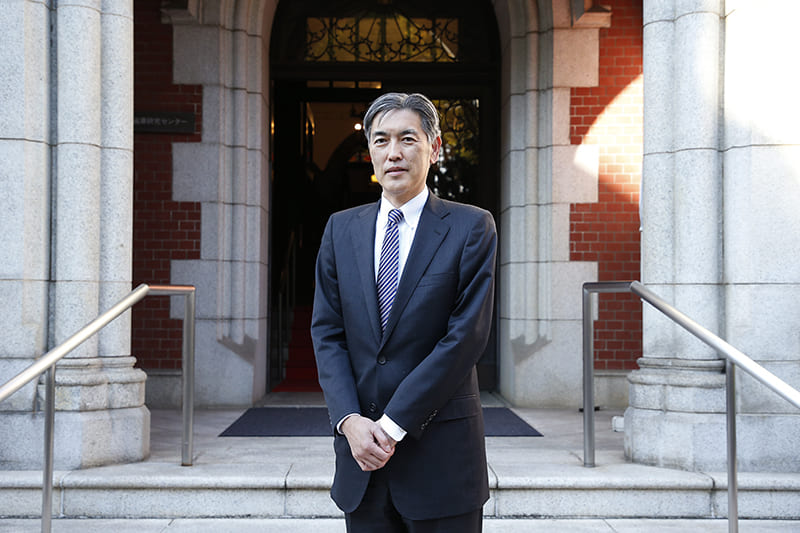
“Achieving decarbonization as well as economic growth and industrial competitiveness at the same time is the core part of the green transformation policy that Japan is carrying forward right now, and this approach is gaining global understanding,” Hideki Takada, the finance and stability director of the GX Acceleration Agency (GXA), said in a recent interview, part of a monthly series by Naonori Kimura, a partner for the consulting firm Industrial Growth Platform Inc.
The GXA was set up in July last year to help carry out the government’s green transformation (GX) policy of investing in projects to reduce companies’ carbon emissions and boost renewable energy production and usage. The government’s ¥20 trillion ($130 billion) budget for green transformation includes about ¥200 billion for the agency, which aims to promote ¥130 trillion in investments from the private sector over the next decade.
The agency’s mission is to support green projects by providing debt guarantees and equity investments, operate the national carbon pricing mechanism starting in fiscal year 2026 — creating a market for trading corporate emissions — and promote research and information toward a carbon-free society.
In February, the government approved a long-term policy guideline, “GX2040 Vision,” under which Japan — currently the world’s fifth-biggest carbon emitter, dependent on imports for most of its energy — will realize stable energy supplies, economic growth and decarbonization all at the same time.
The green transformation policy started against a backdrop of global agreement on achieving carbon neutrality by 2050. During a policy speech at the Diet in 2020, then-Prime Minister Yoshihide Suga pledged that Japan would achieve net-zero carbon emissions by 2050, and the government later formed the policy on investing a total of ¥150 trillion in green transformation efforts.
Compared to its Western counterparts, Takada said, Japan got a rather slow start on green finance after almost 200 countries adopted the landmark Paris accord, which requires countries to set their own emissions targets. But things have changed since then.
While some global entities have retreated from their climate targets due to increased political pressure over the past year, Japan’s commitment to advancing transition finance — including establishing an organization to support energy companies and heavy industries in shifting from fossil fuels to greener energy sources — is winning the regard of the world, Takada said, after Japan’s transition finance policy once was criticized as “greenwashing” by some global investors who said it would prolong fossil fuel companies’ ability to carry on business as usual.
Yet the prospects for solving global warming are still uncertain.
The recent withdrawal of several major financial institutions from international alliances poses a potential risk to global sustainable finance. For example, following Trump’s election victory last November, six of the largest U.S. banks, as well as major Canadian and Japanese financial institutions, withdrew from the U.N.-backed Net-Zero Banking Alliance despite growing concerns about record-high temperatures and an increasing number of extreme weather events. Takada said, however, that media reports on financial institutions leaving the alliances were overblown, and that the trend of their targets for carbon neutrality has remained intact.

Also, the potential economic effects of Japan’s carbon pricing market remain uncertain, and it is yet to be seen how the GXA will support the private sector’s transition finance. Takada said the agency has received more than 70 inquiries about green transformation projects from financial institutions and potential investee companies in the past year. Last July, the agency announced that it had decided to invest in TeraWatt Technology Inc., a California-based startup founded in Japan that provides rechargeable lithium-ion battery cells with high energy density. The amount of the finance has not been disclosed.
The agency expects most of the demand for debt guarantees to come from large projects such as hydrogen production and offshore wind farms, Takada said. It also plans to provide funds for smaller projects by startups, aiming to contribute to developing technological innovations for a greener society.
“Our mission is to assume financial risks that the private sector is unable to bear independently. By doing so, we aim to advance projects that might otherwise remain stagnant,” Takada said.
Asked by Kimura about the financial risks of government-backed funds, many of which have logged losses in recent years, Takada said the agency will thoroughly assess each project’s feasibility and verify whether or not projects could realistically be undertaken by the private sector alone.
The agency expects potential projects to be supported by strategic green transformation areas, designated locations where the government will relax regulations that could hinder transition initiatives and will provide financial assistance, Takada said.
One of Japan’s issues in transition finance is the rather conservative stance of public pension funds, Takada said. “Asset owners, particularly public pension funds, are not active investors (in sustainable projects) in Japan compared to those in the United States and Europe,” he said, adding that such funds in those countries tend to take the initiative on investing in green infrastructure.
Takada said the government has promoted the greater involvement of public pension funds in impact investments, which are designed to effect societal change, noting that such investments also provide financial returns in the medium to long term and so align with fiduciary duty. “We want them to change their mindset and take a more active stance on those investments,” he said.
Naonori Kimura
Industrial Growth Platform Inc. (IGPI) Partner
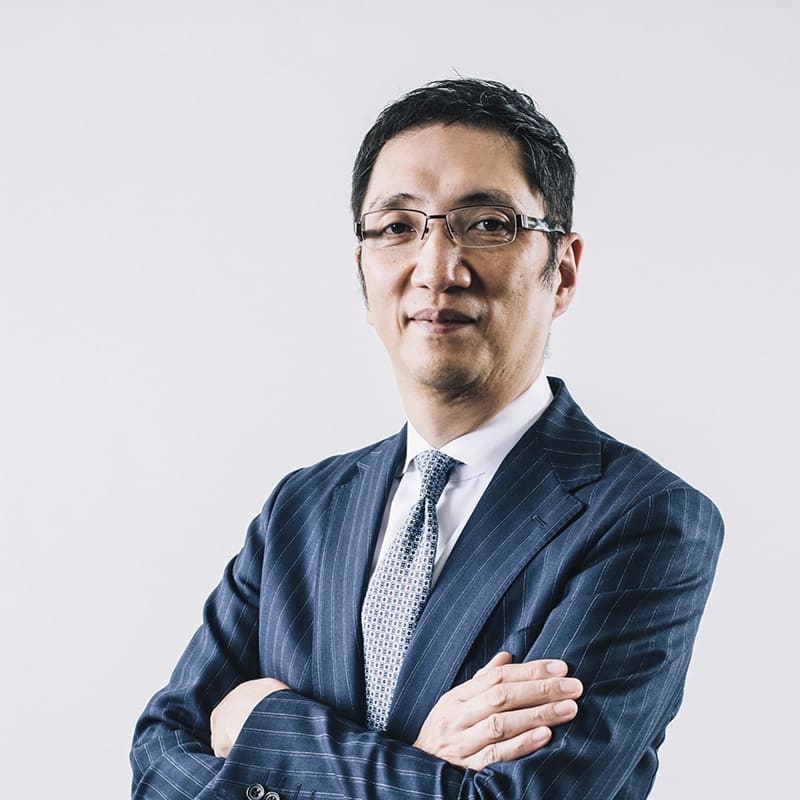
Japan’s green transformation (GX) approach, which aims to balance decarbonization and economic growth rather than viewing them as trade-offs, is attracting international attention. However, given Japan’s geographical constraints, the reality is that decarbonization efforts come with cost challenges and uncertainties in the short term. This requires business leaders to have a long-term perspective while also building a sustainable foundation for promoting green transformation as a national strategy.
The GX Acceleration Agency (GXA) was established to lead this strategic promotion with three main focuses: financial support, emissions trading and serving as a GX strategy hub. The investment needed to promote the green transformation is expected to reach ¥150 trillion ($1 trillion), with ¥130 trillion coming from private funds. Leveraging the remaining ¥20 trillion in government support, the GXA aims to finance ambitious projects that the private sector alone cannot fully undertake, thereby creating more breakthroughs. To achieve this virtuous cycle, it is essential to consistently demonstrate the strategic functions of the GX hub, as emphasized by Takada, in addition to financial support and emissions trading.
Achieving the green transformation is a global imperative, and failure is not an option. We have high expectations for the GXA to act as a catalyst, integrating the strengths of Japan’s financial and industrial sectors to build a sustainable and prosperous future for Japan and the world.