July 06, 2026
JCOM expands from cable to social infrastructure





JCOM Co. Ltd. aims to transform its business by moving beyond its original cable television operations in a nearly saturated market and expanding into social infrastructure services that use its resources to help address issues in communities, businesses and local governments.
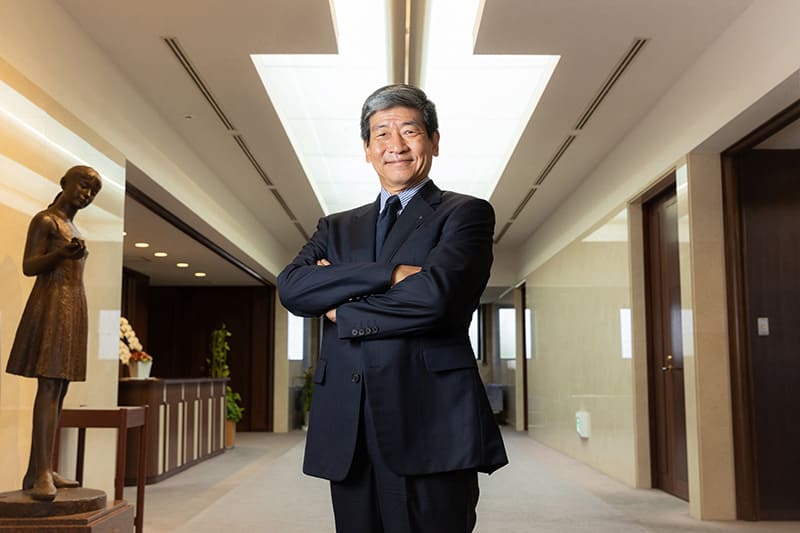
“We realized that we need to redefine our business for further growth,” Kazuhiro Ohashi, the managing corporate officer and senior vice president for JCOM’s corporate strategy planning unit, said in a recent interview, part of a monthly series by Naonori Kimura, a partner for the consulting firm Industrial Growth Platform Inc.
Responding to the need to create further value amid a changing environment for Japanese cable TV and internet services, which JCOM sells as a package under the J:COM brand, the company has begun expanding into a broader range of services that support everyday life, Ohashi said. “We want to provide services that our customers genuinely need in their daily lives,” he said.
The strategy is backed by JCOM’s latest four-year business plan until March 2028, which says the cable TV operator will review its current business structure to maximize its growth potential and go into new fields beyond broadcasting and telecommunications.
The new mission builds on one of the company’s key strengths: its sales network. Ohashi said the company’s ability to communicate face to face with household customers gives it a competitive edge. The company has more than 2,700 sales staff who offer packages combining services from its lineup, including cable television, landline phone, internet Wi-Fi, mobile services, and even electricity and gas. Combined with digital subscriber data, this strength supports the company’s customer marketing strategy, he said.
The lineup also includes security cameras for housing, introduced as concerns about robbery-related violent crime rose in many parts of the country in recent years. “Security camera footage from homes can help identify suspects and enhance public safety,” he said.
JCOM’s knowledge of sales operations and data is also evolving into a plan for an on-demand transportation system for cars and buses, which will possibly contribute to areas that are lacking good transportation options amid the rapidly decreasing and aging population.
The company already introduced the system for its own sales staff in 2021, using high-precision algorithms to enable multiple employees to travel efficiently within their assigned areas. This step led to a reduction in sales staff vehicles and fuel consumption. Moreover, the firm participated in an experimental bus project in the Osaka Prefecture city of Sakai as part of broader on-demand mobility services for communities lacking sufficient transportation options that JCOM expects to help provide in cooperation with the local government and transportation firms.

Another project that JCOM is focusing on is digital transformation for local governments, especially at schools. It provides fast, stable internet and Wi-Fi infrastructure while helping teachers and students to communicate smoothly through digital tools. The company also holds events to teach students how to use the internet and smartphones without getting involved in crime or other trouble. “In that way, we are aiming to develop our business and at the same time tackle various local issues,” Ohashi said.
Its focus on communities extends to the medical field. An application it made enables users to get medical consultations via smartphones and internet-enabled televisions.
Meanwhile, the company’s cable television community media deliver local information for disaster prevention. If a typhoon, earthquake or other natural disaster hits, they are ready to broadcast local live information.
Starting as a cable television operator in 1995, JCOM has steadily developed its business for the last three decades. JCOM initially provided cable television services to remote areas where it is difficult to receive terrestrial broadcasting. Since then, it has expanded through mergers and acquisitions. After two stakeholders, the telecommunications operator KDDI Corp. and the general trading company Sumitomo Corp., started to jointly manage the company in 2013, it became the country’s largest multisystem cable operator, with sales and support centers in five major commercial zones and an expanded lineup of services.
The number of households subscribing to JCOM’s services reached 5.8 million as of March, out of the national total of 61.3 million. Its net profits stood at ¥71.8 billion ($450 million) for the business year that ended in March 2025, up about 6.8% from four years earlier.
Although cable television demand grows moderately every year, it is widely seen as nearing saturation despite the company’s efforts to enhance its television content. JCOM has increased the lineup of entertainment programs by making tie-ups with subscription-based services, such as Netflix in 2019, followed by Disney+ in 2022 and the Discovery Channel in 2023.
While the company is expanding into wider fields, it is also reinforcing its existing communication services by laying high-speed lines called Fiber to the Home. FTTH offers stabler connections than the previous network, which combined optical fiber with preexisting coaxial cable, and at the same time uses less power and thus emits a smaller amount of carbon dioxide.
“By changing the total network, we are trying to reduce the total power consumption for the environment,” Ohashi said. By the end of this business year next March, most of the areas the company covers will have FTTH, he added.

In addition, the company recycles over 99% of the cables and other equipment collected from former customers, contributing to lower carbon emissions and a better environment, he added.
Looking ahead, Ohashi envisions the company becoming better equipped to address social issues in aging communities. One initiative is to further develop on-demand transportation for communities beyond the current experimental stage, so that older people without adequate transportation can travel to hospitals or go shopping when needed. Another goal is to further advance digital transformation in education.
“I hope this company will provide solutions for their problems and contribute to regions’ sustainable growth at the same time,” he said.
Naonori Kimura
Industrial Growth Platform Inc. (IGPI) Partner
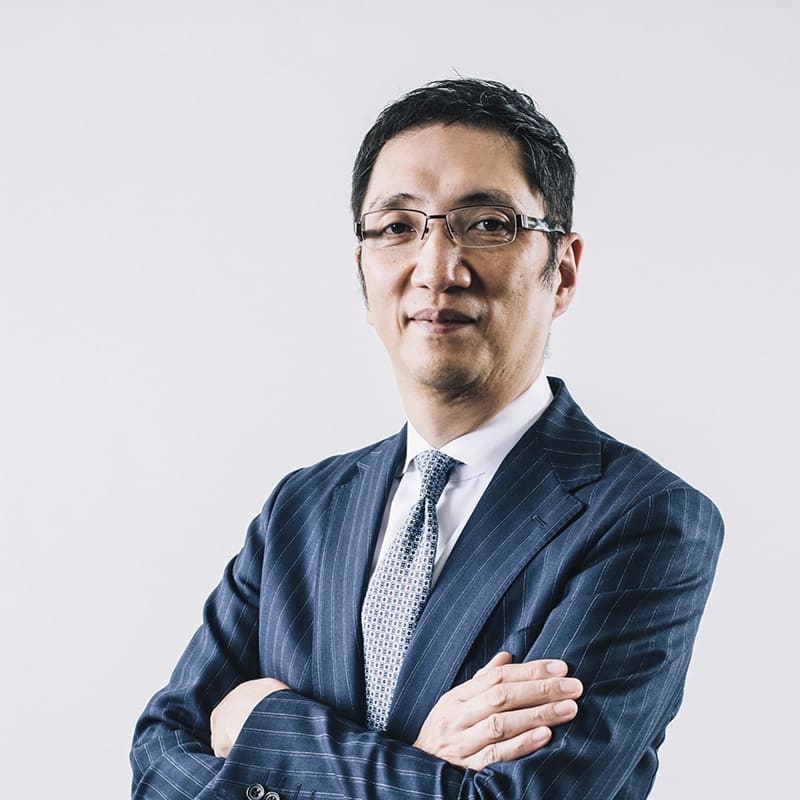
JCOM is seeking to move beyond its traditional business domains and evolve into a company that is more deeply involved in customers’ daily lives and in addressing local community challenges. As the markets mature, the company is redefining its business around two core concepts — “the joy of everyday living” and “the richness of local communities” — by integrating entertainment, telecommunications, local information, and the business-to-business and business-to-government sectors.
The source of its competitive advantage lies not merely in technology or infrastructure, but in its customer touch points rooted in local communities. JCOM aims to identify issues in customers’ daily lives and expand into services that contribute to local safety, security and convenience, such as digital transformation in schools, disaster prevention and public safety, and on-demand transportation. These efforts represent an expansion of the company’s role as a local infrastructure provider at a time when the shrinking and aging of the population is increasingly affecting urban areas as well.
JCOM is also working to reduce its environmental impact through its business structure itself, including lower power consumption through the shift to FTTH, equipment reuse and greater efficiency in sales activities. Although it is not a listed company, its commitment to promoting sustainability management at a level comparable to that of publicly listed companies is particularly noteworthy. JCOM’s efforts point to a direction in which community-based companies evolve into social infrastructure providers that enhance the quality of everyday life.