October 06, 2026
Muratec builds sustainability into factories, logistics




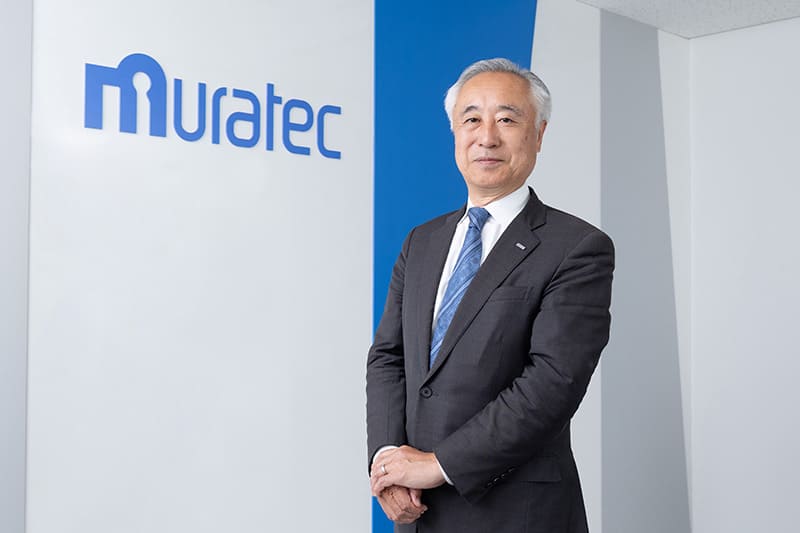
Murata Machinery, building on its base of industrial automation technologies, is contributing to global sustainability at a time when an endless list of large AI data center projects are boosting semiconductor demand.
The Kyoto-based manufacturer, which also goes by its brand name of Muratec, contributes to greater efficiency in the semiconductor and other power-hungry sectors, helping to reduce their environmental impact. Automation, which is essential for efficiency in many industries, is a central part of the company’s five main business domains: textile machinery, logistics and factory automation, clean-factory automation, machine tools and communication equipment.
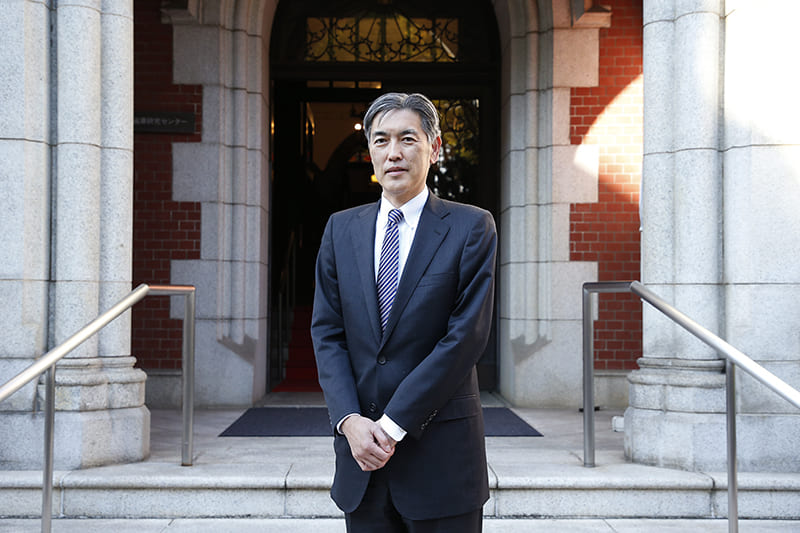
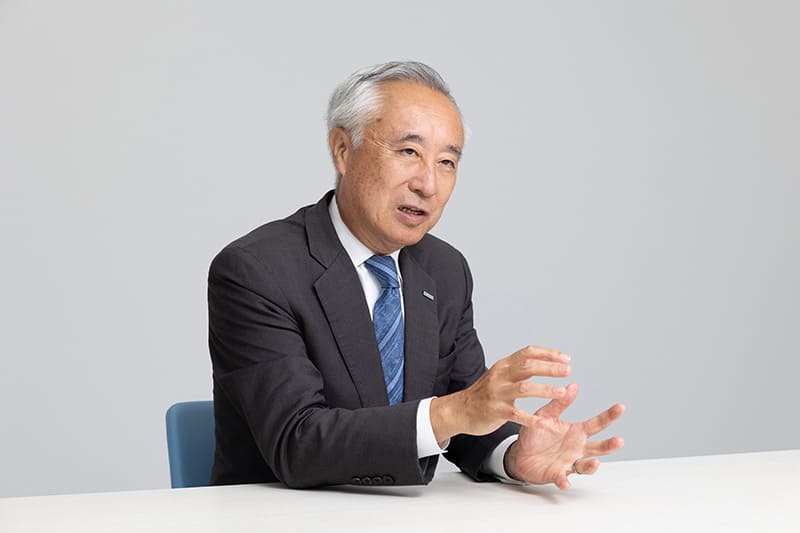
“Now we can make the same number of products with fewer machines than before. This is the environmentally friendly goal that we are trying to achieve. It is as simple as that,” said President and CEO Daisuke Murata in a recent interview, part of a monthly series by Naonori Kimura, a partner for the consulting firm Industrial Growth Platform Inc.
Automation and higher efficiency in chip factories and logistics are one key to addressing a challenge the world is facing: too much electricity consumption. Muratec provides systems that automate storage and transportation inside factories and designs custom logistics systems for sectors like food, pharmaceuticals, chemicals and automobile parts.
From textiles to automation
Muratec, founded in 1935 as a jacquard machine maker, evolved over time as automation transformed the textile industry, Murata said. “Because of our original business, we have been working on automation and labor-saving for such a long time,” he said.
In the beginning, the company supported the weaving of Nishijin brocade, a high-quality silk fabric that originated in western Kyoto around 1500 and was long valued by the ruling class. Today, its group sales have reached ¥520 billion ($3.3 billion), with 8,890 employees in 25 countries and regions.
The textile industry started with hand-woven products, but the Industrial Revolution changed the whole world, boosting efficiency and productivity across industries. Human labor was still needed to tie yarn at the start of the revolution, but the process completely shifted to automation in the modern era.
“The trend of improving products while contributing to a better environment will not change. However, the old rule of focusing solely on productivity will continue to evolve. For example, manufacturing will have a smaller ecological impact and use fewer natural resources,” Murata said.
This is why automation has become more significant than ever before, as manufacturers today are under pressure from apparel brands in Western nations, including the U.S.-based outdoor clothing retailers Patagonia and The North Face, that are responsive to calls from environmentally conscious end users. “I expect manufacturers to be increasingly required to introduce production methods that have less environmental impact,” Murata said.
Reducing emissions
Among other things, Muratec focuses on reducing Scope 3 Category 11 indirect emissions of carbon dioxide from the use of its products and services, as defined in the Greenhouse Gas Protocol.
“We assemble products and don’t use or generate much heat, so our Scope 1 (direct) and Scope 2 (indirect) emissions are not significant,” Murata continued. “Meanwhile, our customers consume power and at times generate heat. Dealing with these issues in the right way is directly linked to our main business.” The company demonstrates this strategy in its sustainability KPIs (key performance indicators), targets that measure, among other things, its contributions to a better environment.
With global competition intensifying in a wide range of industries, however, automation alone cannot provide a competitive edge. Murata said his company’s competitiveness lies in its after-sales maintenance service and overall usability, while European makers are superior in product design.
For example, Muratec boasts easy-to-replace parts and an easy-to-read interface. Also, it makes products that are more compact than those from Europe, trying to fit them into smaller Asian structures.
Developing people, products
To maximize its human capital, Muratec has also introduced a unique internal personnel system that has succeeded in motivating employees. Under this “career discovery system,” work tasks are divided into about 100 sections, and employees can apply once a year to work wherever they want. For that purpose, job descriptions prepared by section leaders are disclosed to all employees. During the fiscal year that ended in March, about 50 employees applied, and 20 transferred to new sections.
“The good point of the system is that leaders consider how to improve employees’ skills and how to encourage their career development, not just how to report higher performance,” said Murata. “I wanted to encourage competition among my staff in a positive way and increase labor mobility within the company.” He added that the system originally aimed to discourage people from leaving the company. The efforts seem to have borne fruit so far, leading to an average tenure of 16.5 years.
The goal of the system is to help employees develop greater creativity and new ideas that lead to product development as a result of changing positions, he said.
At the end of the interview, Murata said the company’s 10-year vision toward 2035 is to “change and evolve.”
For one thing, the company needs to overcome the challenge of making itself a sustainable organization, including adjusting workforce demographics, appointing future successors and advancing generational change in the company, Murata said.
For another, it aims to develop new products. “I hope the company will move further ahead by working on new manufacturing centered on environment and resources,” he said. For example, the new manufacturing products it is currently working on include winding machinery that does not need to stop frequently at every yarn splicing, which drastically improves energy efficiency and package quality.
“We aim not just to use energy-efficient motors but also to create innovation and drive product evolution by introducing new ideas,” Murata said.
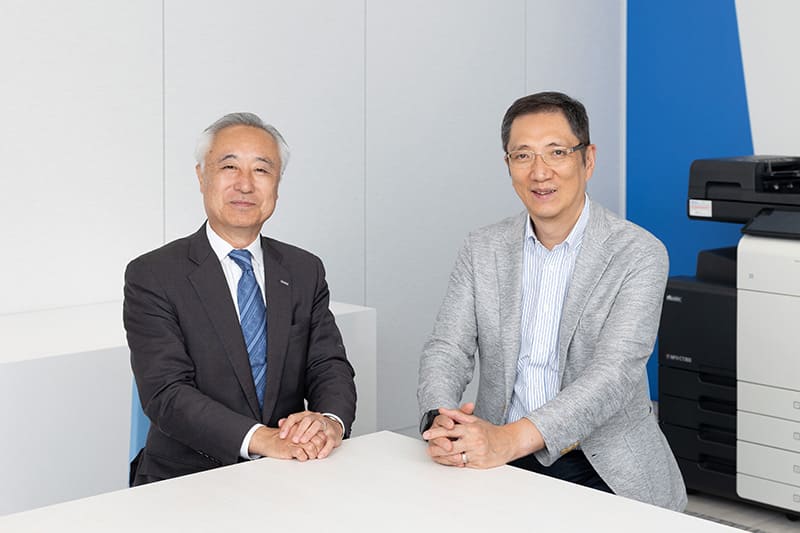
Naonori Kimura
Industrial Growth Platform Inc. (IGPI) Partner
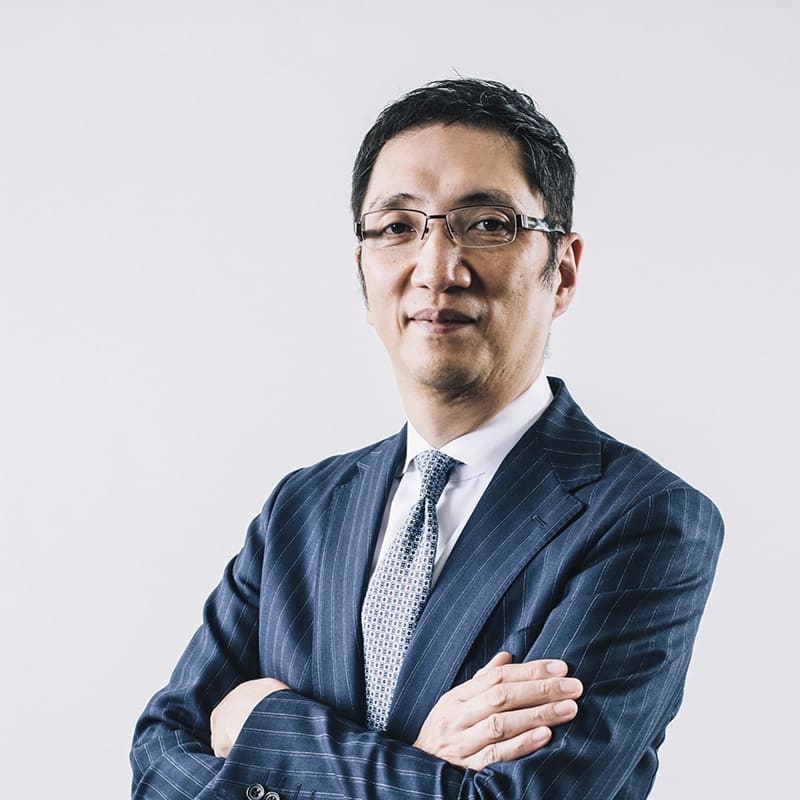
Murata Machinery’s history in textile machinery is also, in every sense, a history of automation. Replacing tasks once performed by people with machines to raise productivity also meant reducing the use of labor, energy and materials. This corporate DNA has been carried forward into a diverse range of businesses, including semiconductor factory transportation systems, logistics and machine tools. Today, it has evolved beyond simple labor-saving into a force capable of transforming customers’ manufacturing operations as a whole — shortening processes themselves and eliminating unnecessary transportation and energy consumption. As demands to reduce environmental impacts grow worldwide, one of President Murata’s comments was particularly striking: that in addition to QCD (quality, cost and delivery), “creating the same value with fewer resources” is becoming a new source of competitiveness. At the same time, the further automation advances, the more it prompts renewed questions about the work that people should perform and the meaning of work itself. Placing great importance on its philosophy of “human-friendly technology,” the company at the same time supports employees through initiatives such as an internal job-posting system and talent utilization unconstrained by age. Looking toward its centennial in 2035, the “evolve” in the company’s theme of “change and evolve” does not mean a mere expansion in scale, but qualitative advancement. We look forward to Murata Machinery’s next stage of evolution as it transforms its technology, businesses, people and organization together and contributes to the sustainability of society through manufacturing.