July 06, 2026
Yamanashi inn Esoto offers supreme sake and views




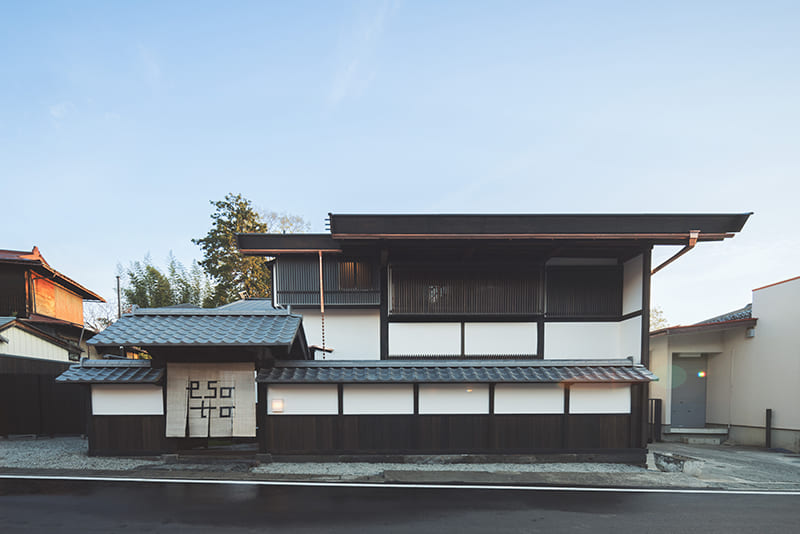
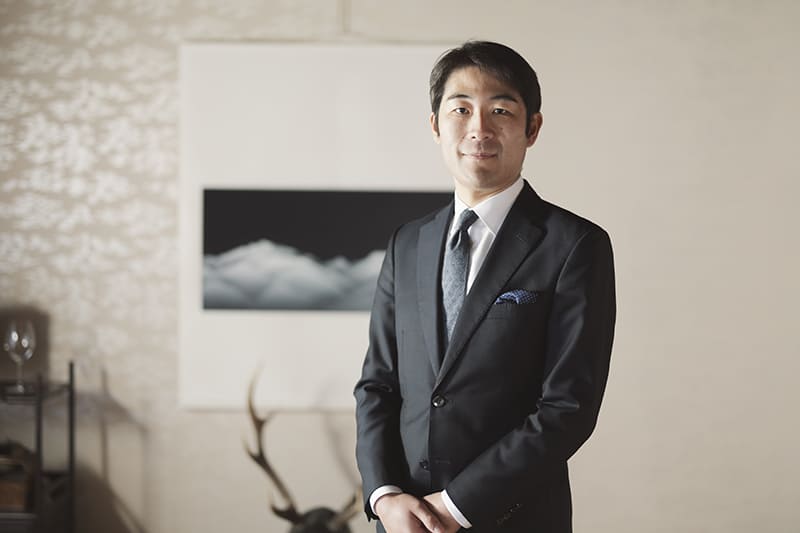
In the quiet neighborhood of Hakushu, in the Yamanashi Prefecture city of Hokuto, surrounded by mountains, rivers and rice fields, stands Esoto, a premium lodging facility in a traditional-style building constructed around 120 years ago. The inn, which opened on June 1, only accepts one group per night, offering guests a relaxing and refreshing time as well as a rich gastronomic experience.
The inn is owned and operated by Yamanashi Meijo, a sake brewery that is known for its Shichiken brand and was founded in this area in 1750. The building, made of wood and plaster and roofed with tiles, used to be the residence of one of the branch families of the family that has been running the brewery.
This area is located in the northern part of the prefecture, at an elevation of nearly 600 meters, close to mountains such as Hinata, Amagoidake and Kaikomagatake. Tsushima Kitahara, the 13th-generation president of the brewery, explained that the Shichiken brewery uses water that has been filtered and purified over decades after rain and snowfall on Mount Kaikomagatake seeped deep into granite layers in the ground.
Yamanashi ranks among the top prefectures in Japan for annual hours of sunshine and the percentage of sunny days. Thanks to the mild climate, significant temperature differences between day and night, and the plentiful water flowing from the mountains, agriculture also thrives in this area.
Kitahara noted that the district along the old Koshu-kaido road where Esoto and the brewery are located used to be an important traffic hub. “Records show that there were 15 lodging facilities around here during the Edo Period, but none of them remain,” he said. As larger roads and railways were built in the modern era, the bustle of the old road gradually faded away. Compared to nearby resorts with better connections to public transportation, this area does not attract many tourists. However, this also means that visitors can fully immerse themselves in the unspoiled scenery and enjoy the town’s nostalgic atmosphere.
The Shichiken brewery has been at the heart of the community for almost 280 years and a constant witness to this region. In 1880, Emperor Meiji stayed in the main building of the brewery owner’s residence while touring Yamanashi, Mie and Kyoto.
In the days when the emperor was still referred to as a living god, the townspeople were thrilled to have him visit the town, accompanied by hundreds of attendants. Kitahara explained that, to ensure the emperor’s safety, the exact time of his arrival was not disclosed in advance. “It is said that the women of the town waited in the streets from early morning, and that their face powder ran down their faces with sweat, leaving white streaks on the street,” he said. The rooms and the gardens used by the emperor have been preserved almost exactly as they were.
The brewery also operated as a bank in the past. One of the rooms that was used as a bank teller’s counter back then has also been preserved and is now on display. “The iron bars that separated customers from bank workers were removed and collected during the war for use in producing weapons,” Kitahara noted. The rough cut marks left at the roots of the iron bars are still visible today.
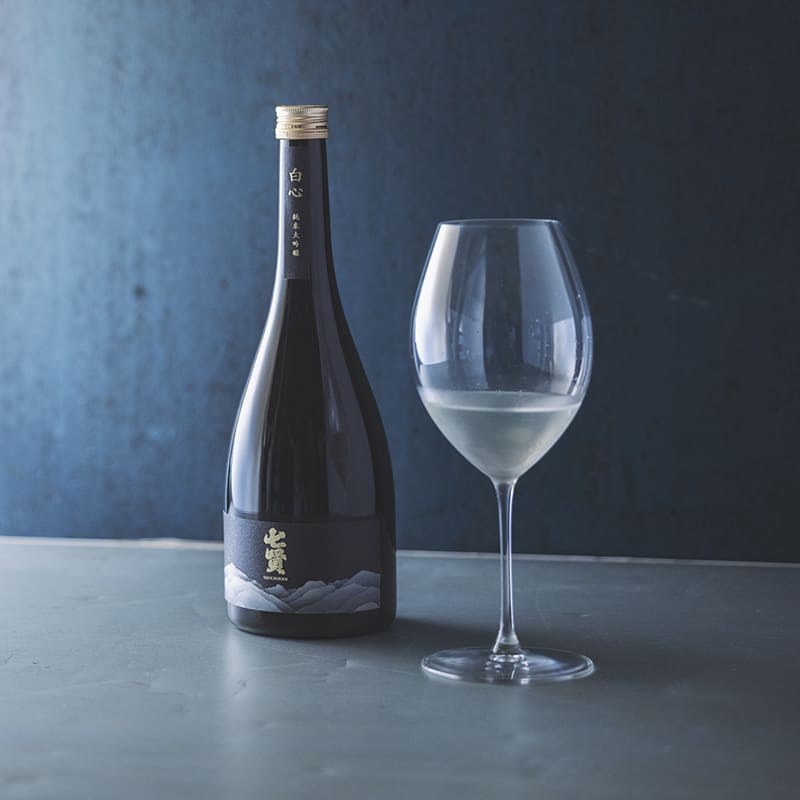
With its long history and tradition, not to mention the various awards it has won over the years — including IWC Champion Sake 2025 — the brewery takes pride in being a symbol of the region. However, Kitahara also feels responsible for the community’s future. “We believe that our achievements, including Esoto’s success, contribute to the area’s prosperity,” he said.
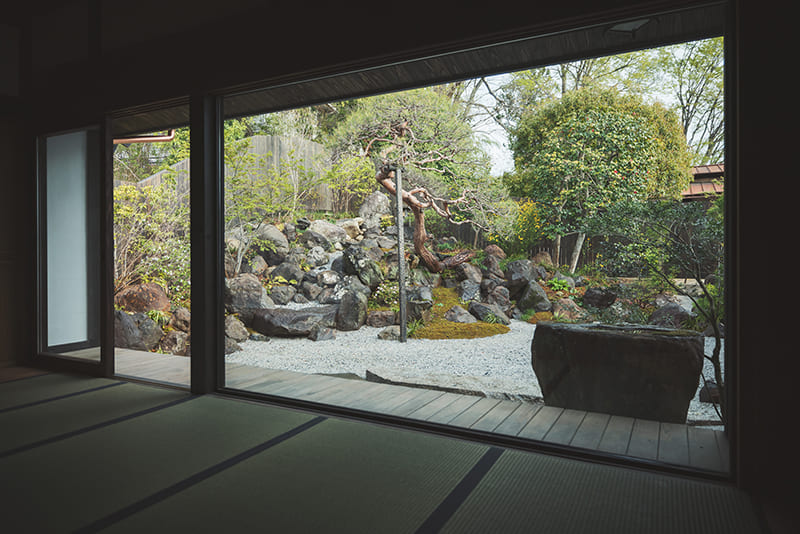
This is why he deeply contemplated the significance of running an inn connected to a sake brewery that is part of the local community. His answer was to pursue authenticity. The rooms are laid out like those of the house where Emperor Meiji spent the night, and three adjoining tatami rooms offer views of both the Japanese-style front garden and courtyard on the opposite side. The bath, housed in a renovated traditional storehouse, provides a view of the courtyard.
With the help of a contractor specializing in the design of traditional Japanese tearooms, the space was intentionally designed to avoid ostentation, creating an atmosphere of depth and tranquility. As the 13th-generation successor of the brewery, Kitahara kept the founder’s beliefs in mind while planning the inn. “Why did the founder decide to make sake here? It is because this place was blessed with beautiful water. If you have excellent ingredients, you don’t need fancy methods. This is true not only for sake brewing and cooking, but also for accommodations,” he said.
The fittings, such as the handles on the fusuma sliding doors, as well as the furnishings and lighting, are all antiques. “All the tableware is antique art, too. Some pieces are quite valuable, but there is no point in having them if we don’t use them,” Kitahara said.
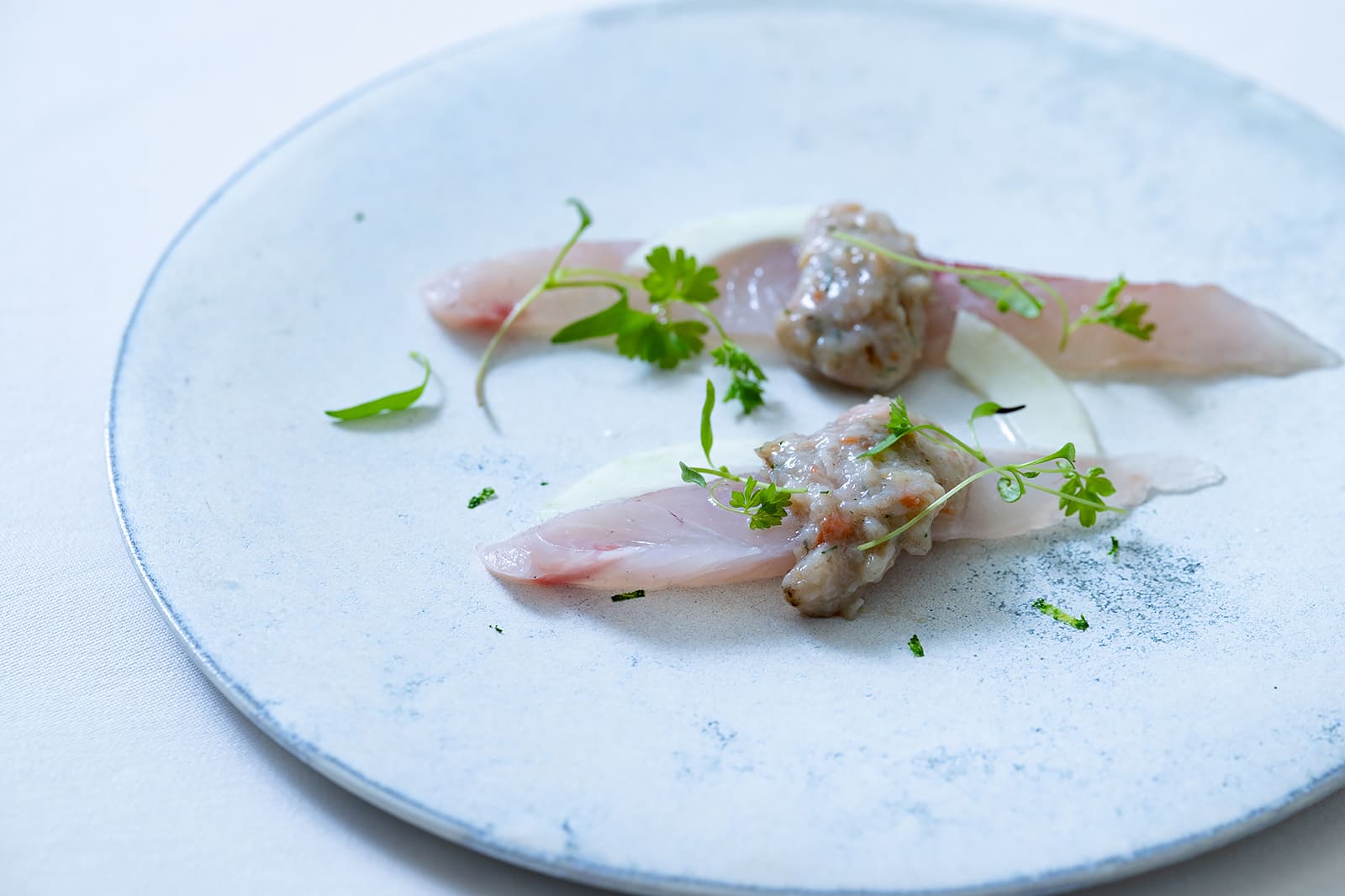
In the dining room, seats are arranged around the kitchen. Here, locally sourced vegetables, fruits and herbs as well as meat, fish and eggs are skillfully prepared and plated right before guests’ eyes. Every dish is both visually stunning and full of flavor. Sake and sake lees are incorporated in various ways, from sauces to desserts, releasing a rich aroma. The sake served with the meal — ranging from sparkling sake and various types of chilled or warmed sake to spirits made from sake lees — is carefully selected to complement each dish. “We also listen to our guests’ wishes in advance and try to accommodate their requests, whether they want to roast sweet potatoes over an open fire, sample local game meat or enjoy a barbecue,” Kitahara said.
The basic accommodation plan includes a tour of the sake brewery. Depending on the time of day or season, guests can see rice being washed, kōji mold being spread on rice, sake bubbling like a living creature as it ferments in tanks and moromi (raw fermented mash) being pressed to extract sake.
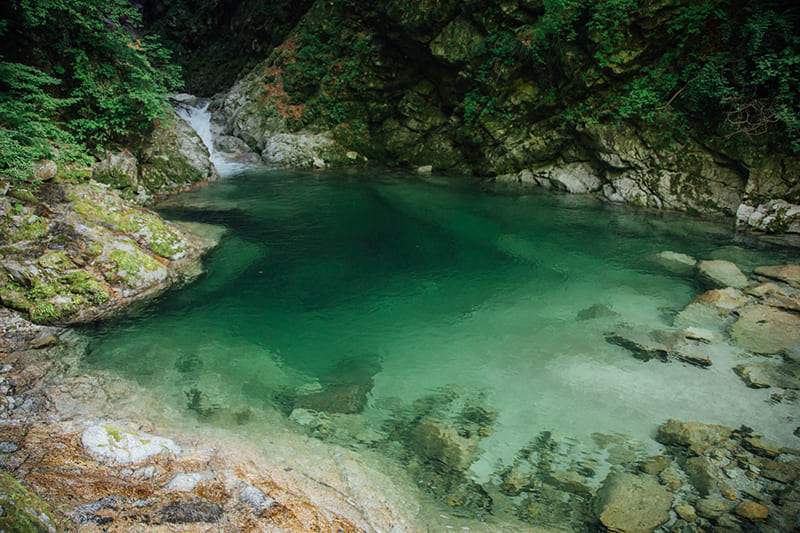
Guests can also take a tour of Ojiragawa Canyon, where the water used to make sake at the brewery originates, and walk along a clear stream. The water is icy cold even in summer, shining in various shades of blue and green as the water flows on the white granite rocks, pebbles and sand reflecting the sky and the surrounding greenery. “In the nearby park, you can see fireflies in June, weather permitting. They can only live near clear streams,” Kitahara said.
There are also rice paddies owned by the brewery in the neighborhood. “We mainly use the Yumesansui and Hitogokochi breeds, which are suitable for cultivation at high altitudes. Some of the rice we use is grown in our own rice fields, which we rent from local farmers,” Kitahara said.
Esoto offers a variety of other activities upon request, including zazen meditation in a nearby temple, blueberry picking, vegetable harvesting, tea ceremonies and making traditional wagashi sweets, all of which engage various stakeholders in the town. He believes that Esoto will continue to grow with the town. “Starting this September, we will accept guests who require assistance in English. We look forward to offering experiences that cannot be found elsewhere, in the hope that it will contribute to the revitalization of sake culture,” Kitahara said.