September 07, 2026
Suntory’s collaborative approach to water stewardship
Sustainable Japan Network




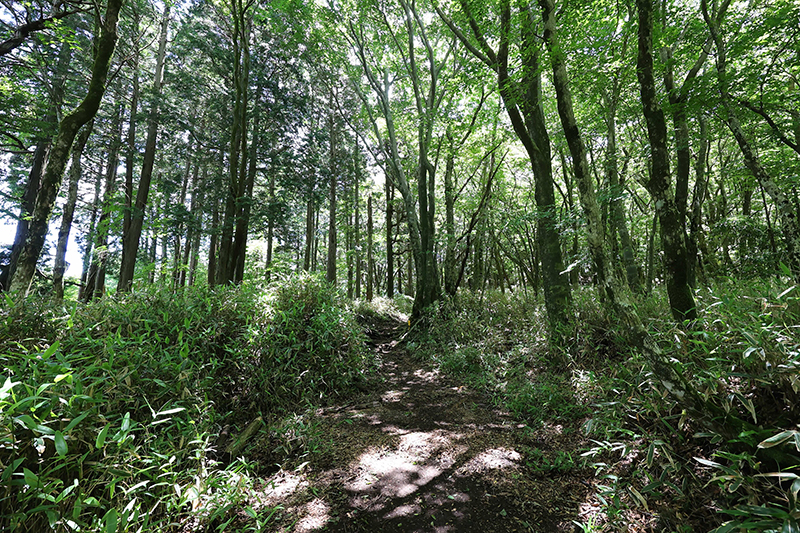
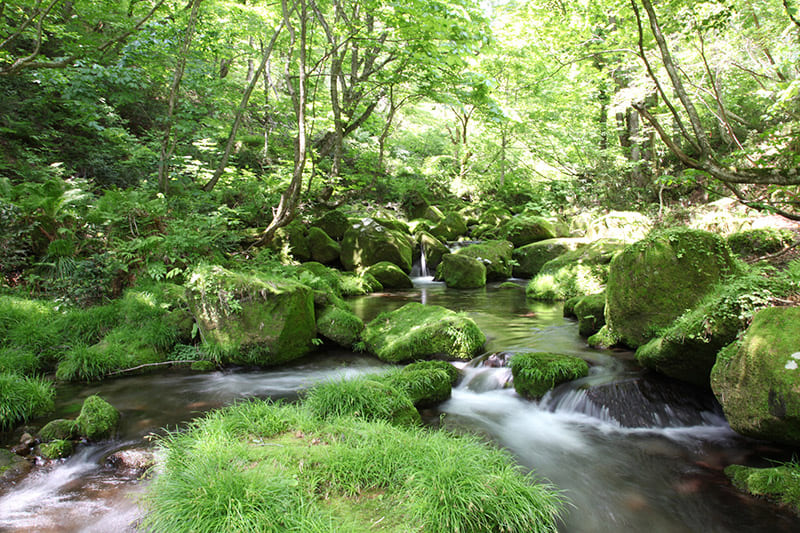
The region comprising the city of Kumamoto and 10 surrounding municipalities is a rare example of an area where the tap water for approximately 1 million residents is sourced almost entirely from groundwater. Volcanic deposits from ancient eruptions of Mount Aso created a highly porous soil structure that naturally filters rainwater deep underground, enriching it with minerals.
This is the primary reason why the global beverage company Suntory Holdings built its Suntory Kyushu Kumamoto Plant here in 2003. The facility uses this high-quality groundwater to produce various products such as beer and Suntory Tennensui, the company’s signature natural mineral water.
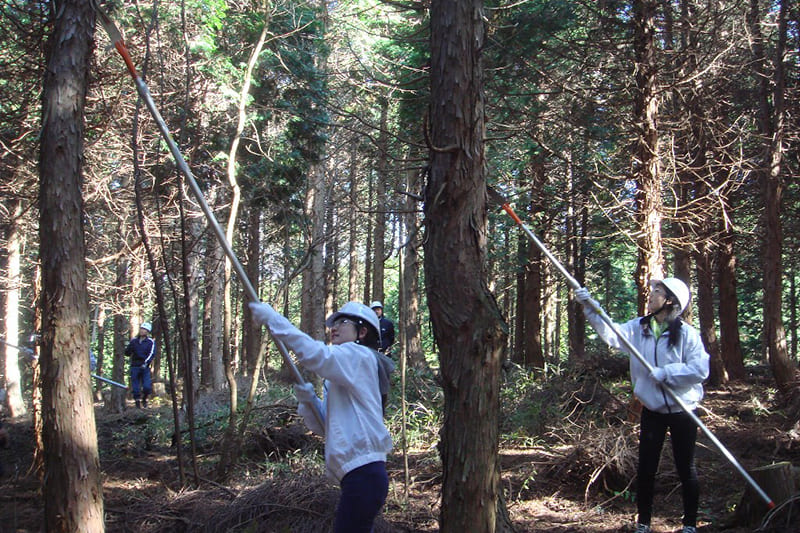
That same year, the company launched its first Suntory Natural Water Sanctuary in Kumamoto to enhance water-source recharge capabilities and preserve biodiversity. Working in collaboration with experts in various fields, Suntory conducts research to identify the forests’ characteristics, conditions and challenges, formulates medium- to long-term action plans and carries out activities such as creating maintenance trails, pest control, thinning, pruning and planting. The results are verified using various scientific data and simulations. By identifying areas for improvement and regularly reassessing the forests’ conditions, the project continuously adjusts its action plan and maintains the forest environment.
Unmanaged or overly dense forests block sunlight from reaching the ground, making it difficult for a diverse range of flora and fauna to thrive. In such forests, the soil becomes hard and barren, causing rainwater to run off into rivers instead of seeping underground, increasing flood risks.
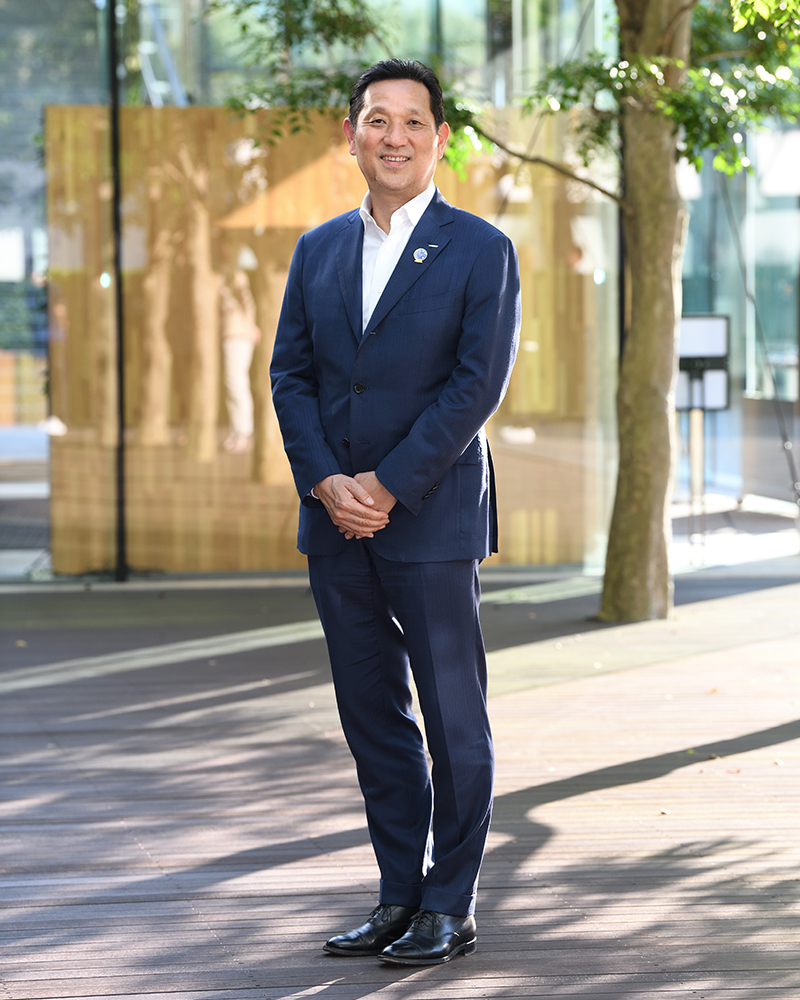
The richer the variety of plants, the greater the array of small animals that feed on them, which attracts larger predators, creating an environment rich in biodiversity. Fallen leaves and animal waste are broken down by microorganisms into rich humus soil, where soil organisms till the earth to create a soft, fluffy surface layer that allows rainwater to seep more easily into the layers deep below.
A resilient ecosystem where various plants coexist — some trees spreading their roots widely, others extending their roots deeply, and grasses taking root near the surface — is precisely what protects soil from eroding or collapsing. This disaster-prevention function and the abundant water resources provided by nature are an important asset not only for local businesses including Suntory but also for local communities.
Suntory Natural Water Sanctuary is designed to create and sustain this environment. As of March, the initiative had expanded to 27 locations across 16 prefectures. The total area of forests being restored and conserved by Suntory exceeds 12,000 hectares, recharging more than double the volume of groundwater extracted by its own plants in Japan.
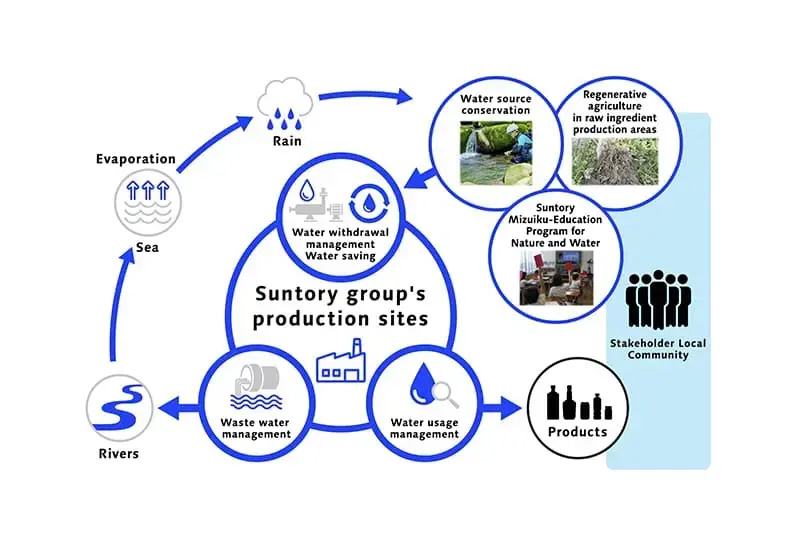
For Suntory, these efforts are not separate from its business. Water is essential for creating Suntory’s products, and the same water resources also sustain local communities, agriculture and ecosystems. Recognizing this shared dependence, the company works with local partners to protect and replenish water resources through initiatives such as the Natural Water Sanctuary, helping sustain healthy water cycles in the watersheds where it operates. In doing so, it aims to secure the water its business relies on while sustaining the communities and ecosystems that share these watersheds.
One of the most distinctive features of the activities in Kumamoto is the fuyumizu tambo (winter-flooded rice paddy) project launched in 2010. Typically, rice paddies are flooded before the planting season, which starts around May or June. While the rice is growing, the water levels are carefully managed to keep the fields filled, and then the water is drained away ahead of the harvest between late August and October. While paddies normally remain dry throughout the winter, this project continuously channels water into the fields during the winter months, promoting the infiltration of water into the ground. This serves as an effective method for recharging water outside of forested areas. In addition to this, efforts are underway in collaboration with local farmers and researchers to support a shift toward organic farming in these paddies, creating habitats for diverse organisms and exploring how greater biodiversity can help reduce pest damage.
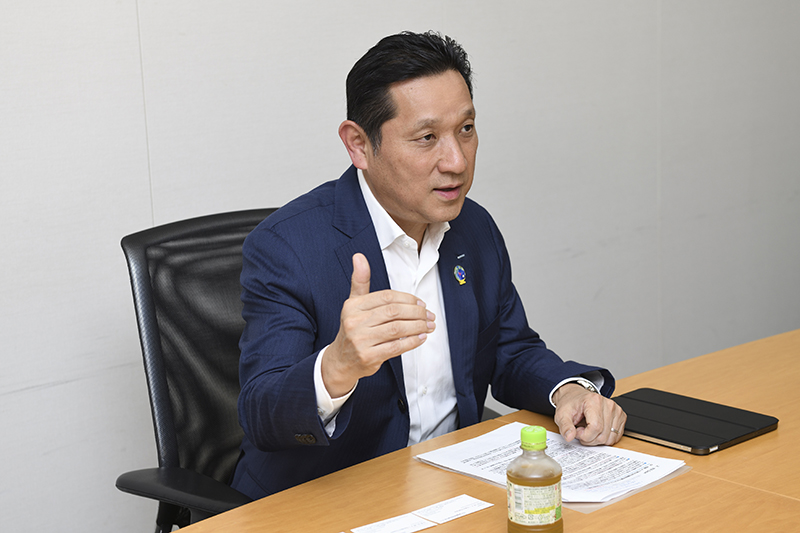
Another distinctive initiative is the conversion of abandoned farmland into wetlands. This year, an initiative began to restore approximately 3,000 square meters of abandoned rice paddies adjacent to the Natural Water Sanctuary Aso into wetlands by drawing water from a nearby forest stream. Similar to the winter-flooded paddies, this contributes to groundwater recharge while simultaneously conserving biodiversity by helping create habitats for amphibians such as frogs, aquatic insects and other native wildlife. Local farmers and researchers are also involved in this project. Jun Asaki, the chief sustainability officer of Suntory Holdings, noted that it is becoming increasingly important to work with diverse stakeholders to engage in water-source conservation and groundwater recharge over broader areas beyond just upstream forests.
Allowing water to seep deep into the ground can reduce landslides and river flooding, but in recent years Kumamoto residents have still faced the problem of street flooding caused by torrential rains. The primary cause is said to be changes in land use, such as building houses and factories on former fields and rice paddies due to accelerating urban development and the expansion of industrial facilities. To address this issue, the initiative Kumamoto Water Positive Action was launched in March 2025. Bringing together partners from academia, industry and finance, the initiative seeks to create a framework that enables broader participation in groundwater recharge efforts through green infrastructure such as rain gardens.
A rain garden is a planted area designed to temporarily store rainwater and allow it to slowly infiltrate into the ground, reducing the volume of water that flows directly into sewage systems during heavy rains. It is a key piece of green infrastructure used to mitigate urban flooding.

Research and development are also underway on innovative financial mechanisms, including monetization of the groundwater-recharge value generated by rain gardens. To help accelerate these efforts, the Kumamoto Water Positive Design Center was established earlier this year. “Our Natural Water Sanctuary has been ongoing for 23 years, and we have our own specialized Institute for Water Science. We also have experience partnering with local stakeholders on water-recharge initiatives internationally, including in Spain, the United States and Mexico. We hope to act as a catalyst for multistakeholder collaboration here in Kumamoto as well,” Asaki said.
At the Global Nature Positive Summit held in the city of Kumamoto in July, Asaki and other representatives from Suntory took the stage to share the company’s nature-positive achievements, including its initiatives in Kumamoto, with participants from Japan and abroad. Asaki noted that two-thirds of the attendees at the summit were from the industrial and financial sectors, indicating a high level of awareness among private businesses regarding nature-positive corporate activities.
Suntory is the only company in Japan to have received the highest-level Platinum certification under the global Alliance for Water Stewardship (AWS). It is also one of the five companies that co-founded the Japan Water Stewardship Leadership Group in 2025. “A watershed cannot be stewarded by one company alone. Through this group, we hope to work with other Japanese companies, sharing knowledge and learning from one another to extend water-source conservation beyond our own sites and across entire watersheds,” Asaki said.
Suntory is a member of the Sustainable Japan Network, a group of companies that cooperate with this newspaper to spread information about sustainability in Japan. You can also be part of the network; check https://sustainable.japantimes.com/sjnetwork-en for more details