November 16, 2026
Japan Post to expand its social infrastructure services


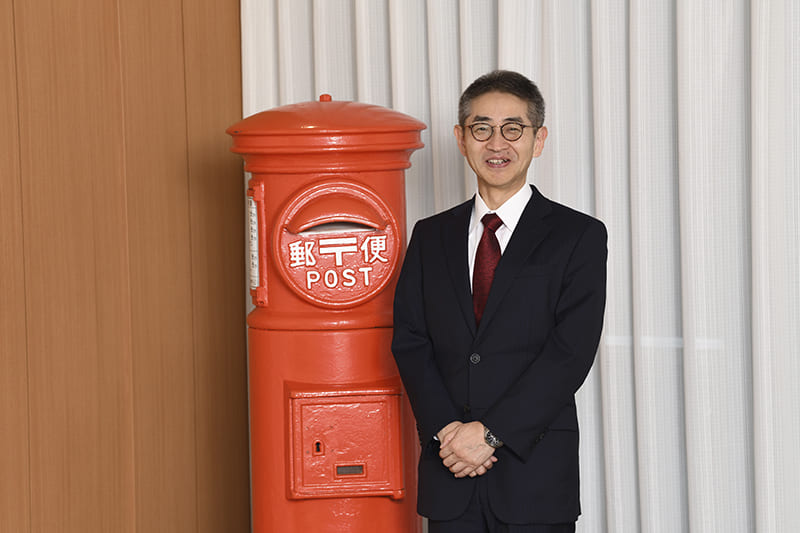
Japan Post Co. is set to transform itself by strengthening its role as part of the country’s social infrastructure, building on its nationwide network of approximately 24,000 post offices built up over more than 150 years.
The postal arm of Japan Post Holdings Co. was established when privatization of the postal services began in 2007. Although mail volume has declined due to digitalization and online communication, mail is delivered to around 30 million delivery locations every day, and the group maintains approximately 120 million ordinary deposit accounts.
This year, a revised set of postal privatization laws added a new task to the group: providing essential community services such as municipal work for the social security system, vacant house survey, online medical care, and lifestyle support services for senior citizens, including face-to-face consultation.
“We provide services that can use the existing post office network to help people in communities. I expect the role of supporting such social infrastructure to grow further in the future,” said Japan Post President and CEO Shinya Koike in a recent interview, part of a monthly series by Naonori Kimura, a partner for the consulting firm Industrial Growth Platform Inc.
Koike emphasized that the company’s role is becoming increasingly significant as Japan’s population ages and the number of older residents grows in both rural and urban areas. “In these circumstances, face-to-face communication at post offices is especially valuable to society,” he said.
Koike related one anecdote he heard while inspecting post offices in Chiba Prefecture following torrential rain and flooding in August, about an elderly man in tears because he wanted to see the postmaster of his neighborhood post office, which was temporarily closed for maintenance and disinfection after the floods. Koike said the story revealed a deep emotional bond that went beyond a business relationship.
A network built on trust
“It goes beyond postal, savings and insurance services. Post offices offer something extra that local residents can rely on,” Koike said. The postmaster may have replaced a light bulb for the elderly man, or run errands for him. “It is highly significant that post offices have become an integral part of their local communities,” he added.
The unique bond between residents and post offices, which differs from their ties with places like banks and convenience stores, may stem from the history of post offices.
The country’s postal system started in 1871 as a state-run service. Due to the national government’s limited budget in those days, however, most post offices were built in later years through contributions from local notables and landowners who donated property for the offices and were entrusted with the job of postmaster.
To reduce the postal arm’s chronic deficits and improve service, a law to privatize the postal group was enacted in 2005 under Prime Minister Junichiro Koizumi. In addition, although the group’s enormous banking and insurance businesses have long faced criticism from the private sector as not playing on a level field, the initial plan to sell off all shares in the group’s savings and insurance units remains only halfway complete following a series of political reversals.
Public service and profit
The major lingering issue is how to maintain the nationwide postal network as a public good while keeping it economically viable, since private companies tend to close unprofitable outlets in rural areas. The postal network has remained in the red, and the business environment has become even harsher in recent years, with digitalization reducing communication by letter and postcard.
Experts doubt whether the revised Postal Service Privatization Act will help advance privatization, as the legislation provides for the injection of about ¥65 billion (over $400 million) a year in public funds into Japan Post.
Koike acknowledges the challenge of boosting profitability while maintaining the public good. “Japan Post is a subsidiary of publicly listed Japan Post Holdings, so we need to achieve a certain level of profitability. However, maintaining the common good at the same time is a difficult task,” he said. “We are working sustainably by increasing operational efficiency through management efforts while asking users to bear some of the necessary burden.”
Japan Post Group unveiled its business blueprint in May by releasing “JP Plan 2028,” a medium-term plan that aims to advance a “co-creation platform” that supports customers and local communities in three areas of financial services — comprehensive logistics, overall financing and lifestyle support — while at the same time expanding its real estate business. It also says the group aims to consolidate the current approximately 3,200 collection and delivery bases into 2,700, expecting cost savings of about ¥5 billion.

Beyond traditional mail
Koike said the postal company aims to become an all-round comprehensive logistics company that responds to customers’ various needs by strengthening the delivery of goods and using the existing network beyond merely distributing correspondence and cards.
The postal group has laid the foundation for this business. It bought the Australia-based logistics company Toll Holdings Ltd. to reinforce its overseas logistics business in 2015 and acquired the Japanese logistics company Tonami Holdings last year to strengthen the domestic network both for corporate and individual customers.
Yet Japan Post is not focused solely on business efficiency. At the end of the interview, Koike mentioned the significance of sending seasonal greetings to friends and family — a traditional custom that is on the verge of disappearing amid digitalization. “Even if it is only once a year, I hope people will see the value of reaffirming their emotional connections with one another by sending New Year’s cards with handwritten comments,” he said.
Naonori Kimura
Industrial Growth Platform Inc. (IGPI) Partner

Japan Post’s network of approximately 24,000 post offices and delivery routes extending to every corner of the country holds significant value as social infrastructure that goes far beyond a mere logistics network. Japan Post’s local presence, face-to-face consultation services and ability to provide essential services nationwide are major strengths. This network is an indispensable social infrastructure. Expanding its role into areas such as municipal administrative services, community monitoring and telemedicine can be seen as an effort to transform this foundation into a “daily-life support platform” that addresses local challenges.
In addition to improving efficiency through digital transformation, Japan Post is confronting the challenge of delivering public services while generating reasonable profits by expanding its logistics operations and pursuing partnerships within and beyond its industry. Even as digitalization advances, the fundamental mission of connecting people remains unchanged. The value of a letter — conveying feelings with a few personal words through something that can be seen and touched — stands out all the more in the digital age. Japan Post is “a company sustained by its people.” We look forward to seeing the company preserve the human warmth at its core, reconcile its public mission with economic viability and transform this time-honored yet ever-relevant social infrastructure into a sustainable model for the future.