May 27, 2026
Creating shark fin cuisine amid global headwinds
Destination Restaurants 2026




PHOTOS: TAKAO OHTA
One of the criteria considered in The Japan Times’ Destination Restaurants selection is whether a restaurant has the capacity to contribute to regional revitalization through cuisine. And one aspect of this question is whether the restaurant coexists in a positive way with its surroundings, including the natural environment. In these circumstances, there may be quite a few readers who feel uncomfortable with this year’s selection of Kesennuma Kuromori, a shark fin specialty restaurant in the Miyagi Prefecture city of Kesennuma, as Destination Restaurant of the Year — the establishment singled out among the 10 honorees as the year’s representative restaurant. The reason is that in recent years there has been a growing tendency worldwide to view shark fin consumption as ethically problematic in terms of marine ecosystem protection and animal welfare.
Various international organizations have established agreements concerning shark conservation and management and have regulated shark fin fishing. These include the United Nations’ Food and Agriculture Organization in 1999 and, in 2010, the U.N. Bonn Agreement and the Washington Convention (CITES). Additionally, shark fin sales and possession have been banned in a number of American states, and an import prohibition has been enacted in the United Kingdom. As a result of increasing anti-shark fin sentiment in Europe and America, it was announced in 2012 that shark fin would not be served at government-related dinners and banquets in Hong Kong, the world’s largest shark fin consumer and distribution hub, and the same policy was announced in mainland China in 2013. This movement has spread to private enterprise, with a sharp increase in the number of businesses that have stopped serving and importing shark fin, including luxury hotels and airlines.
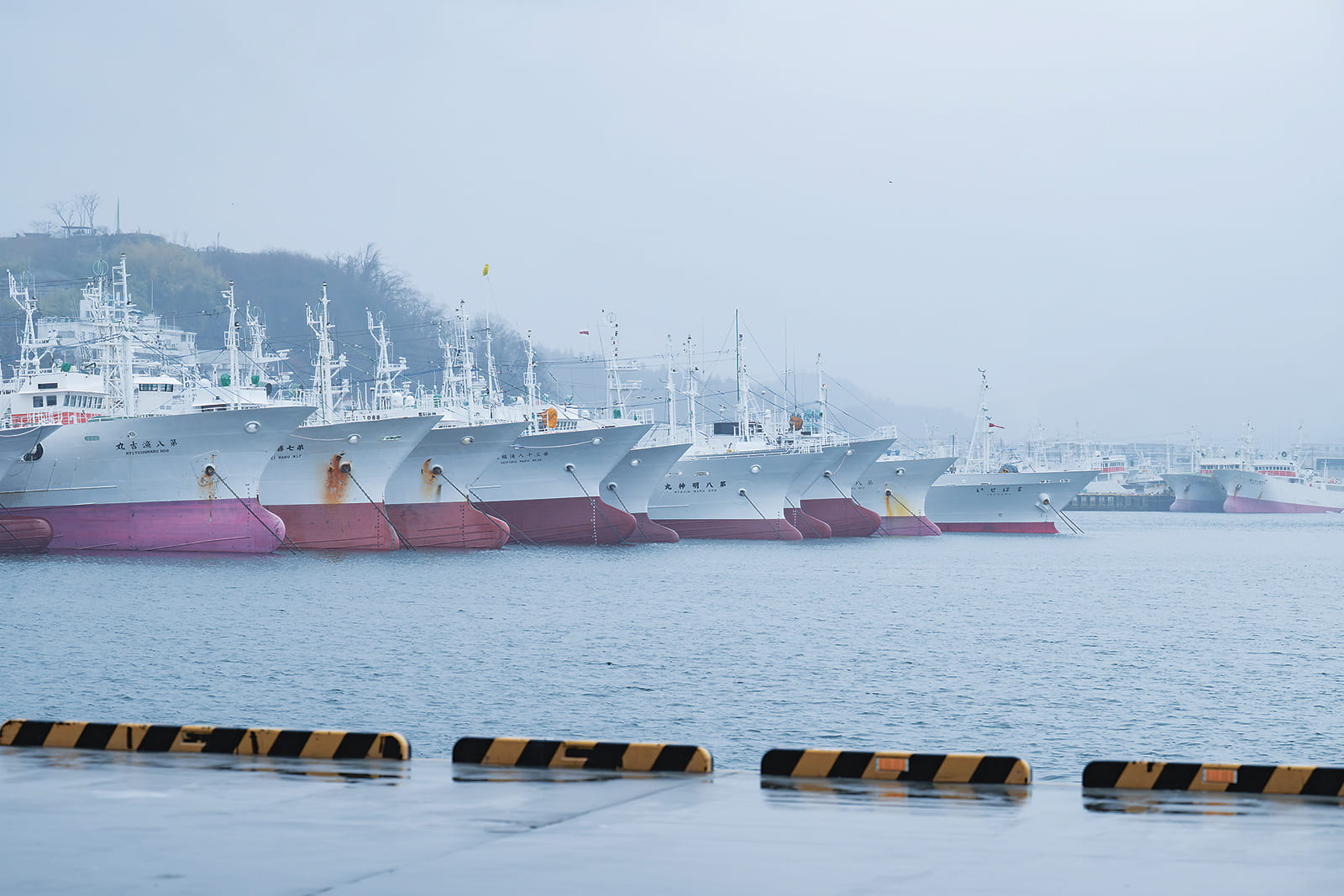
Though this trend continues even now, the Japanese government has been taking a wait-and-see approach. One reason is that, while over 100 of the 500-plus shark species are endangered, the extinction risk for blue shark, shortfin mako and other shark species landed in Kesennuma (Japan’s largest shark fin production area) is extremely low. Japanese fishermen, moreover, do not engage in the cruel practice of finning — removing only the fin and discarding the rest of the shark into the sea. Viewed in this light, the anti-shark fin movement that began in Europe and America could even be regarded as a case of unfounded rumors causing reputational harm.
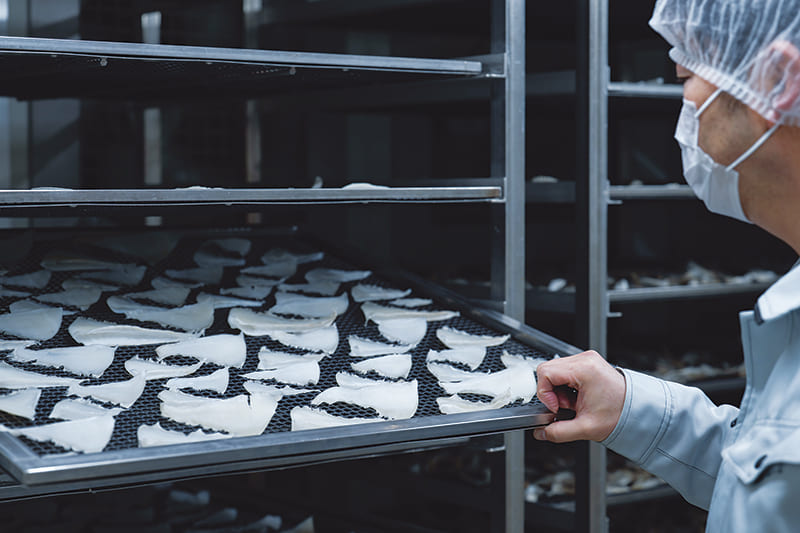
Ishiwata Shoten, which wholesales shark fins to Kesennuma Kuromori, has been processing and selling shark fins in
Kesennuma for over half a century. Hisashi Ishiwata, the company’s third-generation owner and current president, explained how sharks caught in fishing are utilized in Kesennuma without any waste.
“Tuna fishing has flourished in Kesennuma for many years. When longline fishing is used to catch tuna, sharks go into the net, too. Kesennuma’s shark-processing industry has been reorganized to make the most productive use of these sharks. The tail fins, dorsal fins and so on are used in shark fin cuisine. Shark leather can be used as well. Actually, at the G7 science and technology ministers’ meeting held in Sendai in 2023, there was a great deal of interest when Prime Minister Sanae Takaichi (who was then Japan’s minister of science and technology) wore shark-leather high heels produced as an initiative for recovery from the Tohoku earthquake. In addition, shark meat is used in fish paste products and pet food, the organs are used in liver oil, the bones are an ingredient in supplements — nothing is wasted, so almost nothing is discarded.”
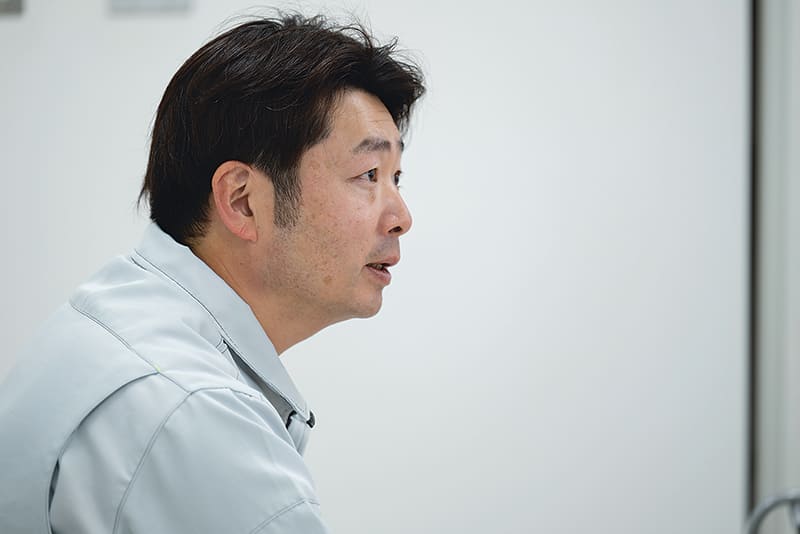
Kesennuma Kuromori’s chef, Yoji Kuromori, shared his thoughts about shark fin cuisine.
“In Kesennuma, shark fin has long been an important industry. Starting in the Edo Period, shark fins, dried sea cucumbers and dried abalones, known as tawaramono sanhin (the three baled products), were exported from Nagasaki to China in straw bales. Concerning shark fin, what the people of Kesennuma have accomplished through ingenuity is something truly sustainable, and it has been my mission to open a restaurant here and share this history. Shark fin is a dried food, and it takes knowledge and experience to skillfully rehydrate and cook it, so it isn’t something that just anyone can do. I prepared these ingredients when I worked at high-end Chinese restaurants in Tokyo, and that experience has been really useful.”
Ever since they met over a decade ago, chef Kuromori and producer Ishiwata have been working together to enhance the value of shark fin.
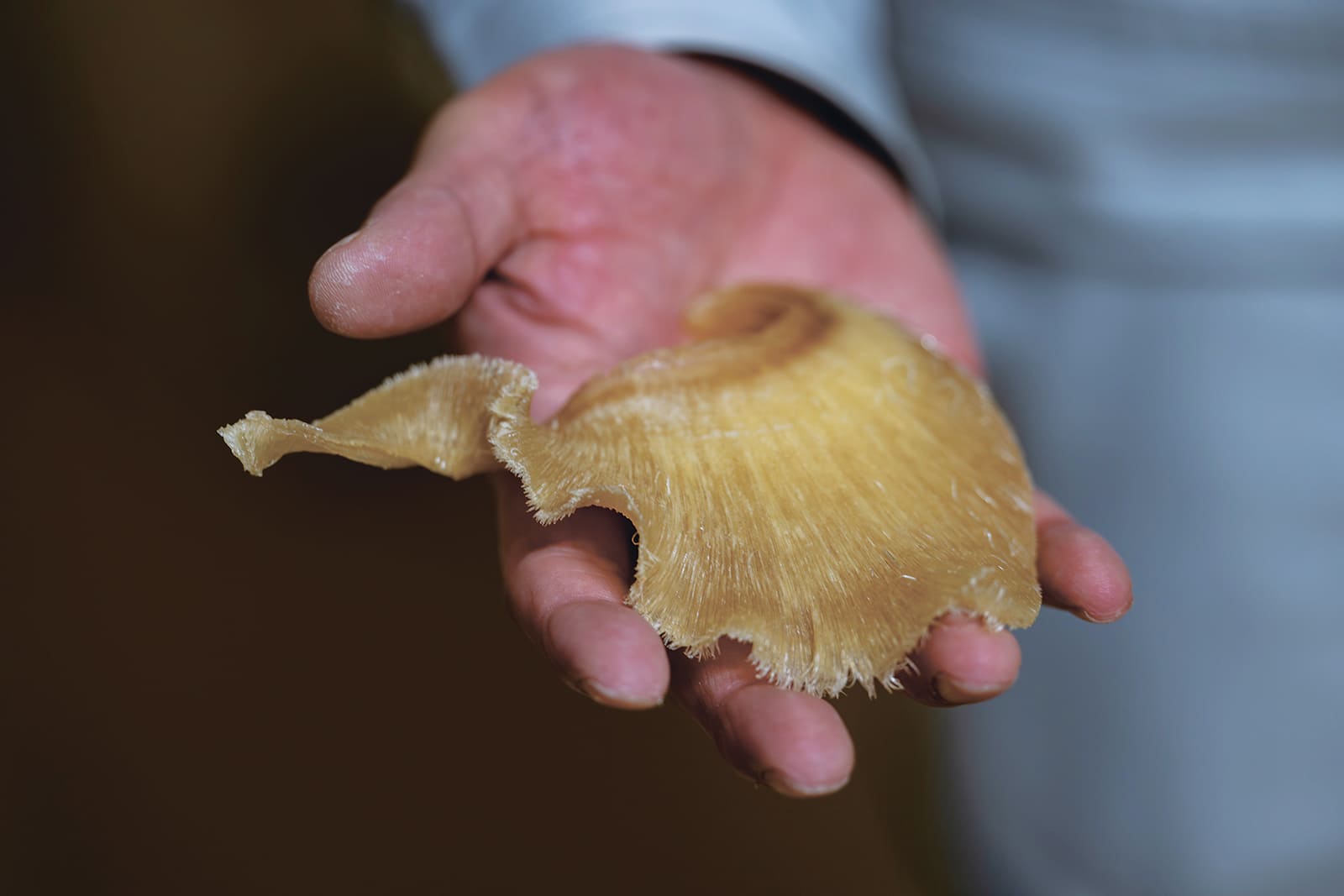
Until the 1960s or 1970s, the usual method for preparing shark fins was to dry the fins after salt-pickling them with the skin still on. But Ishiwata’s grandfather devised the method of removing the skin and bones while the fins were still fresh, then drying them. This is now the standard method throughout the world.
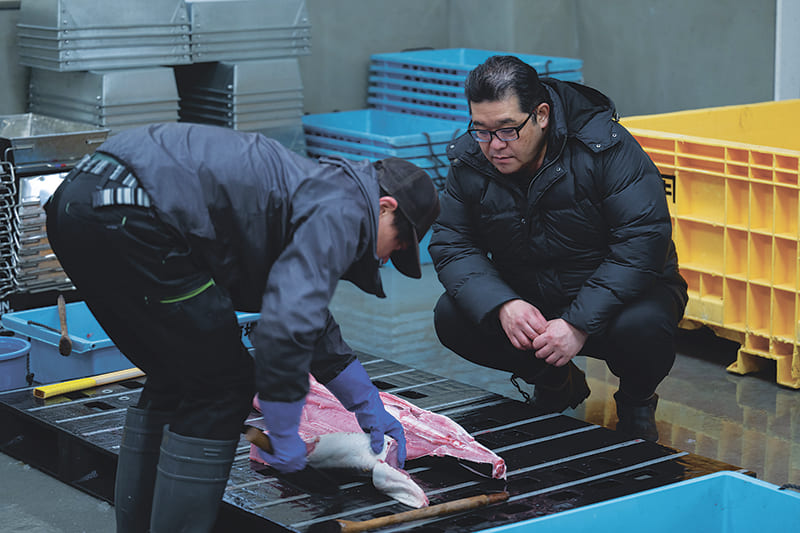
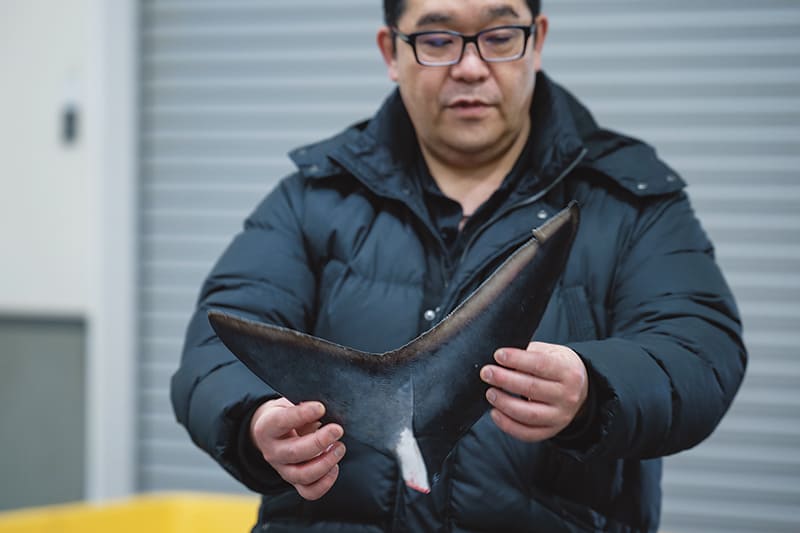
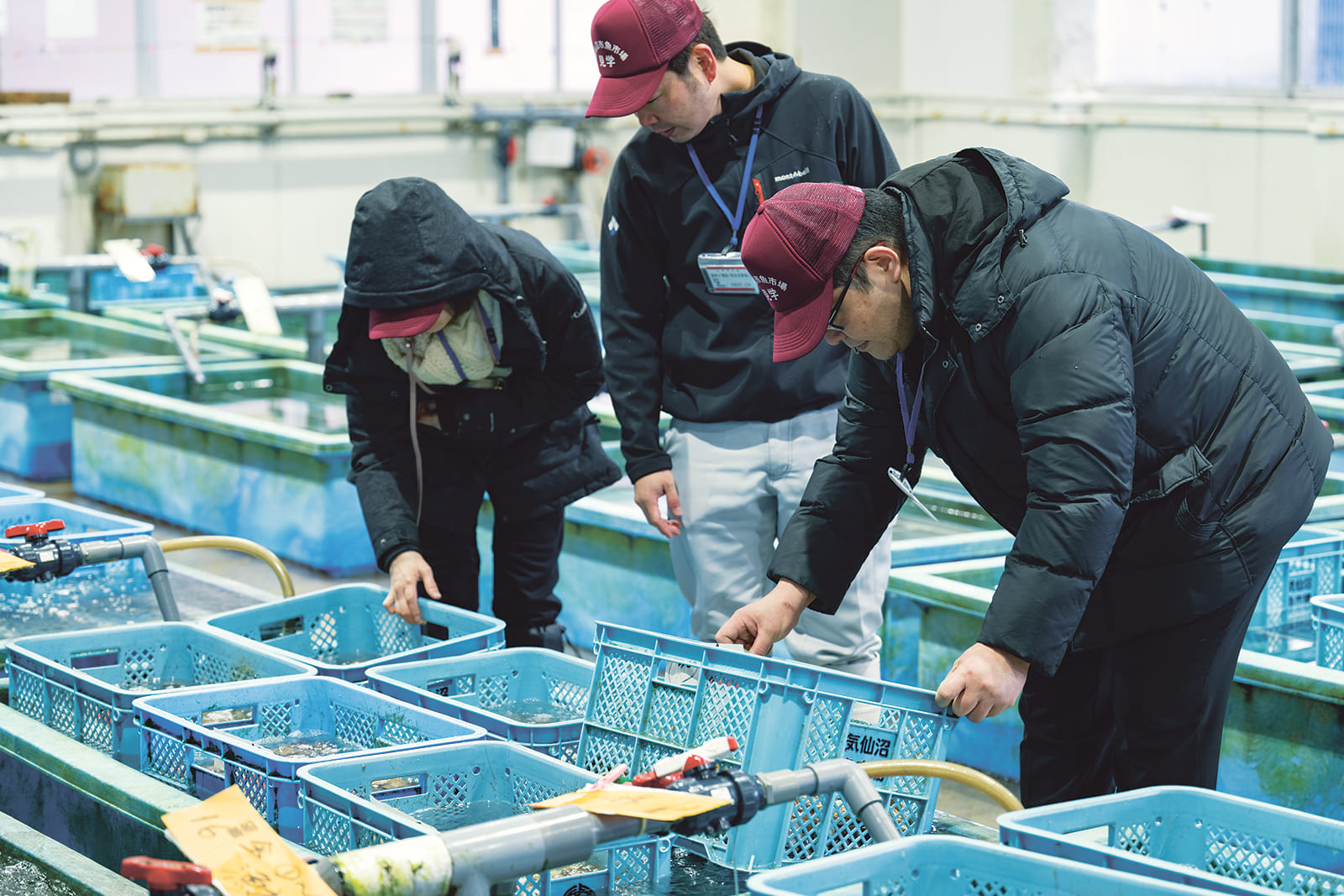
Chef Kuromori frequently drops by the shark fin processing plant.
Ishiwata expressed his thoughts this way: “Shark fin processing techniques have gradually been improving, and we’re now exploring the next stage. Sharks in the ocean are the same around the world, but the quality of the products differs according to the fine details of processing. The product quality in countries that treat shark fin as simply a type of work or an investment is completely different from the quality of products in Kesennuma, where shark fin is treated with real respect as a food. After visiting processing plants in Indonesia, Spain and quite a few other countries, I’m certain that the quality of Kesennuma shark fin, including freshness and safety, is the highest in the world. And if that quality is combined with the skill of a chef like Mr. Kuromori, the value is bound to increase even more.”
Kuromori then explained, “Most Chinese restaurants that offer shark fin serve only tail fin. But the course menu at our restaurant includes pectoral fin, dorsal fin, engawa (dorsal fin muscle) and so on from four different shark species — nine types of shark fin in all. When chefs come to dine at the restaurant as guests, they discover a new delight in shark fin — and within a week, Ishiwata Shoten receives an order for various shark fin parts.”
Kuromori continued, “Kesennuma’s Pacific saury and bonito are famous too, but they aren’t necessarily a powerful draw in terms of bringing in overseas visitors. On the other hand, Kesennuma is the only place where dishes featuring shark fin, a luxury ingredient in Chinese food, can be eaten as ‘locally produced and locally consumed’ cuisine. Today the consumption of shark fin is restricted internationally, and for that very reason I think it’s entirely possible that celebrities will turn their attention to this area and come here to experience the cuisine. If I do everything I should, people will surely come here from everywhere in the world.”
Even if population decline is significant, an increase in the tourist population will benefit the area. Kesennuma works together as a community in handling sharks sustainably, and if its initiatives expand beyond the ocean, the environment around shark fin may change as well. Chef Kuromori is at the front line of these efforts.
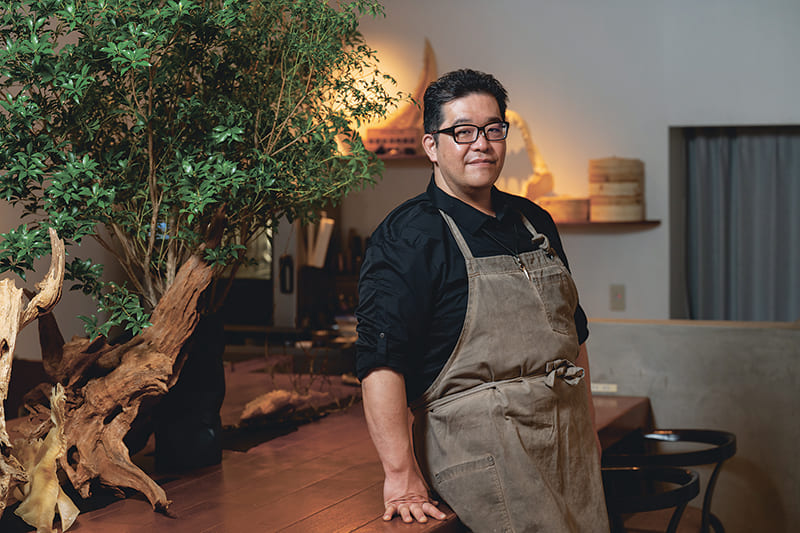
YOJI KUROMORI
Born in 1976 in Yokohama, Kuromori lived in Hokkaido between the ages of 8 and 20. After high school, he started his culinary career at a Chinese restaurant in a Sapporo hotel, then moved to Tokyo when he was 21. At Hong Kong Garden in Nishi-Azabu, he received training in Cantonese cuisine and dim sum from the restaurant’s Hong Kong-born chef. Kuromori then joined the Fukurinmon restaurant group and became its first Japanese head chef. He subsequently worked in the restaurant-consulting industry. The Tohoku earthquake of 2011 prompted his decision to move to Sendai in October of that year. Following stints at a gyoza restaurant and in catering, he opened the restaurant Kuromori in 2014. After relocating twice in Sendai, he opened Kesennuma Kuromori in the city of Kesennuma in September 2025.
世界的に逆風が吹くなかでフカヒレ料理を作る意義。
近年、海の生態系保護や動物愛護の観点から、フカヒレを食べることが倫理的に好ましくないという風潮が世界的に広まっている。だが、日本政府はこの流れに対し静観している。日本一のフカヒレ産地である気仙沼で水揚げされるのは絶滅リスクが極めて低い種類のサメであり、なおかつ、皮や肉、骨、内臓に至るまでサメをあますことなく利用しているという背景があるからだ。
フカヒレ加工業者と二人三脚で独自のフカヒレ料理を追求する『気仙沼 KUROMORI』シェフ、黒森洋司は語る。
「フカヒレ料理を地産地消で食べられるのは世界で気仙沼だけ。今、世界的にフカヒレを食べることが制限されているからこそ、セレブリティがここを目掛けて食べに来る可能性があるのではないでしょうか。」
たとえ人口減少が著しくとも、観光人口が増えれば地元は潤う。街をあげてサステナブルにサメを扱う気仙沼の取り組みが海の向こうにも広まれば、フカヒレを巡る環境も変わるかもしれない。黒森はその最前線にいる。
Return to Sustainable Japan Magazine Vol. 56 article list page