May 27, 2026
How the new DR award plaques are made
Destination Restaurants 2026




PHOTOS: NAOFUMI MIYAJIMA
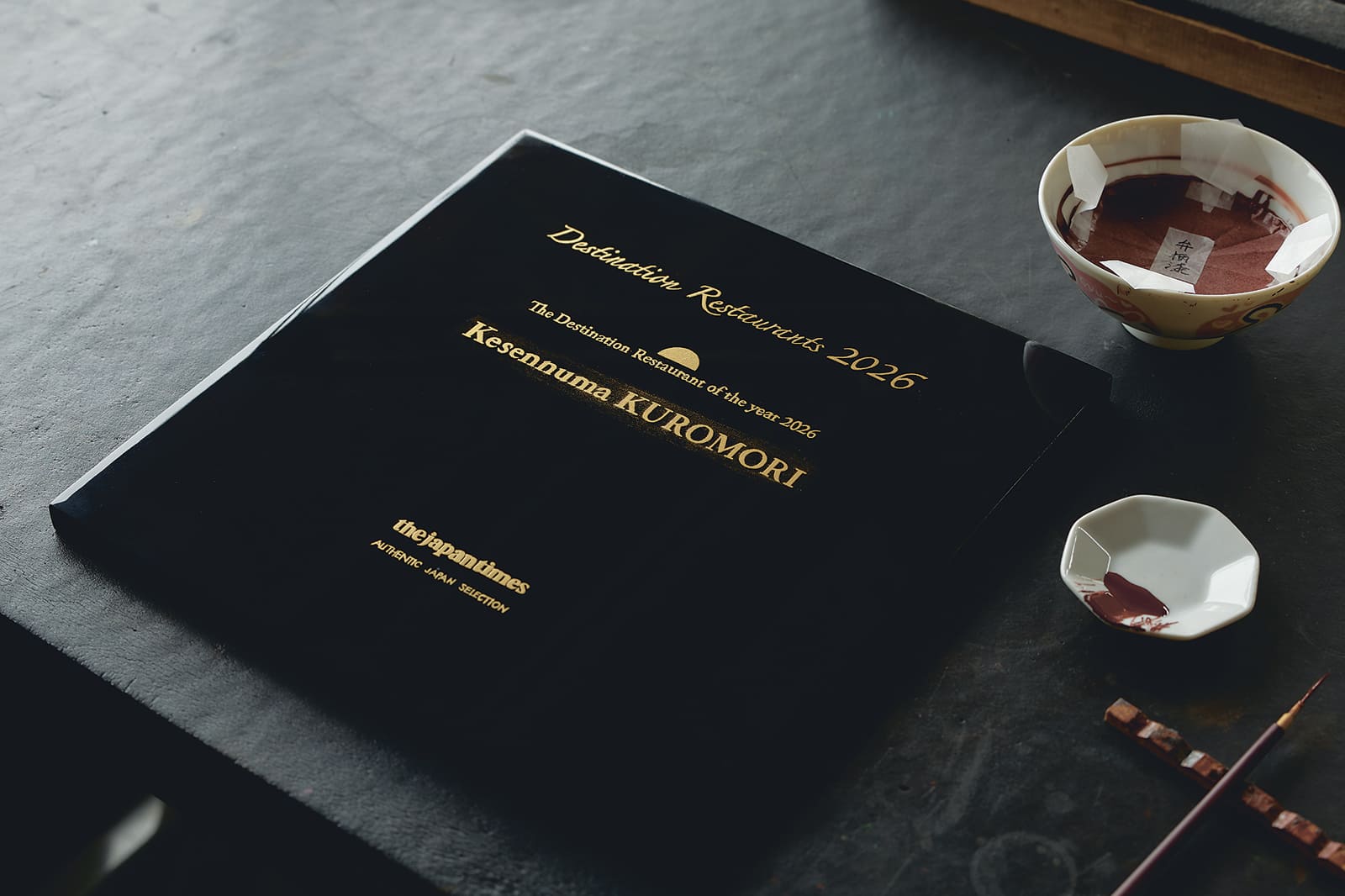
At the annual ceremony to honor those selected for The Japan Times’ Destination Restaurants list, award winners are presented with a plaque bearing their name and that of their restaurant. Aiming to also support recovery from the Noto Peninsula earthquake on New Year’s Day 2024, this year we have commissioned Kanazawa, Ishikawa Prefecture-based lacquerware store Nosaku to make the plaques.
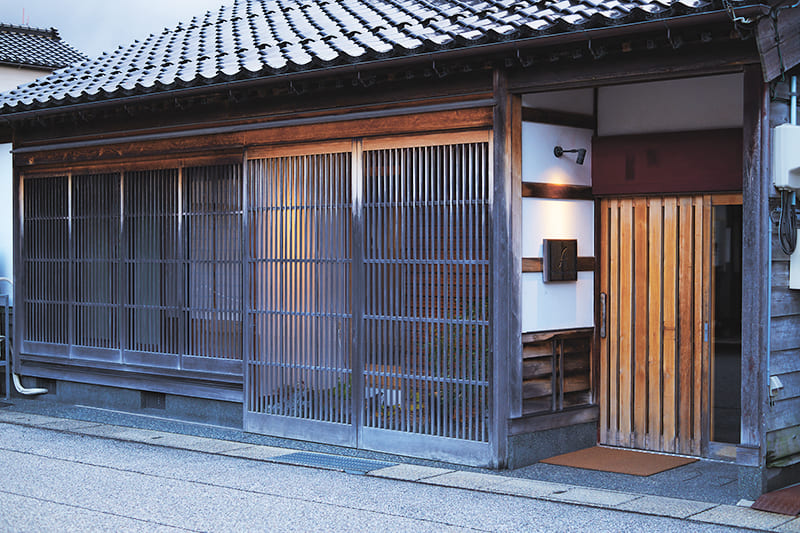
Nosaku has been making lacquerware since its founding in 1780 and also sells lacquer as a raw material. One of Japan’s leading lacquerware makers, it once supplied wealthy merchants and the Maeda family, who ruled what was then the Kaga domain, and today receives orders from prestige global brands. The business is also at the vanguard of the battle to rebuild the Wajima lacquerware industry, which was hit hard by the earthquake.
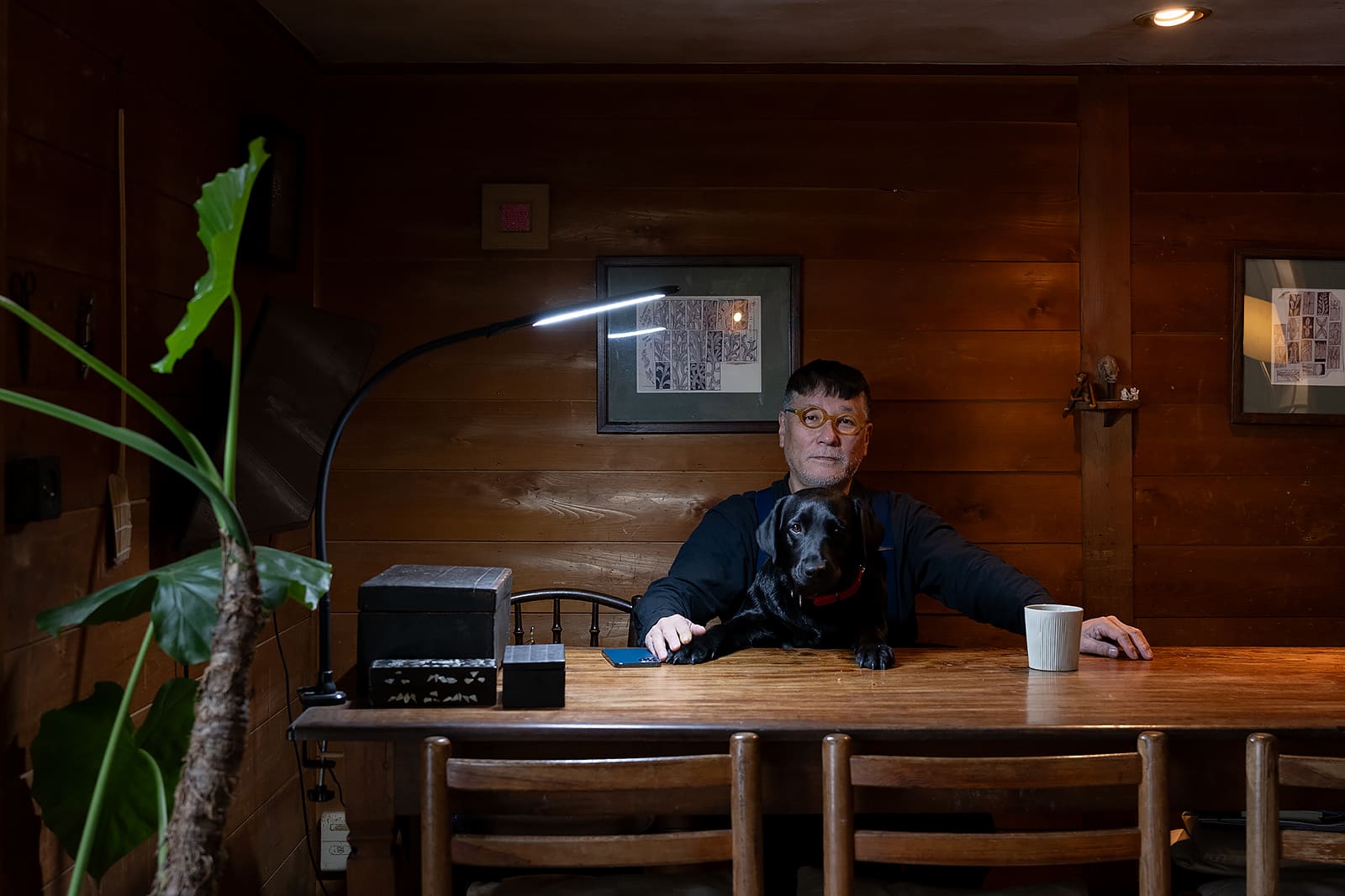
The magnitude-7.6 quake, whose intensity reached 7 in Wajima, damaged the city’s lacquerware workshops and stores, while a fire in the Wajima Asaichi market destroyed 12 business establishments. A number of businesses closed in quick succession, having lost their materials and tools. However, plenty of people still continue their work with Wajima lacquerware, both in Wajima itself and in Kanazawa and other places to which they evacuated. The main Nosaku store also features a section selling lacquerware items on behalf of Wajima lacquerware craftspeople and other artisans affected by the disaster. We talked to Nosaku’s President Yoshihisa Oka, the seventh-generation head of the business.
“We’re what’s called a nushiya, a producer of lacquered craft products,” Oka explained. “Our role is to decide on the direction to be taken in the design of a product and to choose the most appropriate craftspeople for the job. For instance, we’ll select the lacquer artisan based on the type of lacquer required, and the maki-e artisan according to the type of decoration needed. Making Wajima lacquerware involves 124 processes, including the production of the wooden base, the base coating — which may involve applying cloth to the item — internal coating, top coating and decoration using techniques such as maki-e, in which metal powders are applied, or chinkin, a type of gold inlay. It’s based on the division of labor, in which each process is contracted out to specialist artisans. Making a single piece from scratch takes a minimum of six months.”
In mid-April, when we visited to interview Oka, the top coating of the plaques had yet to be applied, so part of the artisanship involved was demonstrated using a prototype. The workshop we were shown around is actually a store selling Buddhist household altars in Kanazawa.
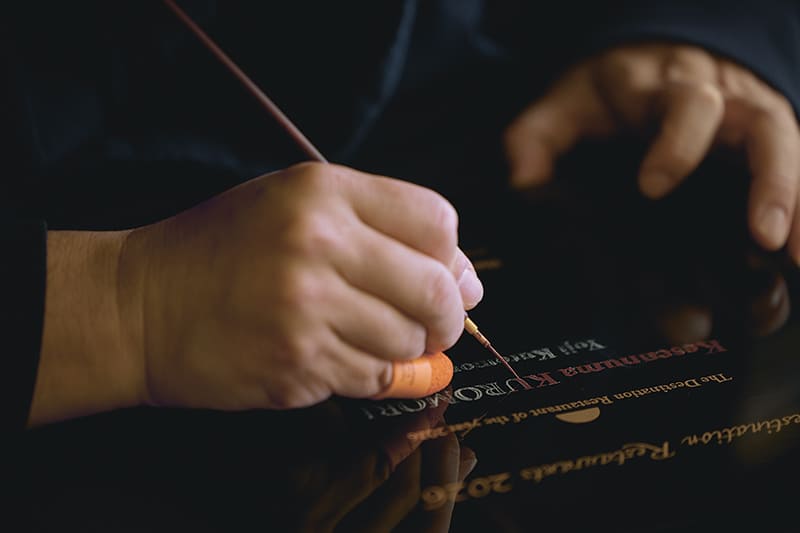
“The request was for a Gothic font,” he said. “It’s more like lettering than a flowing calligraphic script, so I asked a craftsman who’s skilled in writing characters through his everyday work inscribing memorial tablets.” This is why Oka nominated Kishin Otake, who manufactures Buddhist household altars and altar fittings as the fourth-generation head of Shoraku Otake Butsudan Seisakusho, which was founded in 1882. Otake is also a traditional craftsman who studied the maki-e technique.
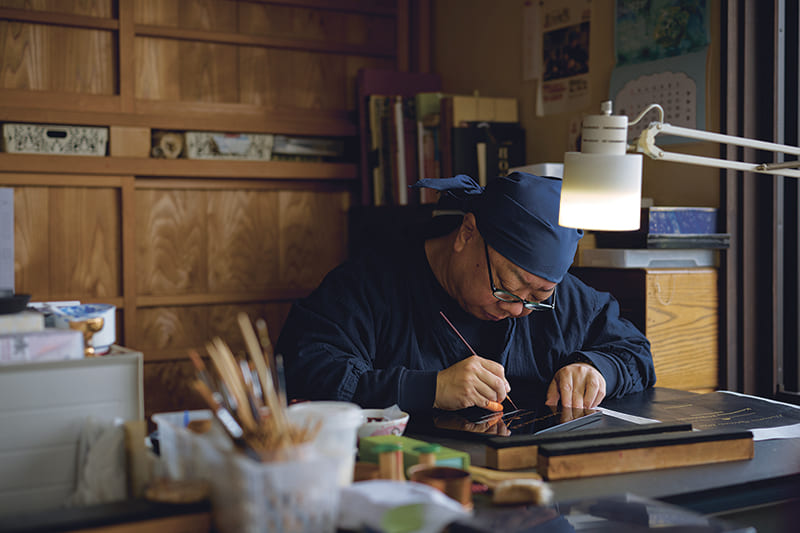
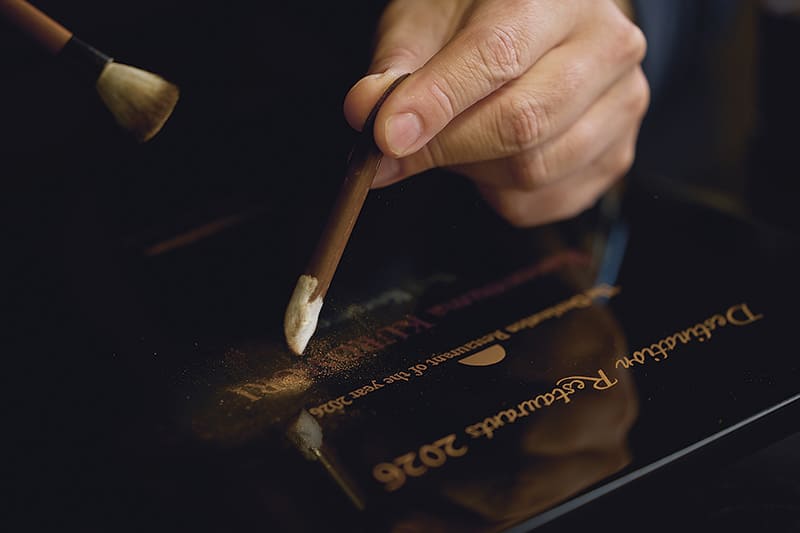
After writing the letters on the Wajima lacquerware plaque in a red-ochre lacquer called bengara, Otake waits about 15 minutes for the lacquer to partially dry before sprinkling powdered gold over it. It is a delicate task that makes even onlookers hold their breath. The lacquer is then allowed to dry fully before the roiroshi, or lacquer polisher, buffs the item to a final lustrous shine.
At the award ceremony in Tokyo in May, chefs engaged in regional revitalization through food will be presented with these beautiful Wajima lacquerware plaques.
NOSAKU
Founded in 1780 in the Kaga domain, in what is now Kanazawa, Ishikawa Prefecture. The company is principally engaged in the refining and supply of lacquer, the raw material for making the lacquer crafts that are a prefectural specialty. In doing so, Nosaku is upholding a tradition that spans more than 240 years, starting with the first head of the family, Notoya Sakutaro, right through to its current, eighth-generation head, Yoshiyuki Oka. Among others, the business also handles Kanazawa lacquerware, Kaga maki-e, Wajima lacquerware and Yamanaka lacquerware.
受賞シェフに手渡されるのは復興を目指す輪島塗の盾。
ジャパンタイムズが主催する「Destination Restaurants」では毎年、表彰式で受賞者に店名と名前入りの盾を贈っている。今年は2024年元日に起きた能登半島地震への復興支援を兼ね、石川県金沢市に店を構える安永9年(1780年)漆器店『能作』に輪島塗の受賞盾の制作を依頼した。
完成までに124の工程を要する輪島塗は、その工程ごとに専門の職人が作業を請け負う分業制で、その職人を振り分けるのも漆工芸のプロデューサーたる『能作』の務め。今回、『能作』7代目当主、会長の岡能久が、盾に名前を入れる職人として選んだのは明治15年(1882年)創業『匠楽 大竹仏壇製作所』4代目として仏壇仏具を製作し、蒔絵も学んだ伝統工芸士の大竹喜信だ。
大竹が輪島塗の板に紅殻漆で文字を書き、15分後に漆が半乾きになったところで金粉を蒔いていく。見ているだけで息が詰まるような繊細な作業だ。そこからまた乾かし、呂色師によって、ピカピカに磨き上げられて完成する。5月に東京都内で行われる授賞式には、10人のシェフの手元に、この美しい輪島塗の盾が手渡される。
Return to Sustainable Japan Magazine Vol. 56 article list page