June 01, 2026
Wakayama startup Nakagawa rooted in sustainable reforestation
Sustainable Japan Award: Satoyama Excellence Award




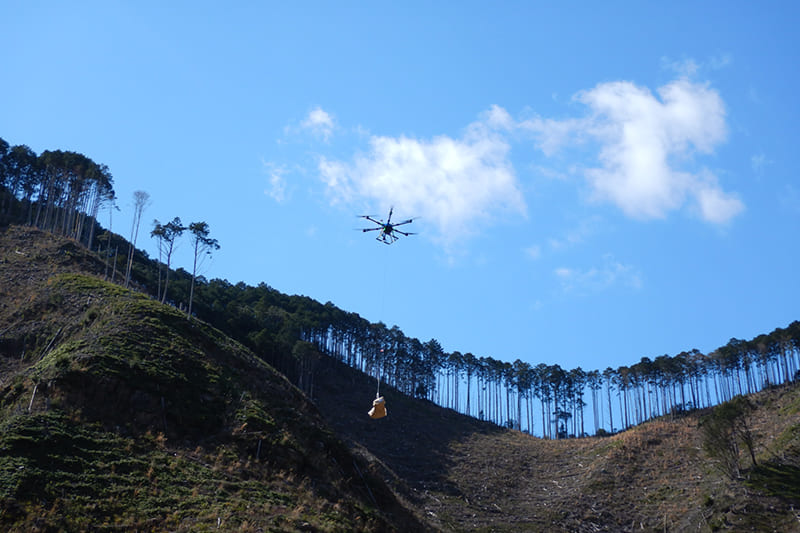
Nakagawa Co. Ltd. is a forestry startup built around an unconventional idea: “forestry without cutting trees.” Based in Tanabe, Wakayama Prefecture, it has developed a circular model to tackle challenges facing Japan’s forestry industry. It won an Excellence Award in the satoyama category of The Japan Times’ Sustainable Japan Award 2025.
In Japan’s forestry sector, reforestation has not kept pace with deforestation, with only around 40% of logged areas being replanted. According to President Masaya Nakagawa, one of the primary reasons is the severe shortage of younger workers willing to enter the field as the workforce ages. As a result, problems such as damage caused by animals and landslides are worsening.
“If forestry skills are no longer passed down to younger generations, the industry itself could eventually disappear,” Nakagawa said. “But if we can pass on the knowledge now and create an environment where younger generations can work more freely, new entrepreneurs may emerge and help rebuild the industry.”
After graduating from university,
Nakagawa worked in trade in Indonesia. However, after contracting dengue hemorrhagic fever, he returned to his hometown in Wakayama and joined a local forestry cooperative. His decision to launch the company was also shaped by growing doubts about modern working styles. At the time, he believed sacrificing himself for work would make his family happy. But when his 3-year-old son asked him to spend more time playing together, Nakagawa began rethinking the way he lived and worked.
“I also realized that if I started a company focused on planting trees, it could become meaningful work for the community,” he said. “And because there were so few people engaged in reforestation, there was very little competition.” With all of this in mind, he founded the company in 2016.
Nakagawa was particularly drawn to forestry’s unusually long time horizon, seeing potential in an industry measured not in months or years, but in decades. “In Japan today, many people work under constant deadline pressure and feel unable to take time off even when they want to,” Nakagawa said. “I began to think that if forestry could become profitable despite its long timeline, it might become an industry where people could work more freely.”
The company has turned tree planting into a community-driven initiative. The acorns used for reforestation are collected by local children, then grown into seedlings over roughly two years at sites including junior high schools, disability support facilities and small businesses before eventually being replanted in the mountains.
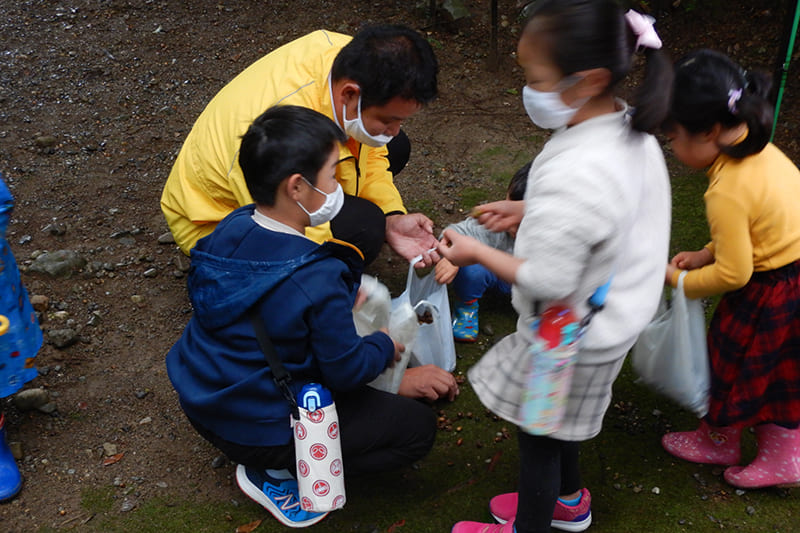
The company has also adopted pesticide-free seedling cultivation methods by using frogs captured by local children to help control pests naturally.
Even the soil used to grow the seedlings is part of a local circular system. Food scraps from households and employees are composted and reused as fertilizer, creating a local cycle in which food waste helps nurture the next generation of trees.
Forestry work has likewise been made more accessible for people unable to commit to full-time employment. Tasks such as weeding, which can be done in short shifts, are entrusted to parents raising children and elderly residents, creating flexible local jobs.
To address the industry’s labor shortage, the company introduced a six-hour workday and has focused on creating a more worker-friendly environment. About half of its 30 employees relocated from outside the region, and many also hold side jobs.
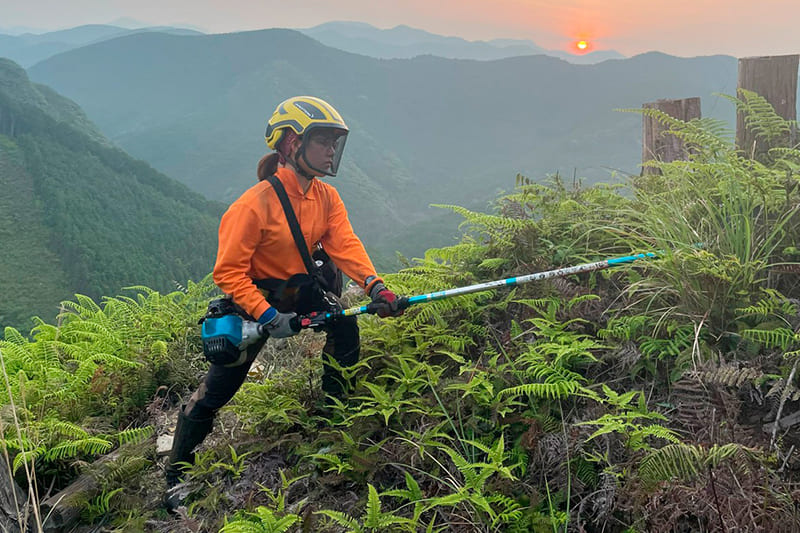
The company has additionally introduced large drones to transport materials through mountainous terrain, reducing the physical burden of forestry work. The change has also made fieldwork safer and more accessible for women.
The broadleaf oak trees being planted — ubame oak, the raw material used to produce Kishu Binchotan charcoal — are also expected to support Wakayama’s traditional local industries in the future.
Today, companies including Salesforce Japan Co. Ltd. and Manulife Insurance Co. support the company as sponsors. Naka-gawa believes the partnerships stem from the company’s long-standing commitment to sustainable, community-based forestry.
“By consistently doing things in a responsible and transparent way, we naturally came to meet the standards expected by global companies,” he said.
“In rural areas, people can still live richly without making money,” Nakagawa said. “Rather than pursuing rapid growth, I want to build a company that reinvests profits back into the community and its workers while creating broader economic impact.”
People inspired by the company’s model have begun launching similar initiatives elsewhere in Japan, and Nakagawa says his long-term goal is to foster like-minded entrepreneurs in all 47 prefectures. “Mountains exist everywhere in Japan,” he said. “That means people can freely work and live where they want.”