September 07, 2026
Tottori Wagyu dishes multiply at Hotel New Otani Tokyo fair
Sustainable Japan Network




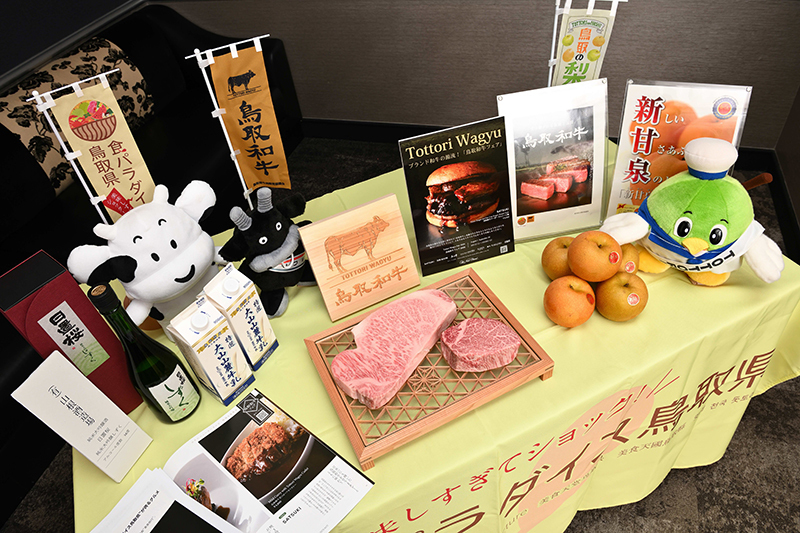
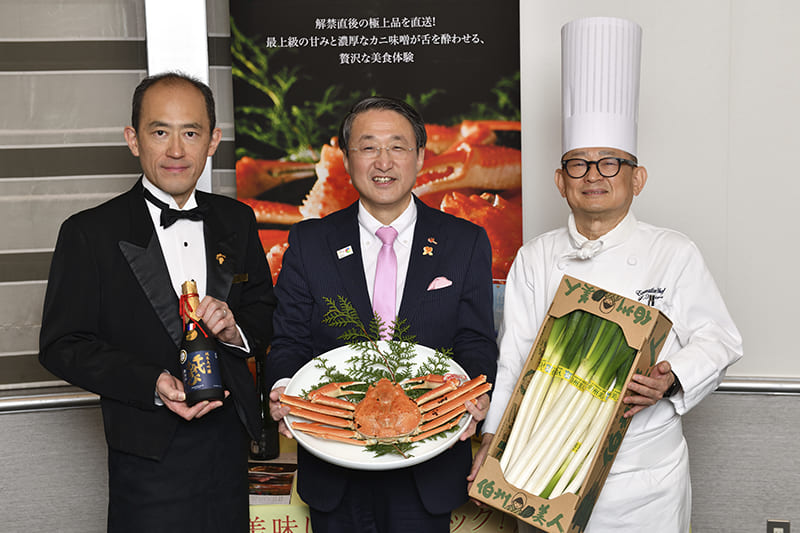
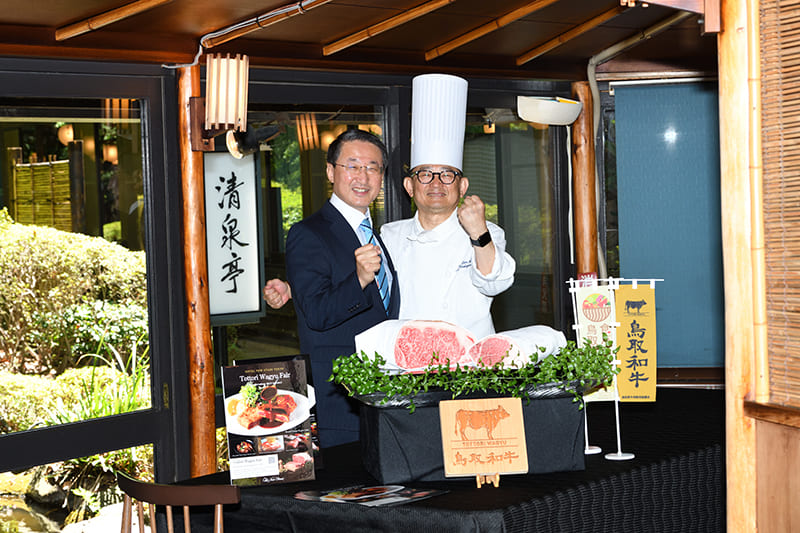
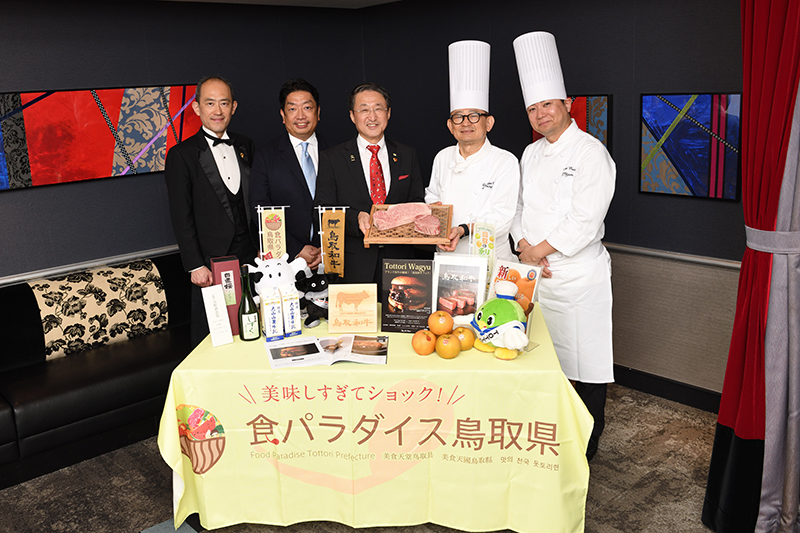
The Hotel New Otani Tokyo in Tokyo’s Chiyoda Ward is holding its annual event featuring Tottori Wagyu-brand beef until Sept. 20. This event has been held annually since 2018 at multiple restaurants within the hotel, and this year’s edition is the largest yet, with eight venues serving dishes made with Tottori ingredients, including Tottori Wagyu beef, pears and sake.
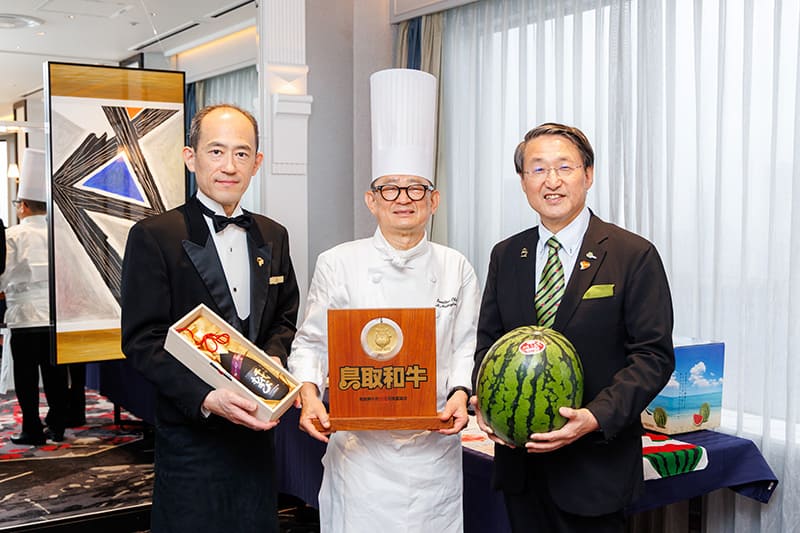
Tottori Gov. Shinji Hirai, who visited the hotel during the event, sampled four dishes from the diverse, creatively crafted menu prepared by the chefs.
Regarding the beef curry with a Tottori Wagyu cutlet served at the all-day dining restaurant Satsuki, Hirai remarked that the curry had a smooth and thick texture and a sweet flavor reminiscent of chocolate, and the rich oleic acid content of the Tottori Wagyu used in the sauce ensured that it was deeply savory without being greasy.
Hirai explained that Tottori Wagyu can be traced back to the sire Ketaka, which won first prize at the inaugural national wagyu competition 60 years ago. Tottori Wagyu’s fat contains high levels of oleic acid — the main component of olive oil — and its lean meat contains a lot of glycogen, which is considered a key source of umami.
The executive chef of New Otani Hotels, Shinsuke Nakajima, noted: “It is difficult to use beef in curry. We need to achieve a good balance so that the meat is not overpowered by the curry.” He said that Tottori Wagyu, with its strong umami, has a flavor robust enough to match up with the curry.
Grand Chef Tetsuya Yuasa said they were able to bring out the inherent quality of the meat by pan-frying the cutlet instead of deep-frying it, to prevent it from absorbing too much oil.
Regarding the chilled udon noodles topped with grated Shinkansen-brand Tottori pear served at the noodle restaurant Nakajima, Hirai said, “The combination of firm udon noodles, the umami of dashi broth and Tottori pears creates a dish that opens up a new frontier in Japanese cuisine while maintaining its traditional essence.”
Nakajima, who makes the noodles himself, said: “There is a traditional way of eating udon, which involves serving it chilled with grated daikon radish. The idea was to try that same method but with grated pear instead.”
Executive Chef Sommelier Nobuhide Tani had also noticed the charm of the pear’s texture and used it to create a cocktail called
Shizuku-Hana, which is available at Bar Capri, pairing the fruit with Hiokizakura Shizuku Junmai Daiginjo, a local sake that Tottori takes pride in. Tottori’s agricultural products and sake are delicious partly due to its abundant mineral-rich underground water nurtured by mountains such as Mount Daisen.
After trying several sakes, Tani found that Hiokizakura Shizuku Junmai Daiginjo went best with the pear. Junmai daiginjō is the highest grade of sake, made exclusively from rice polished to less than 50% of its original size, water, yeast and kōji mold, with no alcohol added. “This sake is crafted using a time-consuming method called fukuro-shibori, where the moromi (fermenting mash) is placed in cloth bags and the droplets that slowly drip from them are collected, instead of pressing the moromi mechanically. The name Shizuku-Hana’s “shizuku” (droplets) comes from this process,” Tani said.
Hirai commented that the cocktail brings out the Shinkansen pear’s strong sweetness and crisp, crunchy texture, resulting in a fruity drink with an enjoyable mouthfeel. Tani explained, “To achieve this texture, we crush the pear with a pestle instead of using a blender, then put it in a shaker with ice, where it is gently mashed as it collides with the ice. Since the pear is very sweet, we add a small amount of lime juice to balance it out.”

For dessert, Hirai sampled mizu-yōkan (soft red bean jelly) and gelato made with Shirobara milk produced in the Mount Daisen area, served at the Japanese restaurant Kato’s Dining and Bar. “The quality of the milk used in this gelato is outstanding, and its natural flavor really comes through in the gelato,” Hirai said, enjoying the textures of the mizu-yōkan and gelato melting on his tongue. Nakajima praised the milk for its “stable fat globules,” explaining that this results in gelato with an exceptionally smooth texture.
General Manager Yoshikazu Takayama explained that when the event first began eight years ago, the menu consisted mainly of dishes such as teppanyaki and steak, which allow guests to enjoy the pure flavor of Tottori Wagyu. In recent years, however, the menu has expanded to include a wider variety of cuisines, such as Japanese, Western and Chinese. Special Tottori Wagyu event menus are also available at the Rib Room steakhouse, the teppanyaki restaurant
Sekishin-tei, the View & Dining the Sky the buffet restaurant and the Chinese restaurant Taikan En. “We want guests of all ages, as well as visitors from overseas, to enjoy the deep, rich flavors of Tottori’s ingredients,” Takayama said.
Tottori is a member of the Sustainable Japan Network, a group of companies that cooperate with this newspaper to spread information about sustainability in Japan. You can also be part of the network; check https://sustainable.japantimes.com/sjnetwork-en for more details